

Author: John Mattiacci | Owner Mattiacci Law
Published April 19, 2026
The crash happens fast. The next few minutes don’t.
You hear the impact, pull over if you can, and start running through the same questions every Philadelphia driver asks after a wreck. Is anyone hurt? Do I call 911? Can we just exchange information and move on? If the police don’t come, am I still supposed to file something?
That confusion is where people make avoidable mistakes.
When to Report a Car Accident in Philadelphia comes down to understanding two separate clocks. One starts immediately at the scene if the crash meets the legal reporting triggers. The other starts if police don’t make a report and the accident falls into the kind Pennsylvania requires to be reported to PennDOT. Those are different duties, and mixing them up can cost you.
After a Crash in Philly What Do You Do First
A common Philadelphia scenario looks like this. Two cars collide at an intersection. Both drivers are shaken up. One says, “I’m fine.” A passenger says their neck hurts, but they think it’s probably nothing. One bumper is crushed, and nobody is sure whether the car should be driven. The traffic behind you is piling up, and everybody wants to get out of the road.
That is exactly when bad decisions happen.
People often assume a crash is “minor” because the cars are still upright and nobody is bleeding heavily. That’s not how these cases work in real life. Small symptoms can turn into documented injuries, and damage that looked cosmetic in the street can later turn out to make the vehicle unsafe to drive. The first job is to protect people. The second is to create a clean record of what happened.
If you’re able to do it safely, start preserving the facts. Take photos, get names, exchange insurance information, and note where the crash happened and when. Those items often become the backbone of the case. If you want a plain-English explanation of why records, photos, reports, and written materials matter so much, this overview of documentary evidence is a useful reference.
For a broader checklist of the first things to do after impact, Mattiacci Law also has a practical guide on what to do after a car accident.
What matters in the first few minutes
- Check for injuries: Don’t limit this to obvious trauma. Ask everyone in the vehicle how they feel.
- Look at drivability: If the car may need towing, that changes the reporting analysis.
- Keep the conversation short: Exchange information. Don’t argue fault at the curb.
- Start your own record: Photos, witness names, and the exact location matter later.
In crash cases, the earliest facts usually carry the most weight because they’re recorded before stories drift and memories fade.
The Immediate Police Report Triggers
The first clock is the on-scene reporting duty. This is the part that catches many people off guard because Pennsylvania law does not leave it to a driver’s personal guess about whether the crash feels serious enough.
The rule: Pennsylvania law, including in Philadelphia, requires immediate reporting to police under 75 Pa.C.S. § 3746 if the crash involves injury to any person, death, or vehicle damage so severe it requires towing, and if police do not respond, drivers must submit Form AA-600 within exactly five days, with missed filing risking license suspension, as summarized by this explanation of Pennsylvania accident reporting law.
The three triggers that require immediate action
There are three legal triggers for an immediate police report in Philadelphia.
Any injury to any person
This is broader than is commonly assumed. A passenger saying they have whiplash symptoms, a headache, soreness, or a cut can be enough to trigger reporting.Death
This one is obvious, but it belongs in the same framework because the legal duty is immediate.Damage so severe the vehicle requires towing
The question is whether the car can be driven safely. If it can’t, treat that seriously.
What counts as an injury
Many drivers wait too long because they think an injury has to look dramatic. It doesn’t.
A person who says, “My neck is stiff,” may have just turned your “property damage only” crash into one that needs to be reported right away. The same goes for a child crying in the back seat, a passenger with a bloody lip, or a driver who feels dizzy after the impact. You are not expected to diagnose anyone. You are expected to respond appropriately.
What works and what doesn’t
What works is simple. Call 911 when one of those triggers is present, cooperate with the officer, and make sure the basic facts are recorded accurately.
What doesn’t work is roadside bargaining. Drivers often say they’ll “handle it privately” because they don’t want insurance involved. That can collapse quickly once symptoms appear, repair costs rise, or the other driver changes their story. If you’re wondering how much harder a case can become without an official report, this discussion of filing a claim without a police report in Philadelphia is worth reading.
If one of the legal triggers is present, calling the police is not a strategy choice. It’s a compliance issue.
The 5-Day PennDOT Report A Separate Critical Deadline
The second clock starts when police do not prepare a report at the scene, but the crash still falls into the kind that must be reported. This often confuses many people. They think, “The officer didn’t come, so I guess there’s nothing else to file.” That’s wrong.
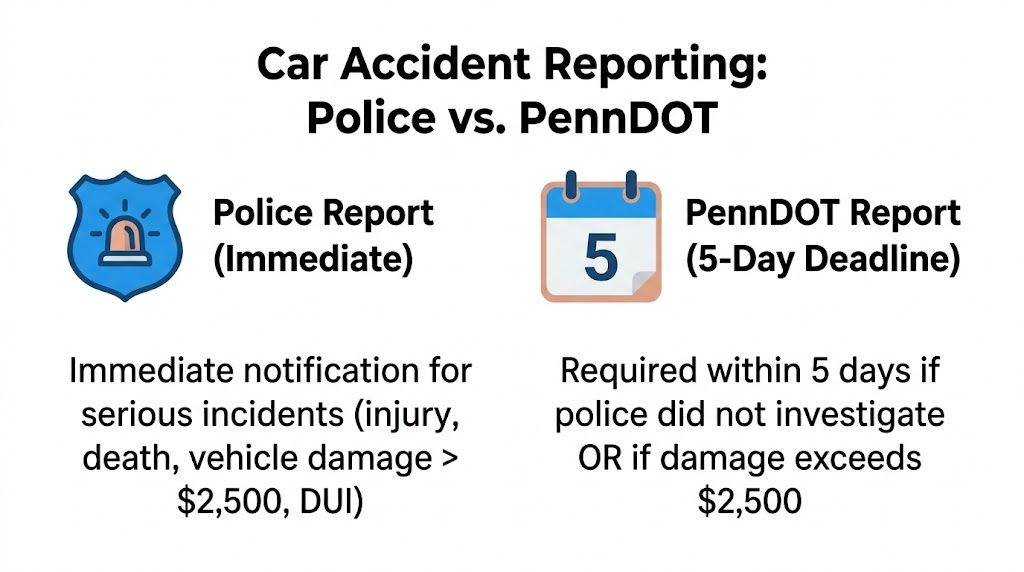
The written report goes to PennDOT on Form AA-600. It is not the same thing as making a call from the roadside. It is not the same thing as telling your insurer what happened. It is a separate filing obligation.
When the five-day deadline applies
Under the Philadelphia-specific explanation of the rule, if no police report is filed at the scene, all drivers involved in an accident with injury, death, or a towed vehicle must file Form AA-600 with PennDOT within 5 days, and the form requires details such as location and time, vehicle information, insurance and policy details, and witness contacts. The same explanation notes that penalties for non-filing include license suspension and can invalidate insurance claims, as described in this guide to minor accident reporting in Philadelphia.
That means the second clock is strict. It doesn’t wait for you to feel better, get a repair estimate, or decide whether you want a lawyer.
What goes into Form AA-600
The form is administrative, but it matters. You should expect to gather:
- Crash basics: Exact date, time, and location
- Vehicle details: Make, model, plate information
- Insurance information: Carrier and policy details
- People involved: Drivers, passengers, and available witness contacts
- What happened: A concise description of the collision and any known injuries
This is one reason careful note-taking right after the crash helps so much. The driver who writes things down early usually completes the form more accurately than the driver who tries to reconstruct everything from memory several days later.
PA accident reporting at a glance
| Report Type | Who to Notify | Deadline | When It's Required |
|---|---|---|---|
| Police report | Police | Immediate | Injury, death, or vehicle damage requiring towing |
| PennDOT report | PennDOT via Form AA-600 | Within 5 days | If no police report was filed at the scene for a crash involving injury, death, or a towed vehicle |
For a practical breakdown of how drivers obtain and use these records, see Mattiacci Law’s page on Pennsylvania accident reports.
The real trade-off
Some people delay because they want more information first. They want to know if the soreness goes away, whether the body shop says the car is repairable, or whether the other driver’s insurer will just take care of it. That delay can create a new problem that didn’t need to exist.
Practical rule: If police didn’t file a report and the crash involved injury, death, or a tow-required vehicle, treat the PennDOT filing as urgent paperwork, not optional cleanup.
The two-clock system is what matters here. One clock deals with immediate notification. The other deals with the written state filing if no police report was made. Missing the second one can damage both your driving privileges and your claim position.
Special Cases and Common Reporting Mistakes
The hardest cases are often not the catastrophic ones. They’re the messy, ordinary crashes where people assume the rules don’t apply.
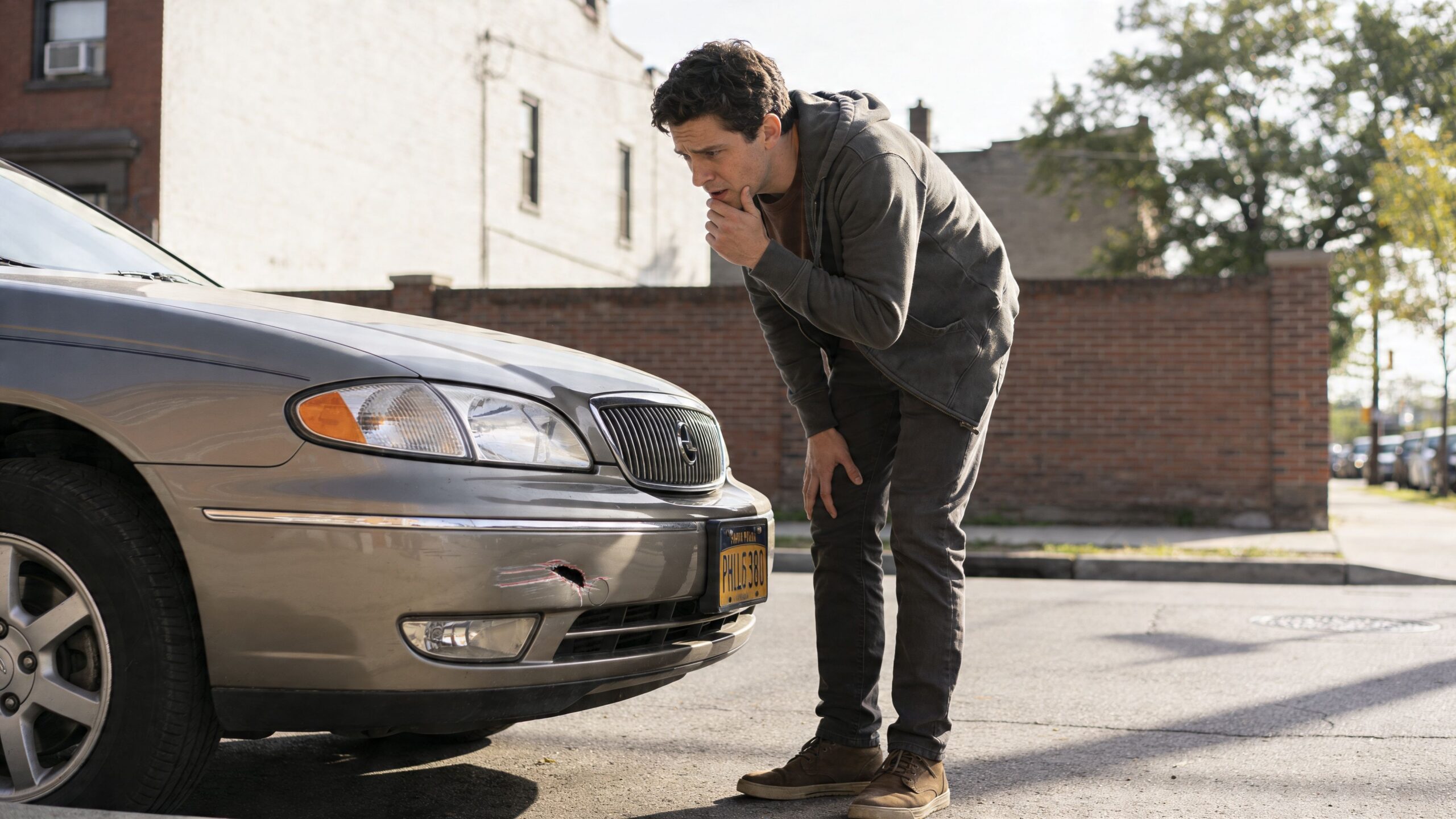
Hit and run is not a gray area
A hit-and-run accident in Philadelphia should be reported immediately even if the damage seems light and nobody thinks they’re hurt. According to this discussion of minor accident reporting and hit-and-run cases in Philadelphia, PPD protocols require either a 911 call or a report to the district of occurrence to create an official record, and 70% of hit-and-run financial recoveries hinge on official police logs over self-filed forms.
That makes practical sense. In a hit-and-run, the official record often captures the details people forget later, such as the direction of travel, partial plate information, vehicle color, or where cameras may exist.
The parking lot problem
Drivers tend to relax the rules when a crash happens on private property, especially in a parking lot. That’s a mistake. The same facts still matter. Was anyone hurt? Does a vehicle need towing? Did the other driver leave? If so, stop treating it like a shopping-center annoyance and start treating it like a case that needs a record.
The label “parking lot accident” doesn’t protect you. If injuries develop later or the other driver disputes what happened, your lack of reporting and documentation can become the problem.
Common mistakes that make claims harder
- Private side deals: One driver offers cash and asks you not to report it. That works until the payment never comes or hidden damage appears.
- Assuming soreness doesn’t count: A complaint of pain can change the reporting obligations.
- Leaving without enough information: You need names, insurance, and identifying vehicle details when possible.
- Waiting to see if damage worsens: If the car later needs towing, the analysis may look very different than it did curbside.
- Treating a hit-and-run like a minor inconvenience: It isn’t.
What experienced lawyers see repeatedly
The most preventable mistake is the “gentleman’s agreement.” Two people exchange phone numbers, promise to keep insurance out of it, and go home. Then one of them stops responding. Or a passenger wakes up the next morning with real neck pain. Or the repair shop finds more damage than anyone expected.
At that point, the driver who skipped reporting is trying to rebuild a case without the strongest piece of early proof: a neutral, official record.
If the other driver asks you not to report the crash, that request usually helps them, not you.
Informing Your Insurer The Third Reporting Track
Police reporting and PennDOT filing do not replace your duty to notify your insurance company. This is the third reporting track, and it comes from your policy, not from the traffic code.

A lot of drivers think that if they called police, they’re covered. They aren’t. Your insurer still expects prompt notice under the terms of the policy. Delay gives the company room to question the claim, the vehicle damage, or the injury timeline.
What to say on that first call
Keep it factual. Give the date, time, location, the vehicles involved, and whether police responded. Identify the other driver if you have that information. Report visible damage and any known injuries without guessing about diagnosis or long-term effects.
What should you avoid? Don’t speculate about fault. Don’t minimize your condition just because adrenaline is still masking symptoms. Don’t offer a recorded statement to the other side before you understand your injuries and your position.
Why this step matters
Insurance companies evaluate claims through records. If your reporting chain is clean, police or PennDOT where required, plus prompt insurer notice, your claim starts on stronger footing. If that chain has gaps, the insurer may argue the facts are uncertain, the injuries are unrelated, or the damage developed later.
That doesn’t mean every delayed report destroys a case. It does mean delay rarely helps.
After the Reports When to Call a Philadelphia Car Accident Lawyer
Once the reporting is done, the case turns on documentation and timing.
The two-clock problem confuses a lot of people after a Philadelphia crash. They focus on whether police came to the scene and miss what comes next. A lawyer steps in when that confusion starts to threaten the claim, especially if there are injuries, conflicting stories, missing paperwork, or pressure from an insurance adjuster to wrap things up fast.
Start preserving the file right away. Keep the crash photos, repair estimates, towing bills, discharge papers, prescription receipts, and any message from the insurer. Follow your medical treatment as recommended. Gaps in care and inconsistent descriptions of pain are the kinds of issues carriers use to cut the value of a claim or deny part of it.
Some cases can be handled without counsel. Many cannot.
You should strongly consider calling a Philadelphia car accident lawyer if any of these apply:
- You were hurt: Symptoms often get clearer in the days after a crash, not at the scene.
- Fault is disputed: If the other driver changes the story, the record needs to be organized early.
- A hit-and-run is involved: These claims depend on quick investigation and proper notice.
- The insurer is pushing for a statement or quick settlement: Early pressure usually means the company is trying to define the claim before the full picture is clear.
- The reporting process was incomplete or confusing: Problems with the police report, the 5-day PennDOT filing, or missing information can create avoidable disputes.
Mattiacci Law handles Philadelphia injury cases involving cars, trucks, motorcycles, and buses. In a case like this, counsel can gather the reports, sort out whether both reporting tracks were handled correctly, preserve witness and camera evidence, and deal with the insurer before the paper trail gets harder to fix.
That is usually the point of hiring a lawyer. It is not just about filing a claim. It is about getting control of the timeline, protecting the evidence, and making sure the record reflects what occurred.
If you remember one thing from this article, remember this: a Philadelphia crash can trigger more than one reporting duty. The immediate police report and the separate 5-day PennDOT report are not the same step. When either one is missed, legal help is worth getting early.