

Author: John Mattiacci | Owner Mattiacci Law
Published May 4, 2026

A crash in Philadelphia can turn on you in seconds. One minute you are inching through Broad Street traffic or merging onto I-76. The next, your airbag is out, another driver is talking fast, and someone is urging you to skip the police and sort it out later.
I have seen that first hour shape cases years down the line. The client who did not get checked by EMS because they thought they felt "fine." The driver who moved on without photos because traffic was piling up. The witness who disappeared before anyone got a name. Those early gaps are exactly what insurance carriers use when they want to cut the value of a claim or deny fault altogether.
In Philadelphia, quick decisions do two jobs at once. They protect your physical safety, and they create the record that will decide how strong your case is if injuries, lost wages, or disputed liability show up later. That matters on Roosevelt Boulevard, in Center City, on I-95, and in crashes involving SEPTA vehicles, delivery vans, or work trucks. It matters even more in a city where serious traffic harm is concentrated on a relatively small share of streets, as noted earlier in the article.
The goal is simple. Do not leave the facts of the crash in the hands of the other driver, a rushed adjuster, or an incomplete report. Take the right steps early, and a trial-focused firm like Mattiacci Law has something solid to work with if the insurance company refuses to be reasonable.
These seven steps are the ones that protect your health, preserve evidence, and keep avoidable mistakes from weakening your Philadelphia injury case before it starts.
1. Ensure Scene Safety and Move to a Safe Location
A crash on Roosevelt Boulevard or I-95 can turn from one collision into two in seconds. The first decision is simple. Get out of danger if you can do it without worsening an injury.
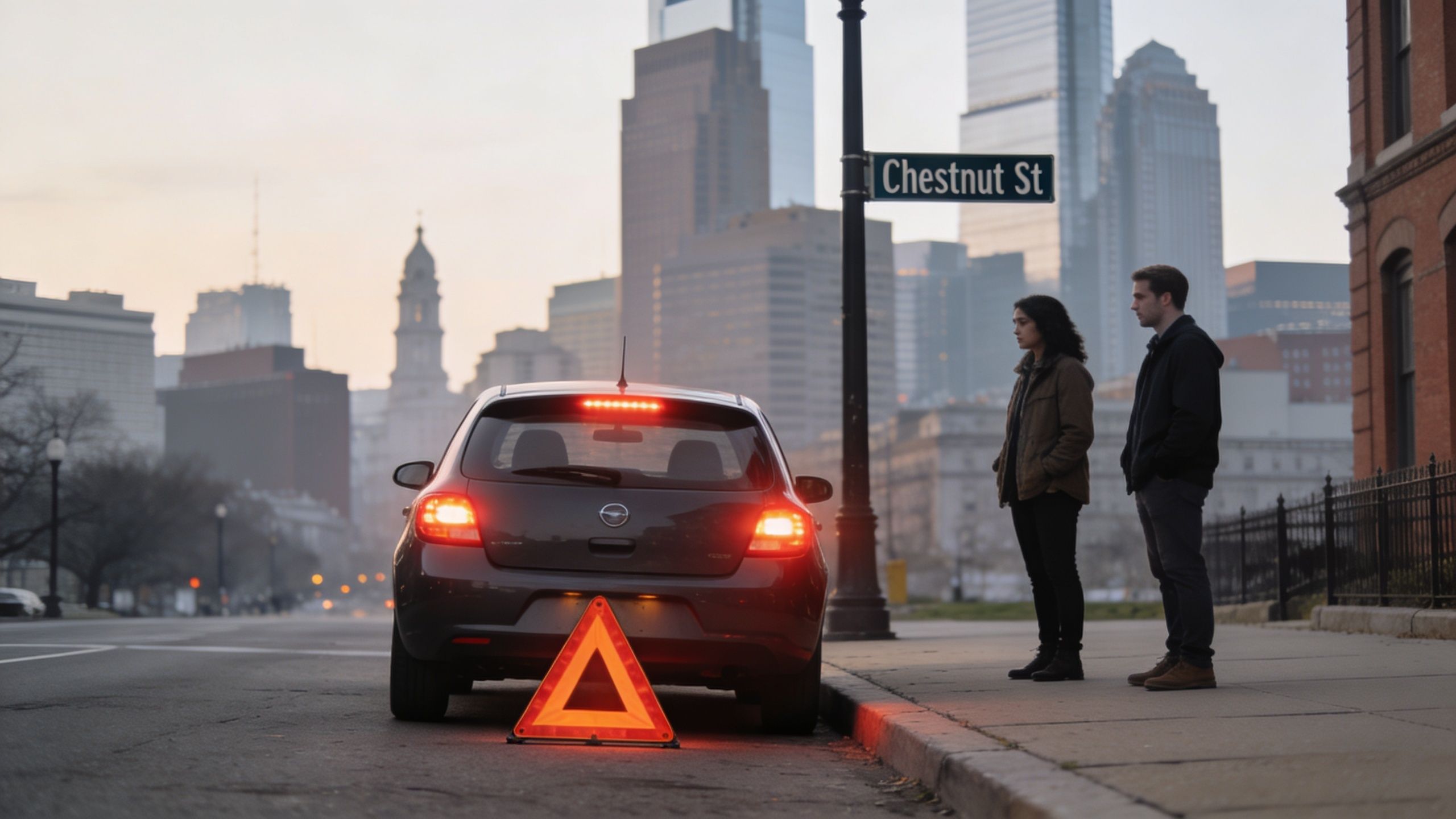
If you can move, get yourself and your passengers out of the travel lane and away from traffic. In Philadelphia, that may mean stepping onto a sidewalk in Center City, getting behind a guardrail on I-95, or moving clear of a construction area on Route 611. If the vehicle can be moved safely and no one appears seriously hurt, move it to the shoulder or curb. If someone may have a head, neck, back, or leg injury, do not force movement just to clear the road.
This is about more than common sense. It affects the case.
Insurance carriers look for avoidable conduct after impact. If someone stays in an active lane, stands between cars, or lets children remain near moving traffic when a safer option was available, the defense may argue that the later harm was partly self-inflicted. Pennsylvania comparative negligence fights are fact-specific, and bad post-crash decisions can give the other side an argument they did not have before. I would rather defend a client who put safety first and explain why the vehicle was moved than try to explain why they stayed exposed in live traffic.
Philadelphia has too many corridors where a disabled car is a serious hazard, as noted earlier in the article. Treat the scene as active and unstable until police or EMS take control.
What does that look like in practice?
- Turn on hazard lights: Help approaching drivers see you as early as possible.
- Move to the curb, shoulder, or sidewalk: A few extra feet from traffic can prevent a second impact.
- Watch for smoke, fuel, broken glass, and debris: A crash scene changes fast, especially at night or in bad weather.
- Keep children and passengers in a protected area: Do not let anyone stand near the roadway while drivers argue about fault.
- Do not linger between vehicles to inspect damage: Property damage can wait. Another driver may not.
One more point that gets missed. Shock is part of the scene too. People often feel shaky, disoriented, panicked, or detached right after a wreck. Those symptoms matter medically and legally, especially if they continue. If the emotional fallout does not let up after the crash, online PTSD treatment options may become part of your recovery record. Physical symptoms can also surface after you get to safety, which is why timing matters if you are deciding how soon to see a doctor after an accident.
One practical rule has held up in case after case. Choose safety over preserving the exact resting position of the vehicles, unless a serious injury makes movement unsafe. A trial lawyer can explain why the cars were moved. It is much harder to fix the damage from a second collision that should never have happened.
2. Call Emergency Services 911 and Obtain Medical Evaluation
You get rear-ended on I-76, step out, and tell yourself it is just a stiff neck. Two hours later, the headache starts. By the next morning, your back locks up, and the insurance company is already asking why you did not seek care at the scene.
Call 911 as soon as you are safe. In Philadelphia, that call does more than bring help. It starts the timeline that will matter if the other driver disputes fault, if your symptoms worsen, or if a jury later has to decide whether the crash caused your injuries.

A 911 response can create several records at once: dispatch logs, officer observations, EMS notes, and hospital intake records. Those records often become the backbone of a Philadelphia injury case. At Mattiacci Law, we look for those early records because they usually show what was reported before anyone had time to shape a story for an insurer or defense lawyer.
“I feel okay” is one of the most expensive statements people make after a crash.
Adrenaline can cover up pain, dizziness, confusion, numbness, and concussion symptoms. I have seen people walk away from a Roosevelt Boulevard collision, decline treatment, and then spend months fighting over whether the injury was real because the first medical record was missing or delayed. That is the trade-off. Skipping evaluation may feel faster in the moment, but it gives the insurer room to argue that something else happened later.
Tell paramedics and ER staff every symptom, even if it seems minor. Headache. Ringing in the ears. Chest pain from the seat belt. Hand tingling. Knee impact on the dash. Anxiety. Trouble focusing. If your head hit anything, say so plainly. If you later need online PTSD treatment options as part of your recovery, those early reports can help connect the emotional fallout to the crash.
Timing matters here for medical reasons and legal ones. A prompt exam protects your health, and it also closes off a common defense argument that the injury was exaggerated or unrelated. If you are unsure how quickly care should happen, this guide on how soon you should see a doctor after an accident explains what delay can do to a claim.
If police respond, ask for the incident number before you leave if you are able. If they do not respond, write down the time of the call, the exact location, and which agency you contacted. In Philadelphia, small details like that often matter later when we are tracking reports, body camera footage, dispatch records, or gaps the defense will try to use against you.
3. Document the Accident Scene Thoroughly with Photos and Video
A Philadelphia crash scene starts changing fast. Cars get moved. Buses pull off. Delivery drivers leave. Rain washes away debris. By the time an insurer reviews the claim, the physical scene that could have proven fault may be gone.
Your phone can preserve it.

From a trial lawyer’s standpoint, photos and video do more than show property damage. They lock in position, timing, visibility, and road conditions before anyone has a chance to reshape the story. In city cases, that matters. A crash at a tight South Philly corner, a Broad Street bus lane, or an I-95 merge can look very different in a courtroom if no one captured the scene when it was fresh.
Start wide. Get the full intersection or stretch of roadway from several angles. Then get closer. Photograph vehicle damage, debris, airbags, broken glass, skid marks, fluid leaks, lane markings, traffic signs, signal lights, and any visible injury.
What to capture in a Philly crash
Take photos and short video of:
- Vehicle positions: Show where each car, truck, motorcycle, or bus came to rest.
- Road context: Include crosswalks, turn lanes, SEPTA stops, bike lanes, parked cars, and construction barrels.
- Traffic controls: Capture red lights, stop signs, arrows, no-turn signs, faded markings, or missing signage.
- Surrounding cameras: Look for corner stores, rowhomes, garages, parking lots, apartment buildings, and transit vehicles that may have recorded the collision.
- Injury evidence: Bruising, cuts, swelling, torn clothing, deployed airbags, and blood inside the vehicle.
Do not overlook the larger environment. In Philadelphia, sight lines are often part of the fight. A delivery van parked too close to the corner, scaffolding, a SEPTA bus at the stop, overgrown trees, or a missing sign can explain why one driver never saw the other. If the case goes into litigation, those details often matter more than people expect.
Video is useful for a different reason. It captures distance, traffic flow, weather, lighting, and sound in a way still photos do not. A 20-second walkaround can help show blocked visibility, uneven pavement, or how little room there was to react.
One local point matters here. Nearby surveillance footage disappears quickly. If you are near a business, apartment building, parking garage, school, or transit route, record the exact address and the camera location. That gives your lawyer a fair chance to send preservation letters before the footage is overwritten. At Mattiacci Law, that is often one of the first things we look at in a disputed liability case.
Enough documentation gives your lawyer something concrete to work with. Weak documentation gives the insurance company room to argue over angles, damage patterns, lane position, and whether the scene really looked the way you remember. If the crash involved a truck, bus, rideshare vehicle, or happened on a corridor like Roosevelt Boulevard or I-95, capture more than your own car. Show the full roadway setup, because speed, lane width, stopping distance, and blind spots often become central issues later.
4. Exchange Information with Other Parties and Gather Witness Details
Keep this part professional and short. You’re collecting information, not negotiating the case on the shoulder of the road.
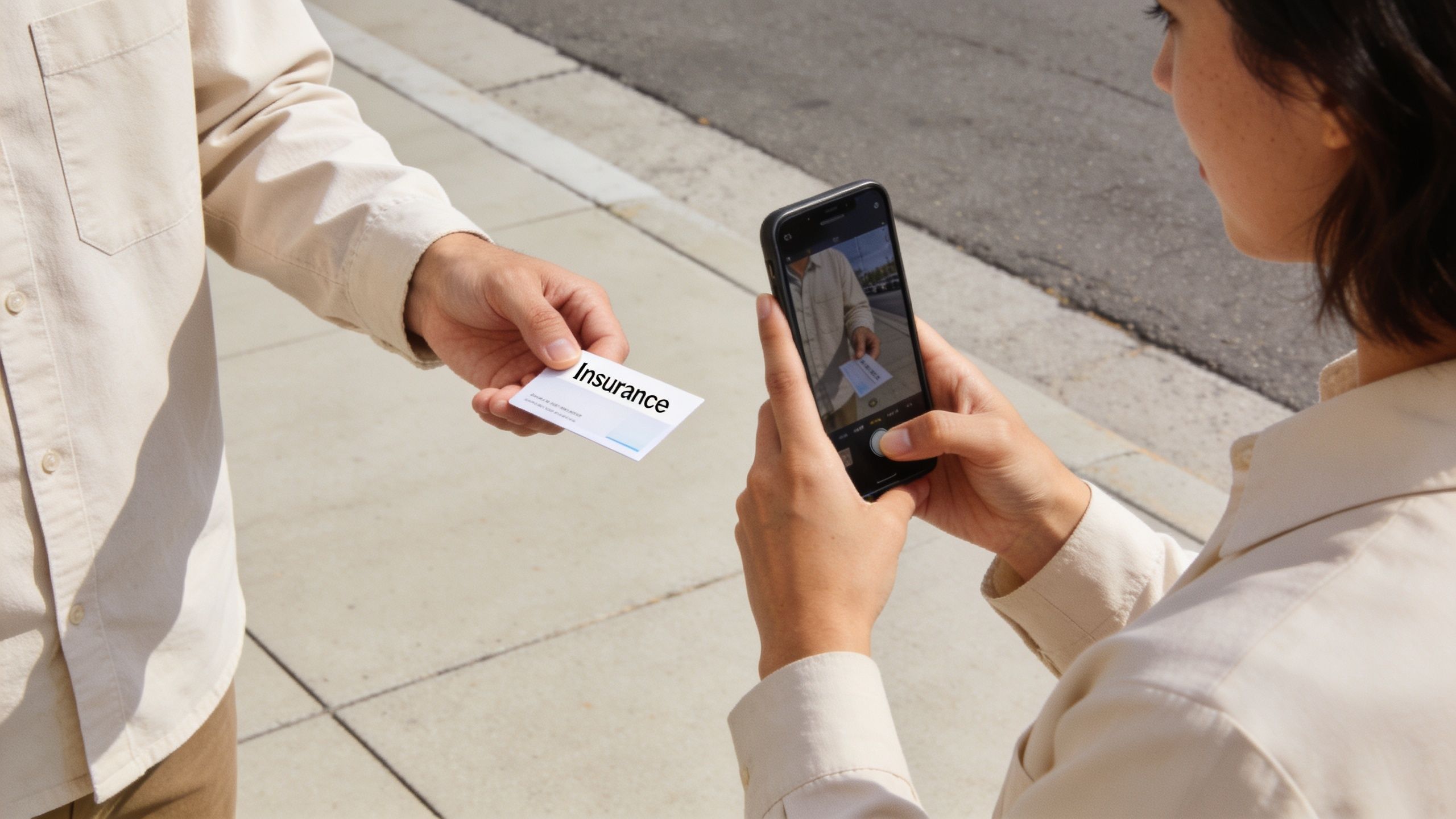
Get the other driver’s name, address, phone number, license number, plate number, insurance company, and policy information. If it’s a company vehicle, rideshare car, work truck, SEPTA vehicle, or delivery van, get the employer or fleet information too. Take photos instead of relying on handwritten notes if you can.
Just as important, get witness information before they leave. In Philadelphia, people often stop, look, say they saw everything, and disappear when traffic starts moving again. An independent witness can decide a red-light case, a left-turn case, or a lane-change dispute.
What to say and what not to say
Use neutral language. Good examples are: “Are you okay?” “Can I have your insurance card?” “Did anyone else see it happen?” Bad examples are: “I’m sorry.” “I never even saw you.” “I was probably going too fast.”
At the scene, facts beat conversation. Names, insurance, witnesses, vehicle details. Save opinions for your lawyer.
If someone says, “Let’s not call this in,” don’t agree on the spot. That usually helps the person who caused the crash, not the person who got hurt. The same goes for cash offers at the curb. Those offers disappear as soon as treatment starts.
For witness collection, be direct:
- Ask for a phone number immediately: Don’t assume police will get it.
- Get a short text if possible: A witness who texts “I saw the pickup run the red light” is easier to locate and preserve.
- Note where they were standing: Corner, bus stop, storefront, opposite lane.
- Record exact names for business drivers: Company vehicles create extra layers of liability and evidence.
In a construction-site vehicle crash, also identify supervisors, flaggers, and coworkers who saw the collision or the traffic setup. Those details often matter later.
5. Preserve All Evidence and Request Police Report Copies
By the time the tow truck leaves and traffic starts moving again, the case is already changing. In Philadelphia, the next fight is usually about proof. What existed at the scene can disappear within hours if you do not preserve it on purpose.
Start building a claim file the same day. Use one folder, paper or digital, and keep every document there. Save the photos and video from your phone in more than one place. Keep discharge papers, prescriptions, towing bills, storage invoices, rental receipts, repair estimates, work excuse notes, and every email or text tied to the crash.
Small items matter more than clients expect. A cracked helmet, a broken child seat, torn clothing, smashed glasses, or a damaged phone can help show force of impact and timing. Do not throw those items away until the case is resolved. If your car has a dashcam, pull the footage immediately. Many systems record over old files fast.
What to preserve right away
Focus on the evidence that disappears first or gets challenged later:
- Damaged property: Keep helmets, child seats, phones, glasses, bags, and clothing in the same condition they were in after the crash.
- Vehicle data and video: Save dashcam footage, app-based driving logs, GPS history, and any onboard data before it is overwritten.
- Medical records: Keep discharge instructions, referrals, imaging orders, pharmacy receipts, and follow-up scheduling records.
- Out-of-pocket losses: Track parking, rideshare trips, medication, braces, crutches, and other accident-related purchases.
- Work loss proof: Save pay stubs, attendance records, employer emails, and disability paperwork.
This matters for fault, not just for damages. Pennsylvania follows modified comparative negligence. If the defense can push your share of fault over 50%, you recover nothing. Even short of that, every percentage point they assign to you can cut the value of the claim. In trial work, I have seen a lane-marking photo, a timestamped video, or a preserved text from a witness change how a case is evaluated.
Get the police report as soon as it is available. In Philadelphia, that report often becomes the document insurers, defense lawyers, and later a jury look at first. It may be incomplete or wrong, but it still shapes the early story of the crash. Review it for basic errors such as the location, vehicle descriptions, witness names, and whether injuries were noted. If police did not respond, this explanation of what happens when there’s no police report after a car accident in Philadelphia will help you understand the next steps.
One warning. Do not "clean up" your file by deleting bad photos, rewriting notes, or tossing duplicates. Originals carry more weight than neat summaries. If you need to report the crash to an insurer, keep that report short and factual, and review this guide on talking to insurance after a crash in Philly before giving details that can be used against you.
Serious crashes need faster action. In truck, bus, SEPTA, commercial fleet, and work-vehicle cases, a trial-focused firm like Mattiacci Law will often send preservation letters right away to secure onboard video, dispatch records, maintenance history, training files, and electronic data before a company says it no longer exists.
6. Notify Your Insurance Company and Report the Claim
The tow truck is pulling away. Your adrenaline is still up. An adjuster call may come before you have seen a doctor, reviewed the police report, or even felt the full extent of your injuries. That first insurance conversation matters more than people think, especially in Philadelphia cases where liability fights start early and every inconsistency gets highlighted.
Report the crash to your own insurer promptly. Keep the first notice tight and factual: the date, time, location, vehicles involved, whether police responded, and whether you are getting medical care. Get the claim number. Ask for the adjuster’s name and the best place to send photos, repair estimates, and medical updates.
Then be careful.
Pennsylvania policies often require prompt notice, but prompt notice is not the same as a full statement. Those are different decisions, and the difference can affect the value of the case. In my experience, insurers in Philadelphia look for three openings right away: delay in reporting, careless comments about fault, and early statements that downplay injury before symptoms have settled in.
Use this approach:
- Report the claim quickly: Late notice can create avoidable coverage issues.
- State only what you know: If you do not know speed, signal timing, or the other driver’s lane position, say that.
- Do not guess about injuries: It is enough to say you are being evaluated or still assessing symptoms.
- Be cautious with recorded statements: The other carrier is building its file, not protecting your claim.
- Do not sign broad medical authorizations: Those forms often reach far beyond treatment related to the crash.
A common mistake is trying to sound reasonable. People say they are "fine" because they do not want to seem dramatic. That sentence can follow the case for months. If neck pain, headaches, numbness, or concussion symptoms show up later, the carrier will point back to the first call and argue the injury was minor or unrelated.
The problem gets bigger in SEPTA, rideshare, delivery van, and work vehicle crashes. There may be multiple policies, multiple adjusters, and a company already working to limit exposure before you know who covers what. Trial-focused firms like Mattiacci Law pay attention to that early because the insurance structure often shapes the whole case, including where pressure can be applied if settlement talks fail.
If you want a clearer line on what to say and what to refuse, read this guide on whether you should talk to insurance after a crash in Philly.
7. Consult a Personal Injury Attorney and Preserve Your Legal Rights
A South Broad crash can look straightforward for the first hour. Then SEPTA has video, a delivery company claims its driver was off the clock, a nearby store records over the footage in three days, and the insurer starts shaping the story before you know who is responsible. That is the point where legal timing starts to matter.
You do not need a lawyer for every minor bump with no injury. You should speak with one early if there is real medical treatment, disputed fault, a commercial vehicle, SEPTA involvement, a motorcycle, a pedestrian or bicycle impact, a government vehicle, or any work-related issue. In Philadelphia, those cases turn on details that disappear fast, especially video, vehicle data, dispatch records, and witness statements from people who were only passing through.
Pennsylvania generally gives injured people two years to file most personal injury claims. That deadline misleads people. By the time a lawsuit is filed, a good case has already been built or badly weakened. Medical records need time to develop. Defendants need to be identified correctly. In a city case, counsel may need to act quickly to secure footage from transit property, businesses, traffic cameras, or nearby buildings before it is gone.
Why early legal review changes the case
A trial-focused lawyer protects more than a filing deadline. The job is to put the case in a position where the defense has to take it seriously. That usually means:
- Preserving short-lived evidence: surveillance video, vehicle downloads, black-box data, dispatch logs, maintenance records, and phone records when appropriate
- Identifying every available source of recovery: the driver, employer, vehicle owner, contractor, property owner, transit authority, or another company tied to the crash
- Preventing avoidable damage to the claim: poorly framed statements, missing treatment gaps, and incomplete documentation of wage loss or future care
- Building the case for trial early: liability proof, medical causation, damages evidence, and witnesses who will still be credible a year from now
That matters in Philadelphia because serious crashes here are rarely just about two drivers trading insurance cards. I have seen Center City and Northeast Philadelphia cases turn on one camera angle, one preserved text thread, or one employer record showing who controlled the vehicle that day. If the case may end up in front of a Philadelphia jury, it should be prepared that way from the start.
Work vehicle and construction-related crashes need especially close review. A worker may have a workers' compensation claim and a separate third-party injury case. A delivery driver may be working under one company’s branding, another company’s contract, and a personal policy that excludes business use. Those coverage fights are not side issues. They often decide how much compensation is realistically available.
Choose a lawyer who is prepared to file suit and try the case if needed. Insurance companies price cases differently when they know the firm on the other side is built for litigation, not quick volume settlements.
7-Step Post-Accident Actions Comparison
| Action | Implementation Complexity | Resource Requirements | Expected Outcomes | Ideal Use Cases | Key Advantages |
|---|---|---|---|---|---|
| Ensure Scene Safety and Move to a Safe Location | Low to moderate – quick hazard assessment and relocation | Minimal: phone, hazard lights, warning triangle, ability to move | Reduced risk of secondary injury; preserved scene integrity; legal compliance | Immediate post-crash on busy roads, hazardous spills, multi-vehicle collisions | Prevents further harm; complies with PA law; preserves evidence |
| Call Emergency Services (911) and Obtain Medical Evaluation | Low – place call and accept on-scene evaluation | Phone, EMS/ambulance, hospital resources | Timely medical care, official emergency records, documented injuries | Any accident with possible injury, loss of consciousness, or major damage | Official medical documentation; establishes causation; immediate care |
| Document the Accident Scene Thoroughly with Photos and Video | Moderate – systematic 360° capture and metadata preservation | Smartphone/camera, time, safe access to scene | Comprehensive visual evidence for reconstruction and claims | Complex urban intersections, disputed liability, construction or truck crashes | Preserves perishable evidence; aids reconstruction; strengthens negotiations |
| Exchange Information with Other Parties and Gather Witness Details | Moderate – collect accurate IDs while avoiding admissions | Notepad/phone, camera for IDs, calm communication skills | Identifies parties and witnesses; preserves contemporaneous accounts | Multi-party accidents, hit-and-run risk, incidents with bystanders | Ensures parties are traceable; preserves witness testimony; legally required |
| Preserve All Evidence and Request Police Report Copies | Moderate to high – gather records and follow up with agencies | Coordination with police, medical providers, insurers; document storage | Centralized case file with official reports, medical and financial records | Serious/catastrophic injuries, contested facts, litigation-ready cases | Prevents evidence loss; provides official and financial proof for damages |
| Notify Your Insurance Company and Report the Claim | Low to moderate – timely reporting with cautious communication | Policy details, police report number, written logs, legal counsel if needed | Preserves coverage rights; opens claims process; establishes timeline | Any accident involving property damage or injury where coverage applies | Protects contractual rights; creates formal claim record; starts investigation |
| Consult a Personal Injury Attorney and Preserve Your Legal Rights | Moderate – retain counsel and coordinate investigation | Attorney expertise, potential expert witnesses, contingency fee arrangement | Legal protection, strategic investigation, increased settlement leverage | Serious injuries, disputed liability, long-term care needs, wrongful death | Protects statute of limitations; professional advocacy; maximizes recovery |
Your Next Step Secure Your Right to Full Compensation
You get hit at Broad and Olney. Your car is half in the lane, half at the curb. A police officer asks questions. A tow truck driver wants a destination. An insurance adjuster calls before you have even seen all the damage, or felt the full effect of your injuries. That first day matters because the record starts forming immediately, and in Philadelphia, weak records turn into disputed claims fast.
The seven steps above are not generic cleanup after a crash. They are how you protect a Pennsylvania injury case before the other side shapes it for you. Medical records tie the injury to the collision. Photos lock in vehicle positions, roadway conditions, and damage patterns. Witness names give your lawyer someone to contact before memories fade. The police report, property damage file, wage loss documents, and treatment records become the backbone of any serious demand package or lawsuit.
Philadelphia cases also bring local problems that out-of-town advice often misses. Intersections are crowded. Commercial vehicles, SEPTA buses, cyclists, delivery drivers, and pedestrians often share the same space. Surveillance footage may exist, but it can disappear quickly. In a serious case, the difference between full compensation and a reduced offer often comes down to whether someone moved fast enough to secure the proof.
I have seen insurers take a thin file and treat it like a weak case. I have also seen the result when the injured person got checked out promptly, documented the scene, followed medical advice, and got counsel involved before giving a recorded statement. The second file is harder to minimize because it answers the questions that decide value and liability.
If the crash involved serious injuries, disputed fault, a truck, a bus, a motorcycle, a work vehicle, or a pedestrian, get legal advice early. A Philadelphia trial firm such as Mattiacci Law can step in to preserve evidence, deal with adjusters, identify every available insurance policy, and prepare the case for litigation from the start. That preparation matters. Cases settle differently when the defense knows the plaintiff’s lawyer is building the file for trial, not just for a quick claim number.
Your job is to protect the facts before they disappear. Then protect your health. Then protect your rights.