


Author: John Mattiacci | Owner Mattiacci Law
Published August 9, 2026
Two weeks after a crash, the car is still in the body shop, the hospital bills are starting to land, and the paycheck got smaller because time off work never hits all at once. That's when many people finally call about a bodily injury claim, not because they're ready to fight, but because they need to know what that one call sets in motion.
What happens next is usually quieter and more administrative than people expect. The insurer opens a file, an adjuster gets assigned, and the injury case starts turning into paperwork, records, and negotiation pressure, not instant courtroom drama. If you want a plain-English primer on the early steps, the internal guide on how to file a personal injury claim is a useful companion, and so is a practical outside resource like the Massachusetts bicycle accident insurance guide for seeing how insurers frame the same process in another context.
The part that often goes unnoticed is the claim file itself. That file becomes the insurer's working memory, and everything you do in the first days after an injury affects how that file reads later. If you're already feeling behind, you're not alone. The point now is to understand the machinery before it starts making decisions about your case.
The First Call and the Moment a Claim Begins
Two weeks after a rear-end crash, a client usually has three things on the kitchen table, bills, a damaged vehicle estimate, and a pile of missed work notes. The first question is rarely “Can I sue?” It's usually, “What does the insurance company do now?”
The claim starts with notice, not court
A bodily injury claim is the formal request for payment, and it usually begins with notice to the at-fault party's insurer. Industry statistics cited in 2026 show that about 95% of personal injury lawsuits end in a pre-trial settlement, and only about one in twenty reaches a courtroom decision, which is why the filing usually starts as a negotiation track, not a trial track. Clio's 2026 personal injury law statistics also note that federal personal injury and product liability filings fell 73% in the year ending March 31, 2025, after a prior 78% surge tied to major litigation, a reminder that volume can swing hard when a large event ripples through the system.
That's the first mental shift. You're not walking into a courtroom on day one, you're walking into a file-building process.
The language changes fast
The words start coming at you quickly, adjuster, FNOL, demand package, lien. FNOL means First Notice of Loss, the point where the insurer opens the file and starts verifying the policy, the driver, and the reported loss. A lien is a repayment claim that can reach into settlement money later, which is why the early paperwork matters so much.
Practical rule: the first call doesn't prove your case, it starts the insurer's review of whether the case is worth paying.
A claim also has a human side. You're hurt, tired, and trying to keep up with appointments while the insurance company uses a system built to sort, value, and discount claims. That's why the first few decisions matter more than they feel like they should.
What a Bodily Injury Claim Actually Is
A bodily injury claim is a third-party liability claim. That means the injured person asks the at-fault party's insurer to pay, instead of using only their own first-party coverage. The carrier is not just looking at whether someone got hurt, it's looking at whether the facts can support negligence and measurable loss.
The four pieces the insurer is trying to connect
Think of the claim as a checklist.
- Duty: Did the other driver, property owner, or business owe a duty of care?
- Breach: Did they violate that duty by doing something unsafe or failing to act?
- Causation: Did that breach cause the injury?
- Loss: Can the injury be tied to medical bills, wage loss, and other measurable damages?
A red-light crash is the cleanest example. If a driver runs a red light and strikes another vehicle, police reports, witness statements, vehicle damage, and medical records help show duty, breach, causation, and loss. The insurer is not evaluating the story you tell in the abstract, it's evaluating the documents that support the story.
Why fault rules matter right away
In Pennsylvania and New Jersey, comparative-fault rules can reduce recovery if the injured person shares blame. That makes early evidence preservation more than a formality, because every photo, statement, and report can affect how the claim is priced. If the file suggests the claimant contributed to the crash, the carrier will use that to discount the number.
The claim rises or falls on documentation quality, not outrage.
That is why the technical structure matters. The insurer's review is built around proof, and the proof has to line up with the legal elements before the file can move toward meaningful money.
The First 72 Hours After an Injury
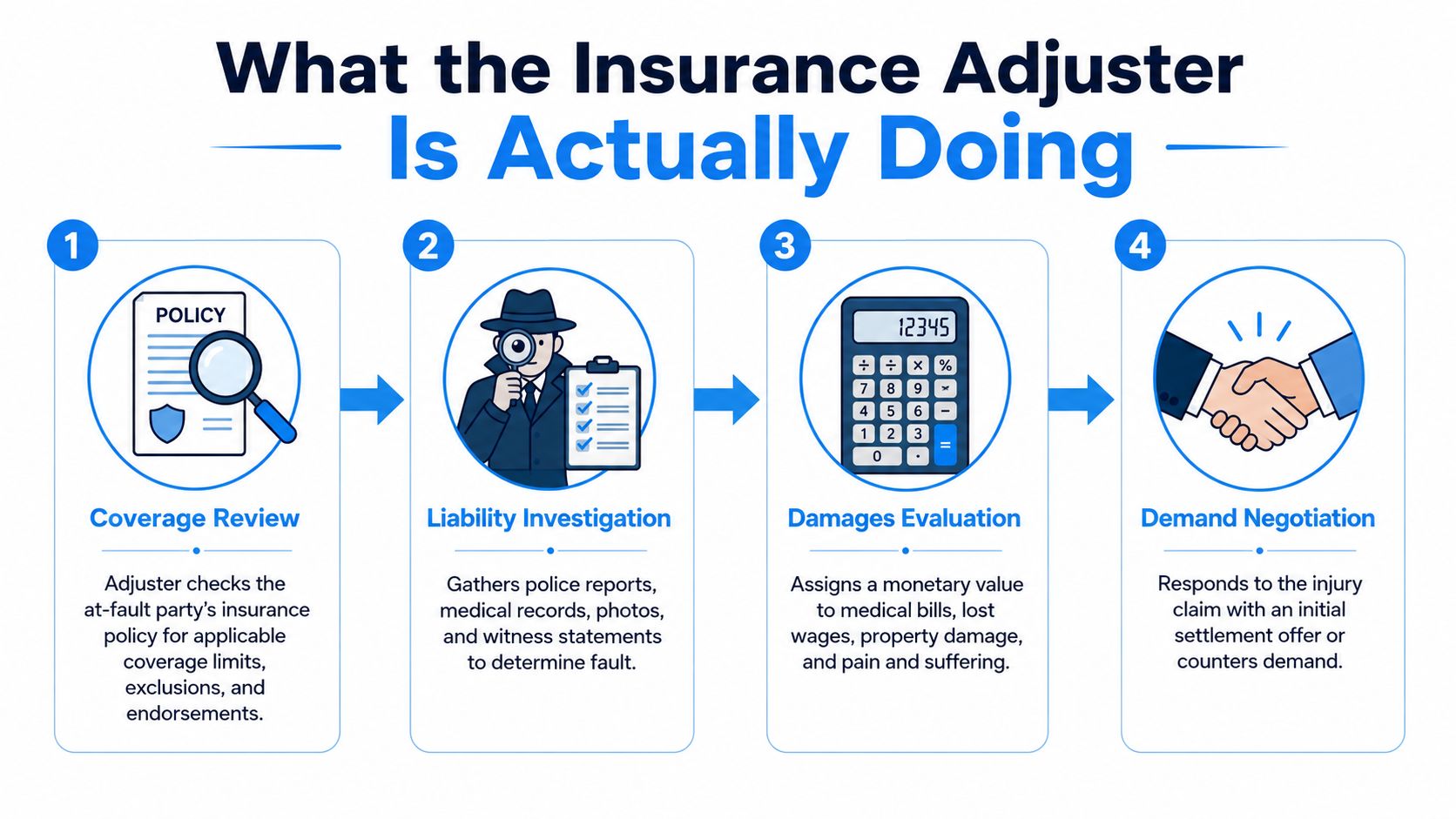
The first three days are not for arguing value. They're for building a record that can survive the insurer's review later. The rule is simple, preserve first, persuade later.
Medical care comes first, even when pain seems mild
A lot of valid cases get squeezed because treatment starts late. If you're unsure how quickly you should be seen, the local guide on how soon to see a doctor after an accident is worth reading. The practical point is the same, gaps in care give adjusters a reason to question whether the crash caused the symptoms.
Document the scene while the details are fresh
Take photos, save videos, and collect witness contact information. Report the incident to the police, a property owner, or an employer, depending on where it happened. If you're able, keep damaged clothing, shoes, and other physical items in the same condition they were in after the event.
Don't feed the carrier extra material
Recorded statements can be framed later in ways you didn't intend. Social media posts can be stripped of context and dropped into a claim file. The cleaner move is to limit what you say until you know how the insurer is using the information.
Best short-term goal: make the record harder to dispute.
The body of evidence created in this window is what underwriters, defense lawyers, and eventually juries use to reconstruct the event. A strong claim usually starts with preservation, not polish. Your job in the first 72 hours is to keep the facts intact.
What the Insurance Adjuster Is Actually Doing
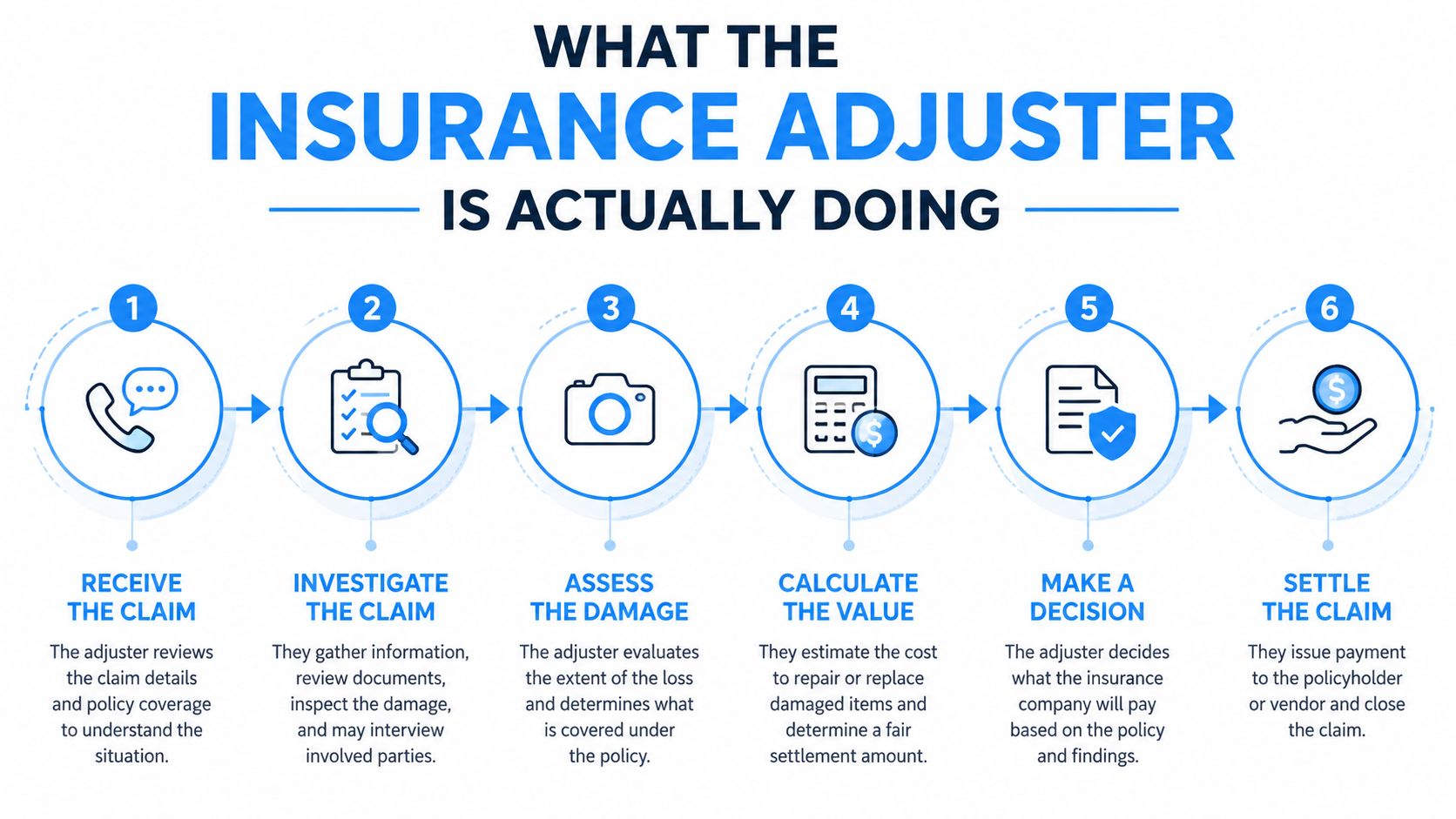
The adjuster's desk is where the claim starts turning into a number. The file usually moves through coverage review, liability investigation, damages review, and then negotiation authority checks inside the company. That's the part most claimants never see.
Coverage gets checked before anyone talks settlement
The adjuster verifies whether the policy was active, whether the driver or vehicle was covered, and whether any exclusions apply. If coverage is weak or disputed, the carrier has a reason to slow everything down. That's not personal, it's how the file is built.
Liability and damages get sorted separately
Police reports, witness statements, photos, medical records, billing statements, and wage verification are all used to assess fault and loss. In comparative-negligence cases, the adjuster also estimates how much blame could be assigned to the claimant. That matters because a share-of-fault argument can reduce the payout even if liability isn't totally denied.
Clean files move, messy files stall
A file with consistent treatment, clear records, and credible providers is easier to value. A file with missing appointments, vague complaints, or thin wage proof gives the carrier room to stay conservative. If the injury looks serious and the documentation is strong, the file is more likely to move up the chain to someone with authority to approve real money.
An adjuster is a claims professional with limits, not a magician with a blank check.
That's why every document matters. Every record either feeds the valuation or starves it, and the carrier will always price uncertainty against you.
The Demand Package, Negotiation, and Why First Offers Are Low
A strong demand package is not a complaint letter. It is the file that shows the insurer what happened, what it cost, and why the numbers are supported by the record. That usually means medical records, billing, wage documentation, liability proof, and a clear damages narrative assembled in one place.
A good package also shows the carrier that the claim is ready for real review, not just another phone call. When the adjuster can see the treatment history, the missed work, and the fault evidence in one packet, the file is harder to brush aside. That is the point.
What Moves the Number
Insurers expect negotiation from the start. The first offer is usually low because it sets the anchor, and many claimants answer with emotion instead of a document-based response. A carrier may also send a release that reaches beyond the injury claim, or ask for a recorded statement designed to narrow the file.
The practical answer is simple. Respond with proof, not pressure.
| Insurer Tactic | Why It Works | Effective Counter |
|---|---|---|
| Low first offer | It anchors the discussion below true value | Counter with a written demand tied to records and wage proof |
| Rush to settle | It tries to close the file before treatment is done | Wait until the medical picture is stable and documented |
| Broad release language | It can wipe out more than the injury claim | Read every release carefully before signing |
| Recorded statement request | It can create statements used to minimize damages | Give one only with preparation and legal review |
Negotiation also works better when the claimant understands the carrier's playbook before the call starts. A practical guide like how to negotiate with insurance adjusters helps frame the conversation around records, timing, and the value of the claim rather than whatever the insurer wants to discuss.
What actually moves the number
Future medical care matters when it is tied to real treatment planning. Wage-loss proof matters when it is consistent and complete. Expert opinions on causation can matter when the insurer is trying to blame prior conditions or unrelated events.
The file the adjuster sees is not the file the claimant sees. Inside the company, the carrier is comparing your records against reserve authority, defense risk, and what it thinks a jury might do if the claim goes further. That is why a trial-ready attorney changes the math. Mattiacci Law is one firm that builds injury claims with records, experts, and settlement pressure in mind, which is the same kind of file discipline insurers respond to. If health insurance or workers' compensation paid bills, subrogation can also pull part of the settlement back out before you ever see it.
A signed release usually ends the claim for that injury event. Once that paper is signed, the advantage is gone.
When and Why a Lawsuit Gets Filed
A lawsuit sounds like the end of the road, but in practice it often starts the part of the process that forces the carrier to get serious. The usual triggers are simple, the insurer disputes liability, the offer is far below the case value, policy limits are the only meaningful money, or the filing deadline is getting close.
Filing suit opens formal discovery
The case begins with a complaint and answer. After that come interrogatories, document requests, and depositions, which are sworn testimony sessions where both sides test the evidence. Mediation often comes later, and if the case still doesn't settle, it can move toward trial.
Most cases still settle after filing
The complaint is a tool because it triggers formal discovery and the threat of a verdict. It is not a promise that the case will be tried. In fact, most claims still resolve before a jury ever hears them, especially once the carrier sees the evidence in discovery.
Timing depends on the injury and the fight
Simple matters can resolve in months. Claims involving serious injuries, multiple defendants, or experts often take much longer, sometimes stretching through discovery, mediation, and pretrial motions. The larger the dispute, the less likely the process stays informal.
If you're reading broader fault guidance, a resource like car insurance fault advice from Select Insurance Group, Inc. shows how different insurers frame liability, even though the local procedural rules still control the case once suit is filed.
A lawsuit is usually a pressure tool first, a trial event second.
That's the part that is often missed. Filing suit often means the claim has become too important to leave inside a casual negotiation.
Damages You Can Recover and the Traps That Reduce Them
The headline number on a settlement letter is not the take-home number. The claim may include economic damages, like medical bills, future treatment, lost wages, reduced earning capacity, and out-of-pocket costs. It can also include non-economic damages, such as pain and suffering, loss of enjoyment of life, emotional distress, and, in wrongful death matters, loss of consortium.
The reductions usually come after the gross value is set
Comparative fault can reduce the award if the injured person is assigned part of the blame. Health insurance and workers' compensation can assert reimbursement rights. Medicare and Medicaid can also claim repayment rights, and provider balances may need to be negotiated before the check is yours.
That's where experience matters. A lawyer who understands lien resolution can often improve the net outcome even when the settlement figure itself doesn't change much. The claim can look solid on paper and still leave too much money on the table if the deductions aren't handled carefully.
Policy limits matter more than people think
If the at-fault driver carries only limited coverage, the practical ceiling may arrive fast. That's when underinsured motorist coverage can become important, depending on the policy and the facts. The value of the claim isn't just what was lost, it's also what the available coverage can realistically pay.
The gross settlement is only the first number. The net result is what pays the bills.
That difference is why claimants should ask early about liens, offsets, and policy limits instead of waiting until the settlement check is already being divided.
Deadlines, Hiring a Lawyer, and the Most Common Mistakes
A valid claim can die on a deadline. In Pennsylvania and New Jersey, the general personal injury deadline is usually two years, but claims against government entities can involve shorter notice windows, and motor-vehicle cases can involve separate PIP-related deadlines. Miss the window, and the insurer doesn't have to negotiate much because the legal claim itself may be gone.
Counsel changes more than people expect
A contingency fee structure means the lawyer gets paid from the recovery, not from an hourly bill every time the phone rings. Direct attorney access matters because injury cases turn on judgment calls about medical timing, settlement timing, and whether the file is ready to fight. A firm that prepares every case for trial tends to build a different kind of record than a firm that just wants the first check.
For people curious about the legal team behind the scenes, the guide to PI paralegal roles and salary is a helpful look at the support work that keeps a file moving from intake through settlement or litigation.
The mistakes that hurt valid claims
- Recorded statements without preparation: The insurer can use loose answers to narrow the claim.
- Social media posts: Casual photos and updates can undercut injury complaints.
- Quick settlements: Signing before treatment ends can close out future care.
- Ignoring coverage limits: The at-fault policy may not cover loss.
- Going it alone on a serious case: Complex injury files usually need organized records, medical proof, and legal strategy.
If you're choosing counsel in Philadelphia, look for trial experience, communication style, direct attorney access, and proof that the firm handles serious injury work, not just paperwork. A lawyer who treats the file like it might reach a courtroom usually negotiates from a better position than one who assumes the carrier will do the right thing on its own.
Mattiacci Law helps injured people in Pennsylvania and New Jersey build bodily injury claims the right way, with investigation, records, negotiation, and trial preparation handled from the start. If your case involves medical bills, missed work, or an insurer that's stalling, visit Mattiacci Law to talk through the facts and what comes next.