

Author: John Mattiacci | Owner Mattiacci Law
Published August 12, 2026

In Pennsylvania and New Jersey, switching lanes in an intersection is generally not expressly illegal, but it can still be treated as an unsafe maneuver. If that lane change contributes to a crash, it can seriously hurt your liability position and your insurance claim.
You’re in the wrong lane, the light is green, and traffic is moving fast enough that one quick move feels harmless. That’s exactly how a routine turn turns into a dispute over fault, because the legal fight usually isn’t about whether you made a lane change, it’s about whether you made it safely.
The Reality of Intersection Lane Changes
A driver who changes lanes in the middle of an intersection usually isn’t violating a special “intersection lane change” ban in Pennsylvania or New Jersey. The core issue is whether the move fits the broader rule that a driver must operate safely, signal properly, and avoid interfering with other traffic.
What the law cares about at the scene
That distinction matters after a crash because police, insurers, and lawyers don’t look only at the lane change itself. They look at timing, traffic flow, signal use, blind spots, and whether another driver had to brake or swerve because of the move.
Practical rule: if the lane change forced anyone else to react, it’s going to be treated very differently from a clean move that stayed clear of surrounding traffic.
A technically permissible move can still create a bad liability story. If you were crossing through a busy intersection and drifted into another lane without a safe gap, the other side will argue you created a hazard even if no one can point to a simple per se ban.
That is why these cases don’t turn on labels alone. They turn on conduct, and that’s where small details become large evidence.
If the police report says “unsafe lane change,” insurers often treat that phrase as a shortcut to fault, even when the underlying traffic code is broader than the report makes it sound.
For drivers in Pennsylvania and New Jersey, the safest habit is simple, choose your lane before you reach the intersection. If you miss your lane, the better move is usually to continue through and correct your route later rather than gamble on a last-second merge inside the intersection.
Pennsylvania and New Jersey Traffic Laws Explained
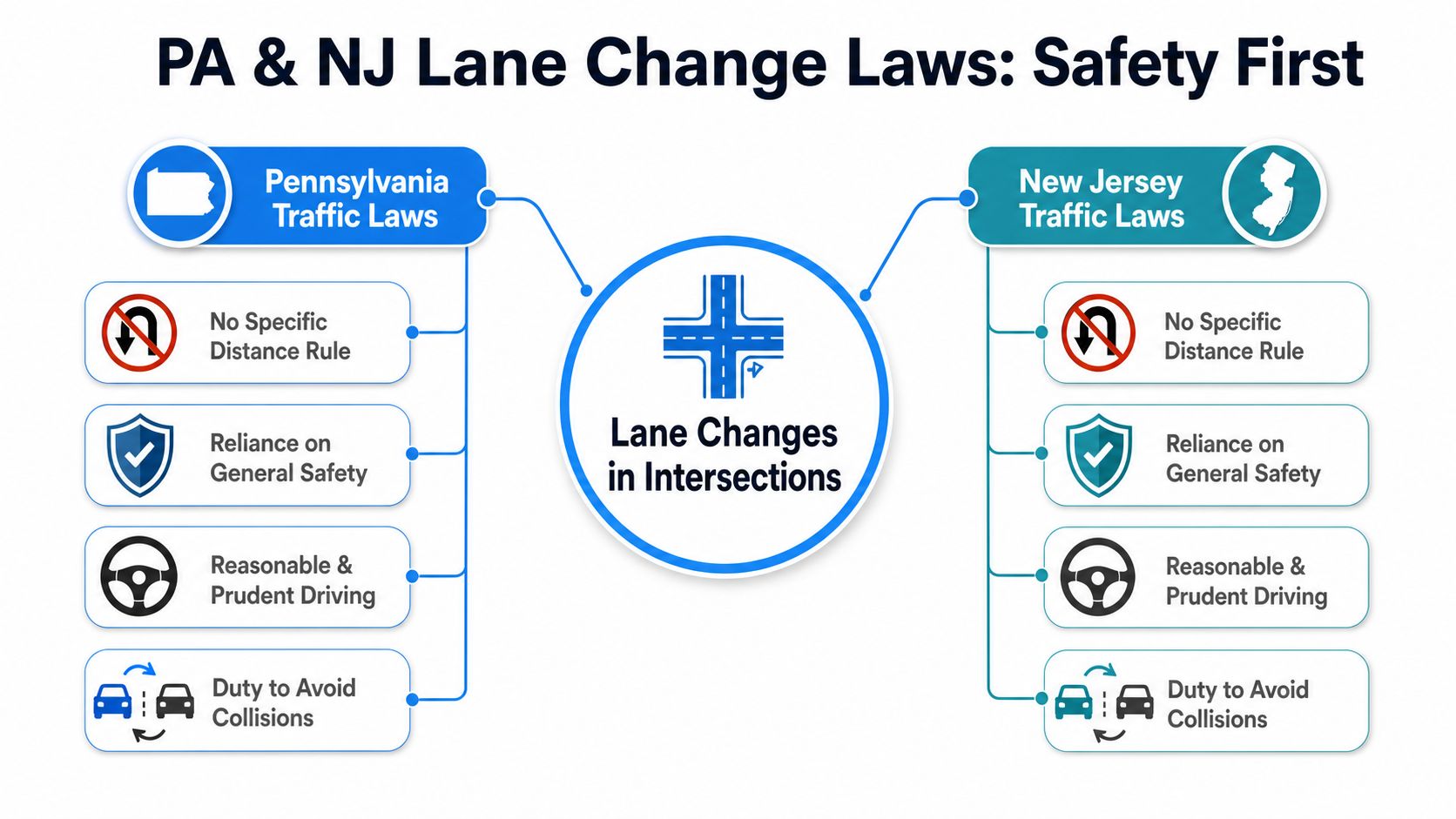
Pennsylvania and New Jersey rely on general safety rules, not a special distance-based prohibition like some other states use. That means the legal question is usually whether the driver made a lane change that was reasonable, prudent, and safe under the circumstances.
What officers and insurers look for
Officers often make a quick judgment based on whether the move interfered with other vehicles, crossed markings that shouldn’t be crossed, or happened when the driver should have been committed to the lane already. Insurance adjusters make the same practical inquiry, because they’re trying to decide whether the insured driver acted with enough care to avoid liability.
That’s why a lane change in an intersection can be cited even when there’s no explicit “you may never switch lanes here” rule. The driver may still be accused of making an unsafe movement, failing to signal in time, or failing to maintain a proper lane position.
For readers who want a broader overview of lane discipline rules, the Melbourne traffic law guide is a useful comparison point because it shows how different jurisdictions organize road-safety obligations around the same basic idea, keep the movement predictable.
Why the reasonable driver standard matters
In both states, the core legal question is whether a cautious driver would have made the move in that moment. That standard gives police and insurers room to evaluate the whole scene, not just the painted lines on the road.
The result is that two drivers can behave almost identically and still face different outcomes depending on traffic density, signal timing, and whether another car had the right of way. The case often becomes a contest over what was visible, what was avoidable, and whether the move happened too late to be safe.
If you’re comparing Pennsylvania lane rules with New Jersey’s approach, an additional local resource like this New Jersey left lane law guide can help frame how lane position affects a case even before an intersection crash happens.
How Different States Handle Intersection Lane Changes
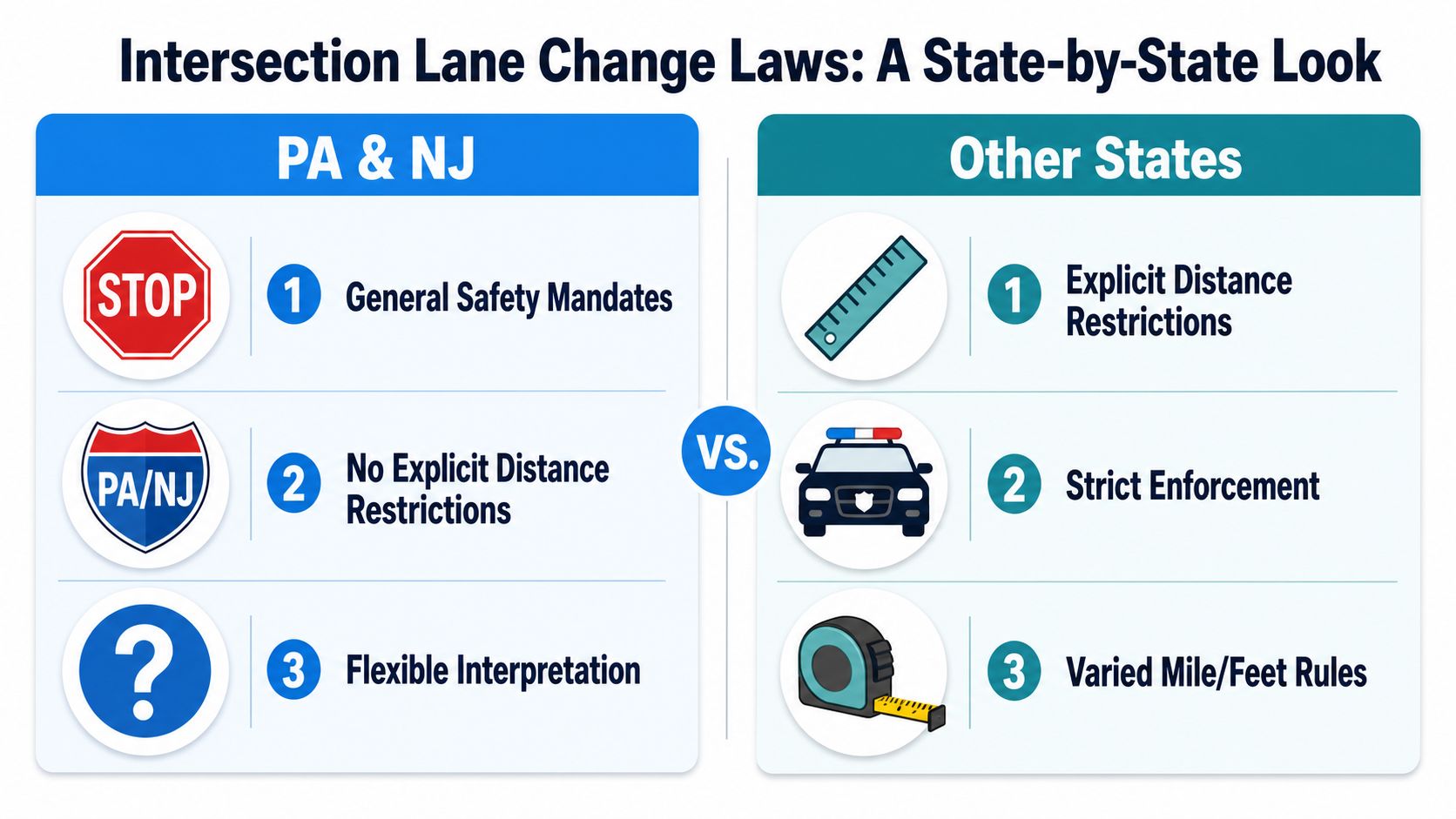
The country is not uniform on this question, and that patchwork explains why one driver can be ticketed in one state and not another for nearly the same move. Some jurisdictions spell out distance limits. Others lean on broad safety language and leave more room for officer judgment.
Explicit bans versus safety-based rules
California is a clear example of a state with a more specific restriction. Its Vehicle Code 21752 makes it illegal to go into another lane within 100 feet of, or while going through, a crossroads, while Vehicle Code 22107 still requires a lane change to be made safely and with signaling. Washington state guidance says lane changes may be made in intersections if they can be accomplished safely, and British Columbia similarly allows them when safe but forbids unsafe changes and crossing solid lines. Those examples come from a single legal pattern, some places write detailed distance rules, while others rely on broader safety standards and enforcement discretion. Sacbee report on California, Washington, and British Columbia lane-change rules
That contrast matters in real claims because it changes how quickly fault gets attached to a driver. In a state with a clear distance rule, the argument can become simpler for the defense. In a safety-rule state, the evidence battle gets more fact-intensive.
Why local counsel still matters
A crash involving an out-of-state driver can get messy fast. One driver may think the maneuver was acceptable because it would be tolerated where they live, while the investigating officer applies the rules of the state where the collision happened.
Bottom line: the same lane change can be treated as routine, questionable, or plainly unlawful depending on the local rule set.
That’s why intersection cases are rarely solved by a broad internet answer. The road markings, the state code, and the timing of the move all shape the liability analysis, and the local legal standard controls which facts matter most.
Liability and Insurance Implications After a Crash
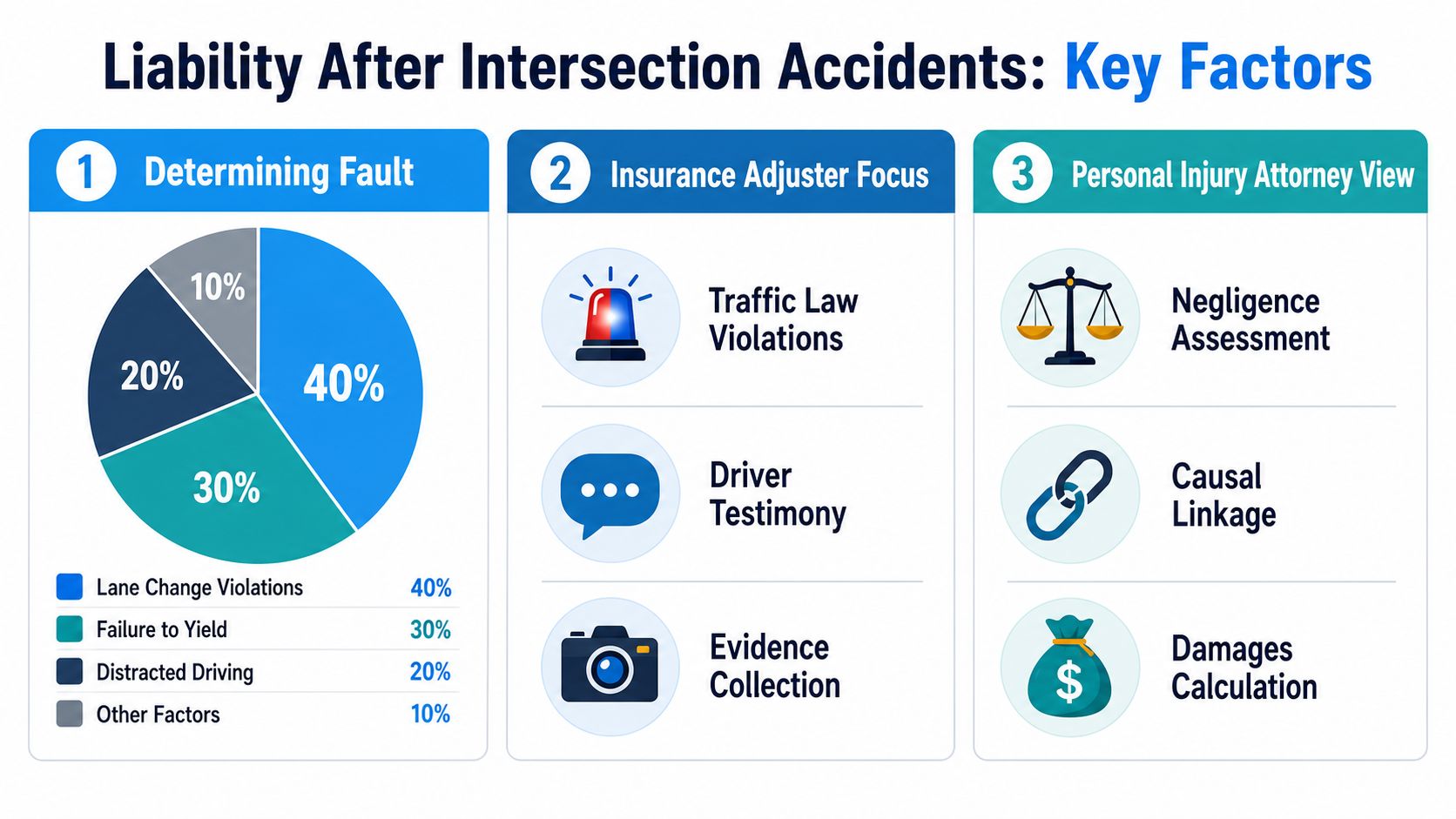
Intersection lane changes are a favorite issue for insurers because they create a clean narrative. The defense can argue the moving driver created the hazard, even if the other vehicle also did something careless. That doesn’t mean the defense is right, but it does mean the lane change can become the center of the case fast.
Why fault arguments get sharper in intersection crashes
A University of Pittsburgh handout reports that reckless lane changes account for 9% of all accidents in the United States, injure almost 35,000 people per year, and kill close to 6,000 people per year. British Columbia road-safety guidance adds that more than 50% of collisions in the province occur in intersections. University of Pittsburgh handout
Those numbers explain why adjusters and defense lawyers treat intersection lane changes as high-risk conduct. In practical terms, the lane change can be framed as evidence of poor judgment, and that framing can affect settlement talks long before a jury ever hears the case.
Practical rule: if your lane change happened inside a busy intersection, expect the other side to focus on signaling, blind spots, and whether you cut across another driver’s path.
The impact on Pennsylvania and New Jersey claims
Pennsylvania and New Jersey both use fault-based systems, so the question isn’t just who got hit. It’s who created the dangerous condition and whether each driver shares some responsibility. A lane change in the intersection often becomes a key issue in that allocation analysis.
That matters because partial fault can reduce what a person recovers, and it can also give the defense an advantage to argue the injured driver made the collision worse. If the lane-change driver is blamed, even partly, the insurance company may use that to discount medical bills, wage loss, and other damages.
The same issue comes up in property-related losses, too. If your car is out of commission after a lane-change collision, the cost of being without it can become part of the dispute. A useful overview of that problem is the Leverage Auto Appraisals loss of use resource, because it shows how replacement and rental issues can become part of the claim picture.
For a more detailed liability framework in New Jersey and Pennsylvania, this intersection fault guide is helpful because these crashes often turn on disputed lane position, not just vehicle damage.
Protecting Your Rights After an Intersection Accident
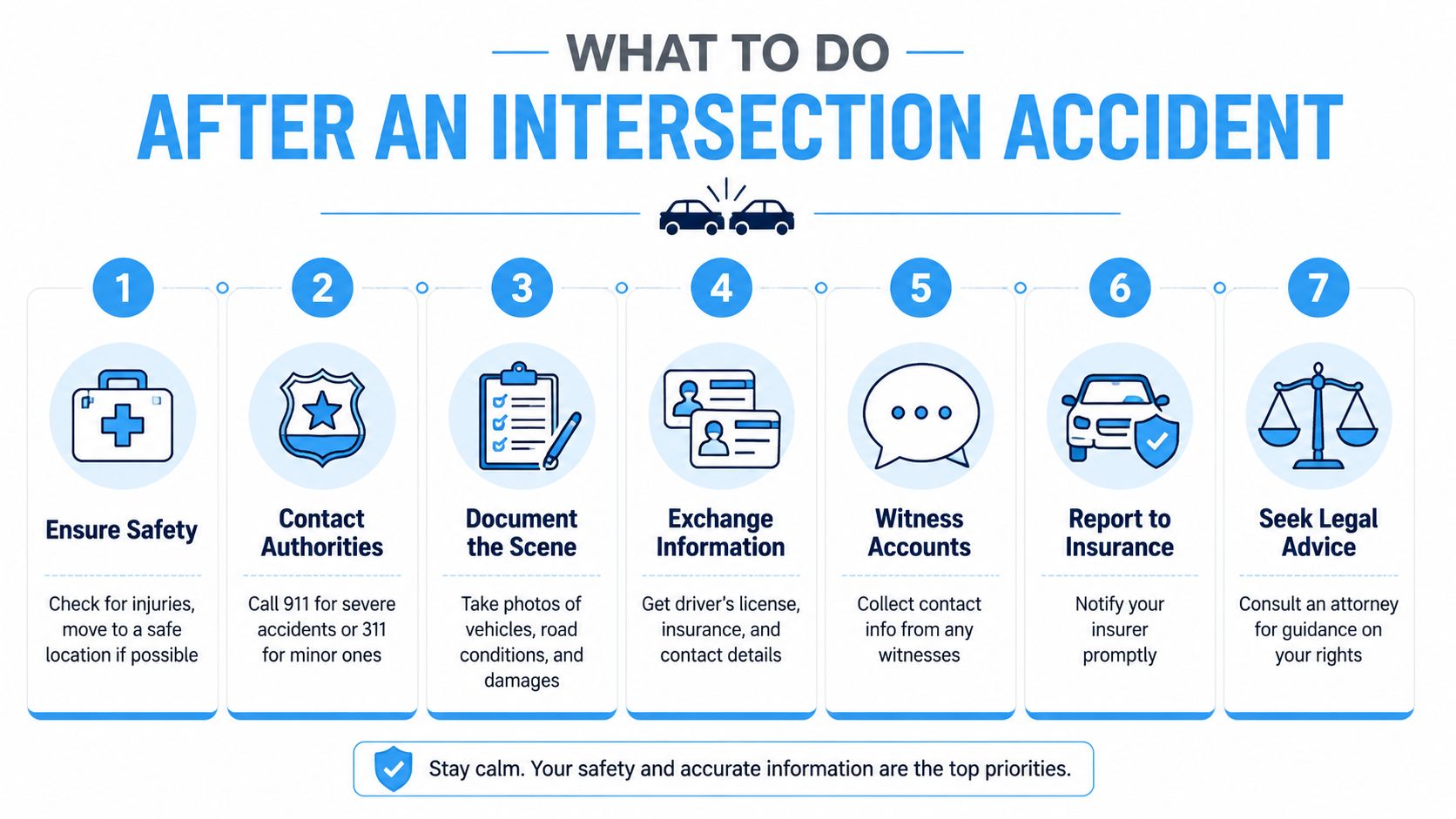
The first minutes after a crash matter because they preserve the evidence that decides fault later. If the lane change happened in an intersection, the exact positions of the cars, the signal phase, and the lane markings can all become central evidence.
What to do at the scene
Start with safety, then work methodically. Get medical attention for anyone who’s hurt, call the police, and avoid moving vehicles unless you have to clear a danger or obey instructions from emergency responders.
After that, document the road exactly as it looked. Take photos of the intersection, lane lines, traffic signals, skid marks, vehicle positions, and any sign that shows the lane setup or turn restrictions. Witnesses matter too, because neutral observers can confirm whether a driver changed lanes abruptly or cut across traffic.
Here’s the evidence that tends to matter most:
- Vehicle position: Photograph where each car ended up before anything is moved, because placement can show who entered the lane first.
- Signal status: Note whether the light was green, yellow, or red, since that affects right-of-way arguments.
- Witness details: Get names and contact information from anyone who saw the lane change or the impact.
- Video sources: Look for dashcams, nearby business cameras, or traffic cameras that may have captured the move.
What not to say to the insurer
Give your insurer the facts, but don’t casually admit fault just because you changed lanes. Saying “I probably shouldn’t have been there” can be used against you later, even if the actual legal issue is whether the other driver was speeding, distracted, or following too closely.
If you’re not sure how to describe the collision, stick to observable facts. Tell the insurer where the cars were, what lane you occupied, whether you signaled, and what you saw before impact. Leave the legal conclusions for the claims process or your lawyer.
A short, careful statement is better than a rushed guess that turns into a liability admission.
When to Consult a Personal Injury Attorney
You should talk to a personal injury lawyer when the crash involves disputed lane position, multiple vehicles, or an insurer that keeps returning to the same allegation, that the intersection lane change caused everything. Those cases need more than a basic claim review because the evidence usually lives in photos, witness accounts, video, and crash reconstruction.
Signs the case is moving beyond a simple claim
A lawyer becomes especially important when the police report conflicts with your account, when the other driver changes stories, or when the insurer says the lane change makes you partly responsible. That’s where legal and factual work starts to overlap, and where an experienced advocate can pressure-test the assumptions being made about fault.
For a helpful overview of when representation makes sense, the when to hire a personal injury lawyer guide is a good starting point because these cases often involve injuries, vehicle damage, and long-term losses that aren’t obvious at the scene.
Why these cases need focused investigation
Intersection lane-change crashes are rarely clean. A driver may have signaled, another driver may have sped up, a vehicle may have been hidden in a blind spot, or the signal phase may have changed before the impact. Each of those facts can shift liability in a meaningful way.
That’s also why reconstruction evidence can be so valuable. A careful lawyer can work through lane geometry, impact points, witness statements, and video to test whether the lane change was unsafe or whether the other driver’s conduct mattered just as much.
If your injuries are significant, don’t wait for the insurer to define the story first. The earlier the evidence is preserved, the easier it is to push back when a lane-change allegation starts driving the claim.
If you were hurt in a lane-change crash at an intersection in Pennsylvania or New Jersey, reach out to Mattiacci Law for a focused review of your case. The firm handles serious injury claims with the investigation, insurance pressure, and trial preparation these disputes demand, and it can help you protect fault, medical, and damage evidence before the record goes stale.