


Author: John Mattiacci | Owner Mattiacci Law
Published March 17, 2026

After a car accident, one of the first and most critical questions people have is simple: How long do I have to file a lawsuit? It's a fair question, and the answer isn't just a suggestion—it's a hard deadline.
Your Deadline to Sue After an Auto Accident
In both Pennsylvania and New Jersey, you generally have two years from the date of the car crash to file a lawsuit. This isn't a guideline the court might bend for you; it's a strict legal deadline known as the statute of limitations.
Think of it like a countdown clock that starts the second the accident happens. The legal system puts these deadlines in place to make sure claims are handled while evidence is still available and memories are fresh. If you miss that two-year window, the courthouse doors will almost certainly be locked for your claim, no matter how strong your case might be.

Why This Time Limit Is So Important
Getting a handle on this deadline is absolutely crucial if you're hoping to get compensation for your injuries. While the time limit to sue after a crash varies from state to state, most fall somewhere in the two- to three-year range.
What trips people up is that the clock starts ticking from the date of the accident itself. It doesn't start when you file an insurance claim or even when you realize how serious your injuries are. Waiting until the last minute puts everything at risk.
Prompt action isn’t just a good idea—it’s essential for protecting your rights. Hesitating can seriously sabotage your chances of recovering money for medical bills, lost pay, and your pain and suffering.
Standard Deadlines in PA and NJ
The good news, if you can call it that, is that Pennsylvania and New Jersey follow the same general rule for personal injury claims from auto accidents. But that consistency shouldn't make you complacent. You can dive deeper into the specifics in our guide on the Pennsylvania car accident statute of limitations and how different factors can affect your deadline.
Here’s a quick-reference table that lays out the basic time limits you need to know.
Standard Auto Accident Statute of Limitations in PA & NJ
| State | Statute of Limitations for Personal Injury |
|---|---|
| Pennsylvania | 2 Years from the Date of the Accident |
| New Jersey | 2 Years from the Date of the Accident |
While this table shows the general rule, don't forget that exceptions exist. Some situations can shorten your deadline, while others might give you more time. We'll get into those specific scenarios later, but the main takeaway is this: your right to sue doesn't last forever, and that clock is always running.
Why This Legal Clock Exists
You might be wondering why these legal deadlines, or statutes of limitations, even exist. They can feel like an unfair hurdle, especially when you're focused on recovering from an injury. But they’re in place for a really important reason: fairness.
Without a firm deadline, someone could live their entire life with the threat of a lawsuit hanging over their head. Imagine getting sued for a minor fender-bender that happened 20 years ago. That just wouldn't be right. These legal clocks ensure that disputes get handled in a timely way, giving everyone—you and the person you're suing—a chance to find a resolution and move on.
Time Is the Enemy of Evidence
But there's a more practical reason this clock matters for your case: time is the enemy of evidence. The longer you wait to file a claim, the harder it becomes to prove what happened. A strong auto accident case is built on fresh, solid proof, and that proof starts to disappear almost immediately.
Think about how quickly the key details of a crash can vanish:
- Witness Memories Fade: The person who saw everything happen might forget crucial details just a few months down the road. Their story becomes less clear and less convincing over time.
- Physical Evidence Disappears: Skid marks wash away with the next rainstorm. Debris from the crash is swept up. The cars involved get repaired, or worse, sent to a junkyard and crushed.
- Video Footage Gets Erased: This is a big one. Many security cameras at businesses or on traffic poles automatically overwrite their footage, sometimes in as little as 30 days. That video could be the one piece of evidence that proves the other driver was 100% at fault.
By setting a deadline, the legal system forces everyone to act while the evidence is still fresh and memories are still clear. A fast investigation is the best way to build a powerful case and lock down the details that will win it.
This is exactly why knowing how long after an auto accident you can sue is so critical. If you wait until the last minute, you’re basically handing the other side an advantage. Your ability to prove your case shrinks every single day you wait.
Getting that evidence locked down early gives your lawyer the tools they need to fight for the money you deserve. The clock isn't just some legal formality—it's a practical reality that directly impacts the strength of your case and your odds of winning.
Exceptions That Can Change Your Filing Deadline
So, you know about the two-year deadline in Pennsylvania and New Jersey. But what if your situation isn't that simple? The law isn't a rigid, one-size-fits-all machine. It has built-in flexibility for situations where applying a hard deadline just wouldn't be fair.
Think of these exceptions as legal detours. They can pause or sometimes even reset the clock on your filing deadline, but only under very specific circumstances. Let's walk through the most common ones you might encounter.
The Discovery Rule in Action
One of the biggest exceptions is the Discovery Rule. This comes into play when an injury isn't obvious right after the crash. After all, how can you be expected to file a lawsuit for an injury you don't even know you have?
Here’s a real-world example: You get into what seems like a minor rear-end collision. You walk away feeling a little sore, maybe some back stiffness, but you figure it'll go away. Months later, the pain gets worse. A doctor finally orders an MRI and finds a serious disc herniation in your spine that was directly caused by the accident.
In a case like this, the Discovery Rule could apply. The two-year clock wouldn't start on the date of the crash. Instead, it would likely start on the date your serious injury was discovered—or reasonably should have been discovered. This prevents you from being unfairly penalized for an injury with a delayed onset.
This is all about fairness. Legal deadlines exist to keep the system moving and ensure evidence doesn't go stale, but exceptions are there to protect people in unique situations.
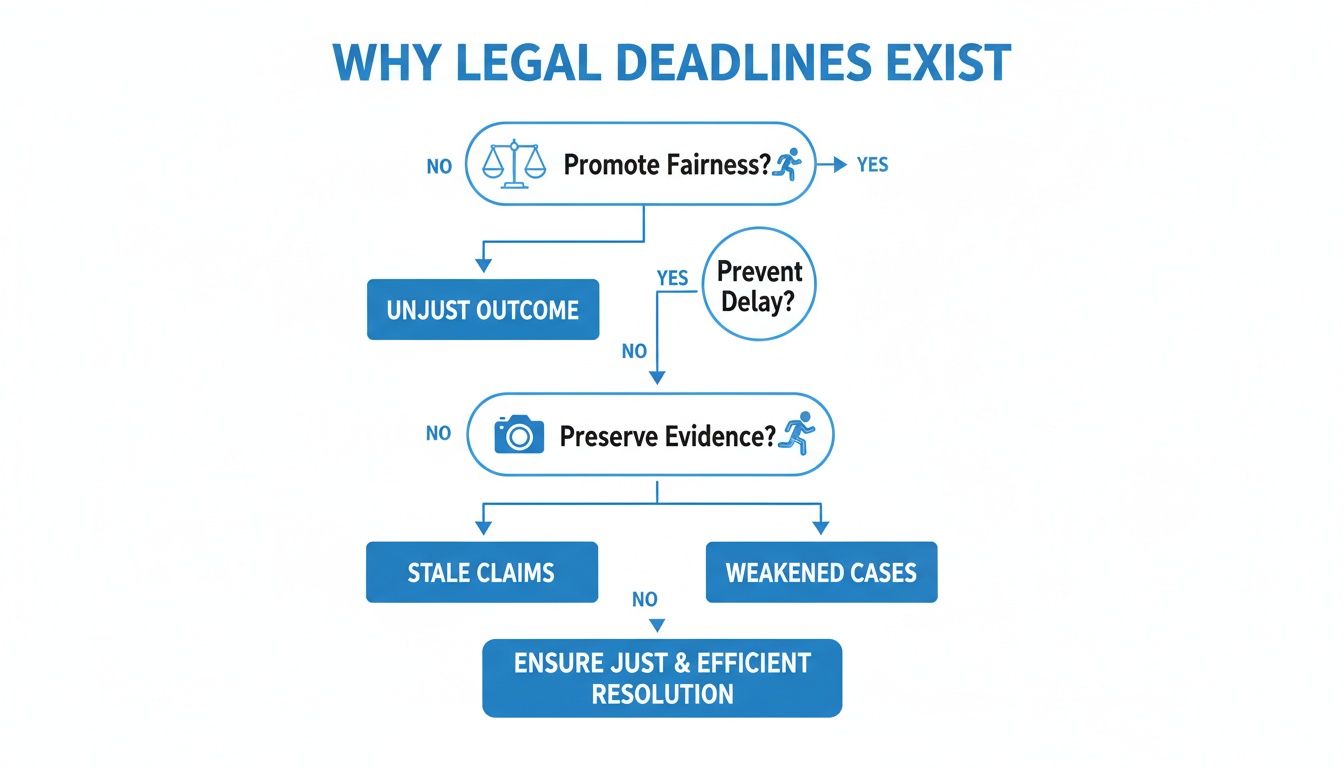
As you can see, the legal system tries to balance encouraging timely action with the need for a just outcome, which is where these exceptions become so important.
What Is Tolling the Statute of Limitations?
Another key concept you’ll hear is tolling. This is just a legal term for "pausing" the deadline. The clock literally stops ticking for a certain period and only starts up again once a specific condition is met.
A few common situations where tolling comes into play include:
- The Victim Is a Minor: When a child is injured in a crash, the deadline is paused. In both Pennsylvania and New Jersey, a minor generally has until their 20th birthday to file a lawsuit, giving them time to reach adulthood before making legal decisions.
- The At-Fault Party Can't Be Found: What if the driver who hit you flees the state or goes into hiding to avoid getting served with a lawsuit? In this scenario, the clock can be tolled until they are located and can be properly served.
Don't expect an insurance adjuster to explain any of this to you. They have no incentive to tell you if the Discovery Rule or tolling might apply to your claim. Only an experienced attorney can analyze the unique facts of your case and determine your true legal deadline.
Understanding these timelines is critical. While the vast majority of cases—around 95-97%—settle out of court, you have to be prepared for the possibility of a lawsuit to get a fair offer. For cases that do go to trial, the process can take an average of 18-24 months from the day the lawsuit is filed. You can dig deeper into these numbers by exploring recent personal injury statistics on CasePeer.com.
Ultimately, figuring out how long after an auto accident you can sue isn't something you should leave to guesswork. It's a complex determination best made with skilled legal guidance.
Special Deadlines for Suing the Government
When the other vehicle in your accident is a city bus, a police car, or some other government-owned truck, the normal two-year clock doesn’t apply. In fact, you can throw it right out the window. Suing a government entity is a totally different animal, with its own playbook and a much, much faster timeline.

Before you can even think about filing a lawsuit, you have to complete a critical first step: giving the government a formal heads-up. It's called a Notice of Claim, and it’s an absolute requirement. No notice, no lawsuit. It's that simple.
The Notice of Claim Requirement
The deadlines for this notice are shockingly short. You don’t get two years. You get a matter of months, and if you miss the window, your right to get compensation is almost certainly gone for good.
Here’s how fast you have to act:
- In New Jersey: You must file a formal Notice of Claim within just 90 days of the accident.
- In Pennsylvania: You have a little more breathing room, but not much. You have six months to provide written notice.
This isn’t just about sending a letter. The notice has to be filed correctly and delivered to the exact right government agency. A small mistake here can sink your entire case before it ever gets off the ground.
This is hands-down one of the most dangerous traps in the personal injury process. So many people assume they have two years, only to discover a few months after the crash that they’ve already lost their right to sue.
Navigating a Procedural Minefield
Let's be blunt: the rules for suing the government are complex on purpose. They're designed to shield public agencies from lawsuits, which means you’re walking through a procedural minefield where one wrong step can blow up your claim. There is practically zero room for error.
This is exactly why you can't afford to wait. If you were hit by any kind of government vehicle, the question of how long after the auto accident you can sue is an urgent one—a matter of weeks or months, not years. You can learn more about these strict requirements by reading about the unique challenges of government injury claims and special deadlines in Pennsylvania.
With these tight deadlines and complicated rules, calling an attorney right away isn't just a good idea—it’s critical. An experienced lawyer can identify the correct government body, make sure your Notice of Claim is filed perfectly and on time, and protect your right to hold them accountable.
How Wrongful Death Claim Timelines Work
When a car accident turns tragic and results in a fatality, the legal process shifts onto its own, separate track. For grieving families, the question of how long you have to sue becomes even more urgent and carries a different set of rules.
Like a standard injury claim, the statute of limitations for a wrongful death lawsuit is two years in both Pennsylvania and New Jersey. But there’s a critical difference in how that legal clock works.
When the Wrongful Death Clock Starts
The two-year countdown doesn't start on the date of the crash. Instead, it begins on the date of the person's death. This is a hugely important detail, especially since an accident victim might pass away days, weeks, or even months after the initial wreck.
Let's say an accident happens on May 1st, but the injured person sadly dies from their complications on May 30th. The two-year deadline for the family to file a wrongful death lawsuit starts on May 30th, not May 1st.
This rule exists for a reason. It ensures families have the full legal timeframe to act after their loved one has passed, recognizing that the very nature of the case changes from personal injury to wrongful death at that moment.
Who Has the Right to File a Claim?
Here’s another key difference: the lawsuit isn’t filed directly by a spouse, child, or parent. Instead, the claim has to be brought by the personal representative of the deceased person's estate.
This representative is typically named in a will or appointed by the court. They act on behalf of the surviving family members, fighting to get compensation for the profound losses they’ve suffered. The damages can include things like:
- Medical bills from before the person passed away
- Funeral and burial expenses
- Loss of the deceased's future earnings
- Loss of companionship, guidance, and support
Understanding these strict deadlines and procedures is vital for families dealing with an unimaginable loss. The evidence needed to legally connect the death back to the accident is everything. For some, understanding how private autopsies due to wrongful death cases can help prove this link might be a crucial step. Given the emotional weight and legal complexities, getting in touch with an attorney right away is the best way to make sure your family’s rights are protected.
Steps to Protect Your Right to Sue After a Crash
Knowing the legal deadlines is just one piece of the puzzle. The other, more important piece is what you do right now to protect your claim. Knowing you have two years to file a lawsuit is useless if you don't have the evidence to back it up when the time comes.
What you do in the hours and days after a crash can make or break your case. The clock is already ticking, and crucial evidence starts disappearing almost immediately.

Your Post-Accident Action Plan
Think of this as your immediate game plan. Every single step creates a piece of the foundation for a strong case and protects you from the insurance company's favorite tactics.
A solid case is built on clear, timely proof. Here’s what you need to do:
Seek Immediate Medical Attention: This is your top priority, no exceptions. Even if you feel okay, serious injuries like concussions or internal bleeding often have delayed symptoms. Going to an ER or urgent care creates an official medical record that links your injuries directly to the crash.
Get an Official Police Report: A police report is a powerful, objective account of what happened. It includes driver information, witness details, and often the officer's initial thoughts on who was at fault. It’s one of the first things an insurance company will ask for.
Gather Your Own Evidence: If you can, use your phone. Snap photos of everything—the damage to all cars, your injuries, skid marks on the road, traffic lights, and the general scene. If anyone saw what happened, get their name and phone number. Witnesses become incredibly valuable later on.
Avoid Recorded Statements: The other driver’s insurance adjuster will call, and they'll sound friendly. They'll ask for a "quick recorded statement" to "help process the claim." Politely say no. Their job is to find any reason to pay you less, and they are experts at twisting your words.
Waiting until the statute of limitations is about to expire is a catastrophic mistake. An experienced attorney needs time to investigate, gather records, hire experts, and build a powerful claim.
The single best thing you can do for your case is to call a personal injury lawyer right away. We can step in, handle all communications with the insurance companies, and start preserving the evidence you need to get the compensation you deserve.
Frequently Asked Questions About Car Accident Lawsuits
After a crash, your head is probably swimming with questions. It’s a confusing and stressful time, but getting clear, straight answers can make a huge difference. Here’s a breakdown of some of the most common concerns we hear from people trying to figure out their next steps.
Does Filing an Insurance Claim Pause the Deadline to Sue?
Absolutely not, and this is a trap that catches way too many people. Talking to an insurance adjuster and filing a lawsuit are two completely separate things. The two-year clock on your right to sue keeps ticking, no matter what.
You can be deep in negotiations, thinking you’re close to a fair deal, and still have the courthouse doors slam shut forever if that deadline passes. Never, ever assume that settlement talks with an insurance company protect your legal rights. They don’t.
What if I Was Partially at Fault for the Accident?
You can still recover money. Both Pennsylvania and New Jersey follow a “modified comparative negligence” rule. In simple terms, this means you can file a claim as long as your share of the blame is 50% or less.
Your final settlement or award is then reduced by whatever percentage of fault you’re assigned. This is exactly why having an attorney is so important—a huge part of our job is to fight to minimize your assigned fault, which puts more money back in your pocket. You can learn more by exploring the statute of limitations on personal injury in New Jersey and seeing how fault impacts these cases.
How Soon Should I Contact a Lawyer After an Accident?
As soon as you possibly can. Immediately, if possible. While you might technically have two years, waiting is one of the single biggest mistakes you can make after a crash.
The longer you wait, the harder it gets. Critical evidence like video footage gets deleted, witnesses' memories get fuzzy, and you could miss incredibly short deadlines for claims against government entities. Getting a lawyer involved early gives them the best shot at preserving proof, building a strong case, and protecting you from costly errors.
The aftermath of an accident is confusing, but you don't have to navigate it alone. If you have more questions about your rights or how long you have to file a lawsuit, reach out to us at Mattiacci Law. Schedule your free, no-pressure consultation today by visiting us at https://jminjurylawyer.com.