


Author: John Mattiacci | Owner Mattiacci Law
Published April 14, 2026

You left the crash feeling rattled but functional. By the next morning, your neck feels tight, turning your head hurts, and you're starting to wonder whether this is normal, whether you waited too long, and whether the insurance company is already building a reason to say no.
That situation is common in Philadelphia collision cases. A rear-end hit on I-95, a stoplight crash in Center City, or a low-speed impact in South Philly can leave very little visible damage to a car and still leave the person inside dealing with real neck pain. The problem is that the medical reality and the insurance response often move in opposite directions. Your body may not show the full injury immediately. The insurer may use that delay against you immediately.
Neck Pain After Car Accident in Philadelphia cases often turn on one issue more than people expect. Documentation. Not just that you hurt, but when the pain started, where it spread, what treatment you followed, and how your doctors connected it to the crash. In Pennsylvania, that timing matters medically and legally.
That Delayed Pain After a Fender Bender on I-95
A typical call starts like this. Someone was rear-ended in traffic, got out of the car, exchanged information, and thought they escaped with soreness at worst. Later that night, or more often the next day, the neck stiffens up. Driving becomes harder. Looking over one shoulder hurts. A headache starts at the base of the skull.
That delayed onset isn't a sign that you're exaggerating. It's one of the reasons neck injury claims get mishandled. People assume that if they walked away from the scene, they must be fine. Insurance adjusters love that assumption because it gives them room to argue that the crash wasn't serious enough to cause injury.
Philadelphia drivers deal with this after all kinds of collisions, but it's especially common after rear-end impacts and short-distance city crashes where there wasn't much time to react. You may have said “I'm okay” to the officer or the other driver because, at that moment, you believed it. That statement doesn't control the medical truth.
Practical rule: If pain appears after the accident, treat that as a continuation of the crash, not a separate issue.
If that's your situation, someone hit my car and my injuries showed up later walks through the late-symptom problem in plain terms.
What usually goes wrong
People make three mistakes early.
- They wait too long to get checked out. They hope rest will settle it.
- They talk too freely to the other insurer. A casual recorded statement can become a causation argument later.
- They stop treatment when symptoms fluctuate. Neck injuries often improve and flare, which insurers frame as inconsistency.
A short delay doesn't destroy a case by itself. But every undocumented gap gives the insurer another argument. In Philadelphia neck injury claims, that is where many fights begin.
Understanding the Science Behind Post-Accident Neck Pain
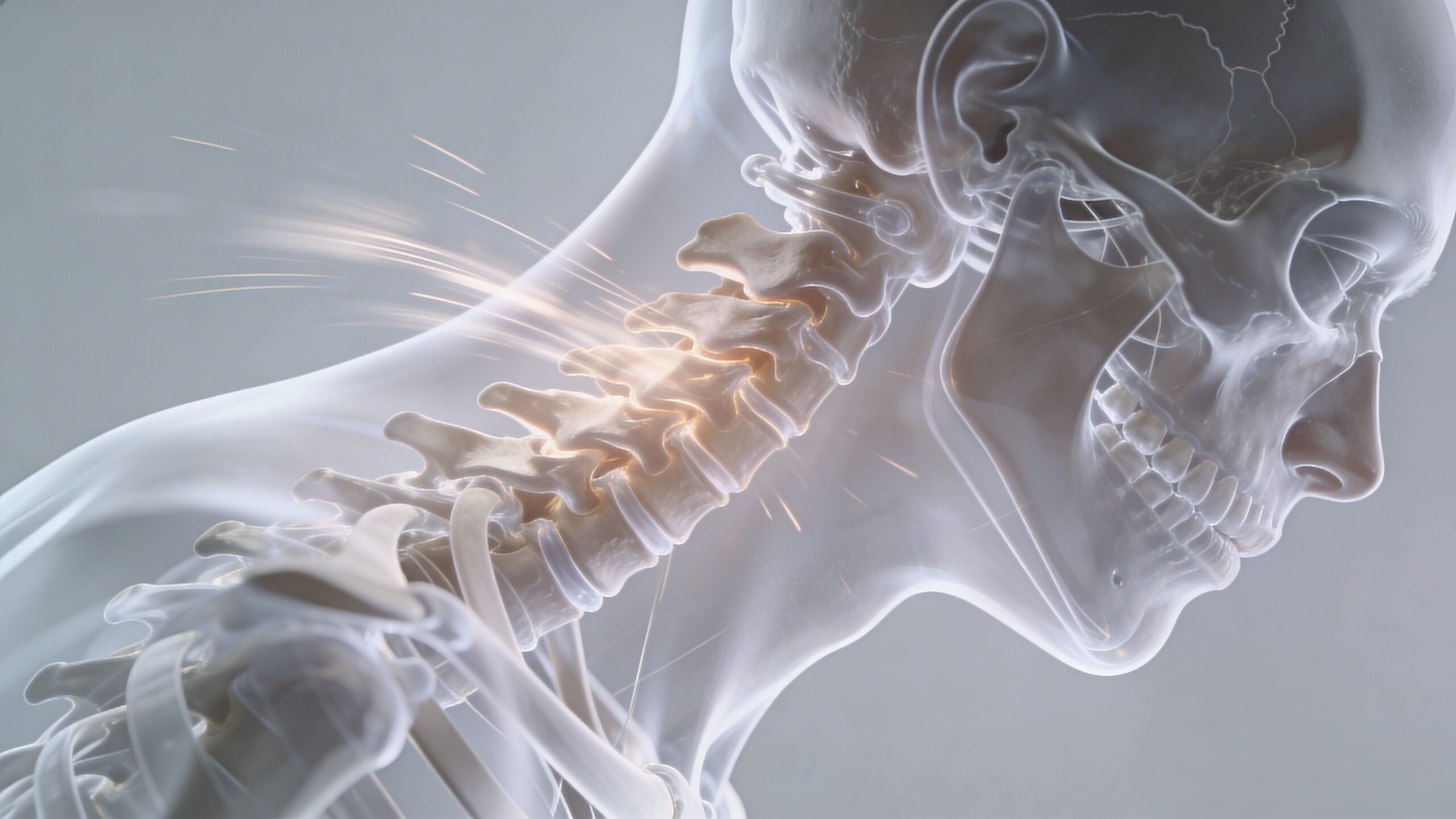
Most post-crash neck pain comes from whiplash, which is the rapid back-and-forth movement of the cervical spine during impact. The motion is fast. The injury can be less obvious. According to Hill Justice's discussion of whiplash claims in Philadelphia, biomechanical studies indicate peak strains can exceed physiological limits in rear-end impacts at velocities as low as 5-10 mph, and symptoms often appear 24-72 hours later because adrenaline can mask pain while inflammation develops.
Why low-speed crashes still hurt people
Your car and your body don't absorb force the same way. A bumper may show minor damage while the neck still gets thrown through a violent motion. Soft tissue injuries don't need crushed metal to be real.
Whiplash usually involves strain to muscles, ligaments, and other soft tissues in the cervical spine. The motion can also irritate joints and discs. That's why a person who initially feels “shaken up” can wake up with substantial pain.
Symptoms that fit a collision-related neck injury
Neck pain is only part of the picture. Watch for:
- Stiffness and reduced range of motion. Turning your head while driving may become difficult.
- Headaches at the base of the skull. These often track with cervical irritation.
- Shoulder or upper back pain. The force doesn't stop neatly at the neck.
- Arm tingling or radiating discomfort. That can point to nerve involvement.
- Dizziness or fatigue. These are common complaints after the initial shock wears off.
The delay itself often becomes part of the diagnosis. It does not make the injury less legitimate.
Why timing matters
Pain after a crash often follows inflammation, muscle spasm, and tissue irritation rather than instant sharp symptoms. That's why people make the mistake of treating the scene response as the final word. It isn't.
What matters is whether your medical record clearly ties the onset and progression of symptoms back to the collision. That is where science and law meet. A clean timeline helps your doctor treat you properly and helps your lawyer prove causation when the insurer tries to separate the pain from the crash.
Your First 48 Hours What to Do Immediately
The first two days set the tone for everything that follows. Pennsylvania sees over 125,000 motor vehicle accidents annually, Philadelphia County leads the state in personal injury crashes, and whiplash affects up to 80% of traffic accident victims, often in rear-end crashes even below 12 mph, according to MyPhillyLawyer's overview of head and neck pain after car accidents.
What to do first
Get medically evaluated
If you have severe pain, neurological symptoms, major headache, or concern about a serious injury, go to the ER. If symptoms are milder but clearly present, urgent care or your doctor may be appropriate. The point is to create a same-day or next-day record.
Report the crash
Make sure there's a police report or official record if one wasn't completed at the scene. Small inconsistencies become bigger later.
Photograph everything
Take pictures of vehicle damage, your position in the vehicle if relevant, roadway conditions, and any visible bruising or swelling that develops.
Preserve basic information
Keep the other driver's insurance information, names of witnesses, tow records, discharge papers, and every bill or appointment slip.
What not to do
A lot of damage in these cases comes from avoidable statements.
- Don't give a recorded statement to the other driver's insurer before you understand your injuries.
- Don't minimize your symptoms out of politeness.
- Don't accept quick money while you're still figuring out whether the injury will resolve or persist.
- Don't skip follow-up care because the pain temporarily eases.
Why lawyers focus so much on this window
The first 48 hours matter because they create the foundation of causation. If your chart says rear-end crash, neck pain, reduced motion, headache, and follow-up advised, the insurer has a harder time claiming the condition came from somewhere else.
A simple checklist helps:
| Item | Why it matters |
|---|---|
| Medical evaluation | Creates the first injury record |
| Crash report | Anchors the event in time and place |
| Photos | Helps counter “minor impact” arguments |
| Follow-up appointment | Shows symptoms continued |
| No recorded statement | Prevents early mischaracterizations |
If you're unsure whether your symptoms justify attention, the safer legal and medical answer is usually yes. Waiting rarely helps.
Navigating Medical Diagnosis and Treatment Plans
Once the initial evaluation is done, the next question is usually, “What kind of injury is this?” That answer often develops over time. Neck injuries can begin as a soft tissue diagnosis and later show a more specific pattern involving discs, nerves, or facet joints.

How the diagnostic process usually unfolds
Doctors often start with the basics. X-rays help rule out fracture or obvious structural instability. If symptoms persist, worsen, or suggest nerve involvement, imaging may expand. MRI is often where soft tissue, disc, and related findings become clearer. CT can be useful when bone detail matters.
The important legal point is this. A diagnosis doesn't need to be instant to be real. It needs to be medically developed and well documented.
If you're trying to stay functional while treatment unfolds, practical self-care matters too. This guide on how to take care of yourself after a spine or neck injury is a useful supplement to your physician's instructions for daily positioning, rest, and activity choices.
When persistent pain points to facet joints
Not all ongoing neck pain is just “whiplash” in the generic sense. According to PhillyLaw's discussion of neck injuries from car accidents, facet joint injuries account for 45-70% of persistent post-collision neck pain. That matters because the treatment pathway is different. Diagnostic medial branch blocks can temporarily relieve pain and identify the source. If the blocks confirm the problem, radiofrequency neurotomy may provide longer-term relief, with 70-80% efficacy at 12 months.
That sequence matters in a claim because it gives objective structure to a complaint insurers often dismiss as “just soreness.”
Treatment that helps versus treatment that hurts your case
What helps is usually straightforward:
- Consistent follow-up care
- Physical therapy when prescribed
- Clear reporting of symptoms without exaggeration
- Keeping copies of imaging, referrals, and work restrictions
What hurts is equally predictable:
- Stopping treatment because paperwork is annoying
- Doctor shopping for a preferred answer
- Ignoring activity restrictions
- Failing to mention new symptoms like numbness or headaches
A treatment plan is also a credibility plan. If you follow it, your medical record tells a coherent story.
Inflammation and soft tissue changes can evolve after the crash, and swelling after injury from accident in Philly is one example of how symptoms may progress in ways victims don't expect at the scene.
How Neck Injuries Affect Your Philadelphia Injury Claim
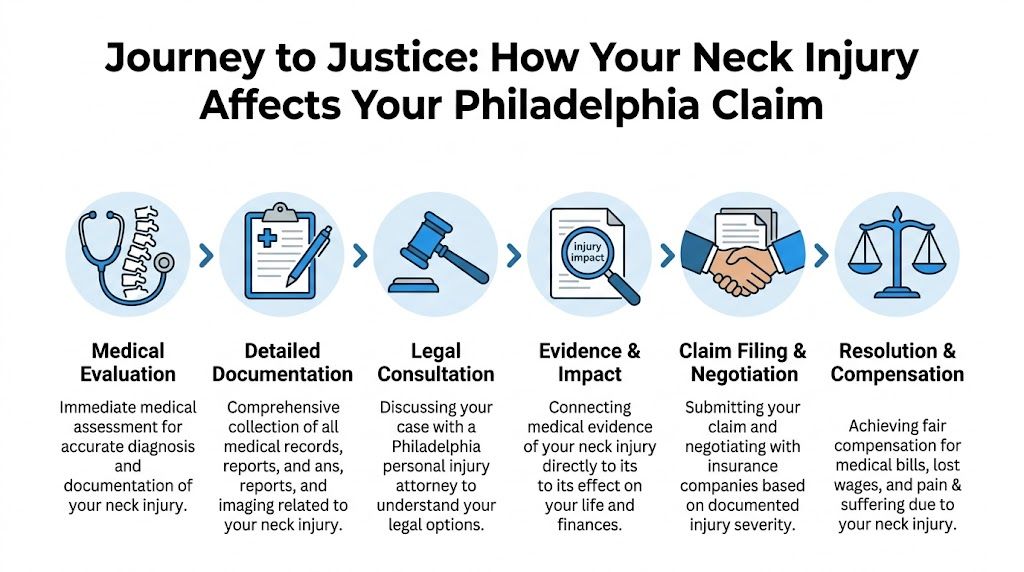
A neck injury claim is built at the overlap of medicine, insurance coverage, and proof. Pain alone matters, but pain that is documented, treated consistently, and tied to real functional limits carries much more weight in negotiations and litigation.
What gives a neck injury claim value
The settlement discussion usually turns on several categories of proof.
Medical records and imaging
These connect complaints to diagnoses, referrals, restrictions, and duration.
Treatment history
A steady course of care is more persuasive than sporadic visits with long gaps.
Work impact
Missed time, modified duty, and lost earning ability can all matter.
Daily life changes
Driving, sleeping, lifting, childcare, exercise, and concentration issues often shape pain-and-suffering arguments.
In Philadelphia, average settlement figures discussed by Lawsuit Information Center put a minor neck injury or whiplash case in the $6,000 to $22,000 range, while more serious neck injury claims involving herniated discs or long-term care can reach $90,000 or more, depending on severity, treatment, and lost wages. Those figures are context, not a promise. A strong file can outperform assumptions. A weak file can underperform a painful injury.
Limited tort and full tort in Pennsylvania
Many clients get blindsided by this. Pennsylvania uses a choice no-fault system. Your own policy election can affect whether you can recover for pain and suffering.
A simple breakdown helps:
| Coverage choice | What it usually means for a neck injury claim |
|---|---|
| Full tort | Broader ability to pursue pain and suffering claims against the at-fault driver |
| Limited tort | Restrictions may apply unless the case fits an exception |
People often focus only on who caused the crash. The insurance election matters too. A lawyer should review the declarations page early, not after treatment is already underway.
Evidence beats general complaints
Insurers respond better to specifics than labels. “My neck hurts” is a start. A much stronger presentation looks like this:
- ER or urgent care record shortly after the crash
- Follow-up visits documenting persistent limitation
- Imaging or specialist referral when symptoms continue
- Therapy notes showing restricted movement and pain triggers
- Wage loss or work modification records
- A clear negligence file showing how the crash happened
If you want a plain-English explanation of how that proof is assembled, how evidence is used to prove negligence in Pennsylvania is worth reading.
Many clients also ask how to feel better quickly while the claim is pending. That instinct is understandable. Just be careful not to let internet shortcuts replace medical care. A general pain-relief resource like how to cure neck pain fast can be useful for symptom-management ideas, but it should never override your treating doctor's instructions or the need for proper documentation.
Insurance Tactics Used to Deny Philadelphia Neck Injury Claims
Insurance companies usually don't deny neck claims by calling the claimant dishonest outright. They do it more carefully. They attack timing, mechanism, history, and consistency.

The arguments adjusters return to again and again
According to this discussion of rear-end crash injury delays in Pennsylvania, adjusters often use treatment delays to argue the neck injury wasn't caused by the crash, even though adrenaline can mask symptoms for 24-48 hours. That tactic can reduce settlements by 40-60% if immediate medical care and legal documentation are missing.
Those arguments usually take one of these forms:
“You didn't complain at the scene.”
That ignores delayed onset.“The property damage was minor.”
That confuses vehicle repair issues with body mechanics.“You had degeneration already.”
Pre-existing doesn't mean uninjured. Aggravation matters.“You stopped treatment, so you must be better.”
Sometimes people stop because of scheduling, cost, or bad advice. The insurer treats that as recovery.
What actually works against these tactics
The best response is rarely outrage. It's records.
A credible Philadelphia neck injury file usually includes a prompt exam, a clear symptom timeline, consistent follow-up, and doctor notes that connect the crash to the diagnosis. If there's a treatment gap, it should be explained. If there's prior neck history, the before-and-after change must be documented.
Don't assume the adjuster “understands what happened.” Make sure the file proves what happened.
One more practical point. Friendly adjusters often ask broad questions early because broad answers create room for later impeachment. Keep your communications narrow, factual, and preferably routed through counsel once the injury claim is underway.
How Mattiacci Law Fights for Your Full Compensation
The hardest part of a Philadelphia neck injury case usually isn't explaining that your neck hurts. It's proving the insurer's shortcuts are wrong.
That starts with building the case the right way. The crash report, vehicle photos, early medical records, therapy notes, specialist opinions, work loss documents, and symptom timeline all need to line up. If they don't, the insurance company will focus on the gap, not the injury.
Mattiacci Law handles that process as a Philadelphia personal injury firm serving clients in Pennsylvania and New Jersey. The firm's work includes investigating the collision, handling insurer communications, coordinating the supporting records needed to document causation and damages, and preparing cases for litigation when settlement discussions don't reflect the actual harm. In neck injury claims, that often means addressing delayed symptoms, rebutting low-impact arguments, and organizing medical proof in a way adjusters and juries can follow.
What good representation changes
A lawyer can't change the crash. A lawyer can change how the case is documented and presented.
That usually means:
- Controlling communications with insurers so the claim isn't undermined by casual statements
- Identifying missing evidence early before records disappear or witnesses become hard to locate
- Working with treating providers and experts when the medical picture is disputed
- Framing the case around function instead of letting the insurer reduce it to a soft-tissue label
Strong neck injury cases are built, not assumed.
If you're dealing with neck pain after a car accident in Philadelphia, the key question isn't whether the insurer sounds sympathetic on day one. It's whether your case file will still hold up when they begin challenging causation, severity, and value.
If you need answers about neck pain after a crash, Mattiacci Law offers free consultations for injury victims in Philadelphia and across Pennsylvania and New Jersey. You can get a direct assessment of your situation, your insurance issues, and the documentation steps that matter before the insurance company defines the claim for you.