

Author: John Mattiacci | Owner Mattiacci Law
Published June 29, 2026
No, a dog usually will not be put down automatically for biting someone. In many jurisdictions, euthanasia happens only after a formal legal or administrative process, and the outcome turns on state law, the seriousness of the injuries, the dog’s history, and how the owner responds after the incident.
If you’re reading this right after a bite, you’re probably dealing with panic on both sides. The injured person may be headed to urgent care. The owner may be terrified that one bad moment means the dog is gone forever. Both reactions are understandable.
I tell clients the same thing at the start. The question, if my dog bites someone will it be put down, doesn’t have a one-word answer in Pennsylvania or New Jersey. What matters most is the legal framework around the bite. That is where many people get misled. They hear about a “one-bite rule,” assume a first incident gets a pass, and then get blindsided when animal control, a municipal court, or a civil claim moves forward anyway.
Dog bites are common enough that authorities take every report seriously. Approximately 4.5 million dog bites occur annually in the United States, and nearly 1,000 people a day are treated in emergency departments for nonfatal dog bite injuries, according to California dog bite statistics compiled here. That doesn’t mean every biting dog is euthanized. It does mean every report can trigger a real process with real consequences.
The Answer Is Not a Simple Yes or No
A bite happens fast. A gate does not latch. A child reaches for the dog’s face. A delivery driver steps onto the porch. Two dogs start fighting, and a person gets hurt trying to separate them. Then the same question hits everyone at once. Is the dog going to be put down?
In Pennsylvania and New Jersey, the answer usually turns on the legal framework applied to the incident, not on panic, anger, or the fact that a bite happened at all. Euthanasia is possible in serious cases, but it is not the automatic result of a first report. I tell clients to separate two tracks right away. One track is public safety, meaning quarantine, investigation, and whether the dog may be labeled dangerous. The other is civil liability, meaning who pays for the injury.
That distinction matters because people often mix up strict liability with the so-called one-bite rule. They are not the same issue, and confusing them leads owners and bite victims to the wrong conclusion about euthanasia risk. In New Jersey, civil liability for dog bites is generally stricter. In Pennsylvania, the rules are more layered, and prior knowledge of dangerous behavior can matter more in some claims. But neither state gives a dog a free pass merely because this was the first known bite, and neither state requires euthanasia just because liability may exist. The legal category applied to the case often drives the outcome more than the bite itself.
What usually drives the outcome
Officials and courts tend to focus on a short list of facts early:
- Severity of the injury: A minor puncture is treated differently from a mauling, broken bones, or permanent scarring.
- The dog’s history: Prior bites, prior complaints, or prior restrictions raise the stakes quickly.
- How the incident happened: Provocation, trespassing, rough handling, or someone interrupting a dog fight can affect how the case is viewed.
- The owner’s response: Prompt reporting, vaccination records, secure confinement, and cooperation with authorities usually help. Evasion does not.
I also tell clients that the first few hours matter more than many people realize. Owners who panic sometimes start arguing, minimizing the injury, or trying to keep the dog out of sight. That usually makes the case worse.
Mistakes that create bigger problems
Some reactions create unnecessary risk for both the dog and the owner:
- Arguing with the injured person: That rarely helps and often creates witnesses against you.
- Hiding the dog or ignoring animal control: Officials interpret that as a public safety problem.
- Minimizing the injury: A wound that seems minor can become infected or leave lasting scars.
- Assuming a private apology ends the matter: Once a bite is reported, authorities may still investigate and impose restrictions.
If you are dealing with the fallout from a recent bite, the smartest first move is to follow a clear step-by-step process after a dog bite. That protects your health, preserves the facts, and reduces avoidable mistakes.
Owners often fear that reporting the bite will guarantee euthanasia. In many cases, it does not. Reporting usually starts a health and safety process first. The harder legal questions come after officials gather facts and decide which rules apply.
The Immediate Aftermath What Animal Control Does First
The first official step is usually not a court hearing. It’s a public health response.
When a bite is reported, animal control or the local health department will typically gather the basics. They want the dog’s identity, the owner’s contact information, vaccination status, where the bite happened, and whether medical care was needed. They also want to know where the dog is and whether it can be safely observed.

Quarantine is common and doesn’t mean the dog will be euthanized
In practice, many bite cases begin with a quarantine or observation period tied to rabies concerns. Owners often hear that word and assume the worst. They shouldn’t.
Quarantine is usually a public health step, not a punishment and not a death sentence. Depending on local rules and the facts of the incident, the dog may be observed at home, at a veterinary facility, or at another approved location. The owner is usually expected to keep the dog confined, prevent outside contact, and provide vaccination records promptly.
Who decides what happens next
One point causes a lot of confusion. The injured person doesn’t get to demand euthanasia as if it were part of a lawsuit settlement. The decision to euthanize a dog is made by local authorities such as the dog warden or health department, not the victim, and those authorities make an individualized assessment based on factors like aggression history and bite severity, as discussed in this explanation of who controls euthanasia decisions after a dog attack.
That means the owner should focus on cooperation, not confrontation.
A sensible first-day checklist looks like this:
- Secure the dog immediately: No more loose access, no casual walks, no contact with neighbors.
- Provide records fast: Rabies and other vaccination documents should be easy to produce.
- Report accurately: Stick to facts. Don’t guess, embellish, or rewrite events.
- Document the scene: Photos of gates, leashes, fencing, or the location can matter later.
- Get legal guidance early: The civil claim and the dangerous-dog process can overlap.
For injured people, the first steps are equally practical. Seek treatment, photograph the wound, identify the owner, and preserve anything that shows how the bite happened. This guide on what to do after a dog bite is a useful starting point.
Practical rule: Animal control cares about containment, medical risk, and public safety first. Legal blame gets sorted out after that.
Pennsylvania vs New Jersey Dog Bite Laws
The biggest legal misunderstanding I see is this: people think the same bite leads to the same legal result in every state. It doesn’t. The strict liability versus one-bite rule distinction changes both civil exposure and, indirectly, the pressure around dangerous-dog proceedings.
Approximately 36 states have adopted strict liability laws for dog bites, meaning owners can be responsible regardless of prior behavior, according to this dog bite law overview and statistics page. But states apply that concept differently, and Pennsylvania and New Jersey are not twins.
Why the one-bite rule confuses owners
The old shorthand says a dog gets “one free bite.” That’s not a safe way to think about either PA or NJ.
FindLaw notes that strict-liability states and one-bite states coexist, and many people misunderstand what a first bite means under their state’s law. It also points out a subtle but important point. In strict-liability jurisdictions, euthanasia risk doesn’t turn only on whether the dog has bitten before. Severity of injury and restraint failures can matter just as much. You can review that broader state-by-state framework in FindLaw’s dog bite laws by state.
Pennsylvania and New Jersey side by side
| Legal Aspect | Pennsylvania Law | New Jersey Law |
|---|---|---|
| Basic civil liability for a bite | Owner is generally responsible for medical expenses caused by the bite. Other damages often depend on proving negligence unless the dog has already been legally classified as dangerous. | Owner faces broader strict liability for dog bites, which usually means prior knowledge of aggression is not required for the victim to pursue damages for the bite. |
| Role of prior aggression | Prior incidents can raise the case from a standard bite claim to a more serious dangerous-dog issue and can strengthen claims beyond basic medical costs. | Prior history still matters for public safety decisions, but it is less important to the victim’s core bite claim than in Pennsylvania. |
| Impact of a first bite | A first bite does not make the owner immune from liability or from official investigation. | A first bite does not spare the owner from civil responsibility for the bite itself. |
| Dangerous dog consequences | A formal dangerous-dog process can lead to restrictions, compliance obligations, and in serious cases, stronger grounds for removal or euthanasia proceedings. | A formal dangerous-dog finding can also bring restrictions and can sharply raise the stakes if the dog injures someone again. |
What that means in real life
For owners, New Jersey usually creates less room to argue, “We had no warning, so we shouldn’t be responsible.” The civil claim is usually more straightforward there.
For victims, Pennsylvania can be more layered. Medical bills may be one issue. Pain and suffering, wage loss, and other damages may require a stronger negligence case unless the dog had already crossed into a dangerous category.
If you want a broader look at the legal environment across the river, this overview of personal injury laws and legal options in New Jersey helps place dog bite claims in context.
When a Dog Is Legally Labeled Dangerous
The moment a case changes from “bite incident” to “dangerous dog matter,” the risk level rises.
That label is not supposed to be casual. In many places, a dog is only subject to mandatory euthanasia after a formal process. Courts do not automatically order euthanasia for a single bite unless strict legal criteria are met, and many jurisdictions require the dog to be judicially declared vicious after a hearing where evidence is presented, as explained in this discussion of when a dog can be put down after a bite.

What authorities usually look for
In Pennsylvania and New Jersey, officials typically examine whether the attack was unprovoked, whether the injuries were severe, and whether the dog has a pattern of threatening or attacking people or animals. They may also review restraint issues, witness statements, prior complaints, and whether the owner ignored warning signs.
A dangerous-dog hearing is where those facts get tested. At these hearings, owners often realize too late that casual statements made to police, neighbors, or animal control have become evidence.
What owners should treat seriously
A dangerous-dog allegation isn’t the time for internet advice or neighborhood consensus.
- Show up prepared: Vaccination records, training history, vet records, fencing photos, and witness statements can matter.
- Address provocation carefully: If the dog was being handled roughly, cornered, or interfered with during feeding or injury, those facts should be documented clearly.
- Fix control problems immediately: Broken gate latches, inadequate fencing, or a history of the dog roaming will hurt your credibility if not corrected right away.
A first bite can still become a dangerous-dog case if the injuries are severe enough or the facts show a major public safety risk.
What victims should understand
From the victim side, a dangerous-dog proceeding isn’t the same as a personal injury claim. One deals with public safety and the dog’s legal status. The other deals with compensation for the person who was hurt. They may proceed on parallel tracks.
That difference matters because some victims hesitate to pursue a claim out of concern for the animal. A civil case doesn’t automatically decide the dog’s fate. The dangerous-dog process does that.
Key Factors That Influence the Final Decision
A dog is rarely judged on the bite alone. In Pennsylvania and New Jersey, the legal framework matters. The same injury can create very different consequences depending on whether officials are deciding public safety, a dangerous-dog designation, civil liability, or whether the facts suggest the dog can be safely managed.
How serious the incident was
Severity still carries real weight. A shallow wound treated the same day is not viewed the same way as deep punctures, facial injuries, crushing damage, multiple bites, or injuries that require surgery. Location matters too. A hand bite while separating fighting dogs is viewed differently than an unprovoked attack on a child’s face.
Medical risk matters even when the wound looks small at first. The Cleveland Clinic’s dog bite overview explains that dog bites can lead to infection, nerve damage, and other complications. That practical reality often affects how aggressively animal control, municipal prosecutors, and insurers respond.
Who was hurt, and under what circumstances
Officials pay closer attention when the victim was especially vulnerable. That includes small children, older adults, and people who could not retreat or defend themselves.
The setting matters just as much. A bite during rough handling, a veterinary emergency, or an attempt to break up a fight is analyzed differently from a dog charging across a yard or breaking confinement to attack a passerby. I tell clients to focus less on labels like “good dog” or “bad dog” and more on the exact sequence of events. Those details usually drive the outcome.
The owner’s conduct after the bite
Owners often underestimate this part.
A fast, responsible response helps. Delays, excuses, and sloppy containment hurt. If the dog is immediately secured, vaccination records are produced, the victim gets accurate information, and a real safety plan is put in place, that can help show the incident is being taken seriously. If the owner argues online, minimizes the injury, or leaves the same broken gate unfixed, that damages credibility.
Courts and hearing officers also look at whether the problem can be managed. That is why post-incident steps matter, including muzzle training, fencing repairs, controlled handling protocols, and an evaluation by a qualified behavior professional. A general discussion of that issue appears in this review of whether a biting dog will be put down.
Why PA and NJ owners get confused
A significant misunderstanding often arises. Owners hear that New Jersey has strict liability for dog bites and assume that means euthanasia is more likely. Victims hear about Pennsylvania’s version of a one-bite rule and assume a first bite is treated lightly. Neither shortcut is reliable.
Strict liability usually affects who pays for the injury. Dangerous-dog findings and euthanasia risk turn more on public safety facts, the severity of the event, prior behavior, and whether future control looks realistic. In other words, the bite statute and the dog’s fate are related, but they are not the same question.
That distinction also affects case value and insurance pressure. If you want a clearer sense of what compensation can look like, this breakdown of average dog bite injury settlement amounts explains the damages side. For owners worried about exposure above standard policy limits, it also helps to find umbrella policies with Duncan Insurance.
The final decision usually turns on one practical question. Can this dog be kept without creating an unreasonable risk to other people?
Navigating Civil Liability and Insurance Claims
A dog may stay alive and still trigger a serious injury claim. In my practice, that is one of the hardest parts for owners to accept. They are waiting to hear from animal control about quarantine, restrictions, or a dangerous-dog proceeding, while an insurance carrier is already opening a liability file.
That split matters in Pennsylvania and New Jersey because the civil rules are not the same, and those rules often confuse people about euthanasia risk. They should not. Strict liability and the so-called one-bite rule mainly affect who pays and what must be proven in court. They do not decide, by themselves, whether the dog will be destroyed. Public safety findings do that.
Liability and the dog’s fate are different questions
New Jersey generally makes the path to civil recovery more direct for a bite victim. Pennsylvania can be more layered, especially when the claim goes beyond medical bills and into broader damages. Those differences affect settlement pressure, insurer strategy, and the owner’s personal exposure if coverage is limited.
They do not automatically make euthanasia more or less likely.
I tell clients to separate these issues early. One file is about compensation. The other is about risk control and whether the dog can be kept without creating another incident. If you blend them together, you make bad decisions in both.
Where recovery usually comes from
Most dog bite claims are paid through homeowners’ or renters’ insurance. Sometimes there is no coverage. Sometimes the carrier reserves rights because of a dog exclusion, a business-use issue, late notice, or a dispute over where the bite happened. Some claims also outgrow the base policy limits, which is why owners with assets should understand excess coverage. If that applies to your household, review how to find umbrella policies with Duncan Insurance.
Victims usually seek payment for losses such as:
- Medical care: Emergency treatment, follow-up visits, medication, infection care, plastic surgery, or counseling.
- Lost income: Missed work, reduced hours, canceled contract work, or long-term earning loss in serious cases.
- Pain and life impact: Scarring, physical pain, emotional distress, and loss of normal use or enjoyment.
For a practical look at how lawyers and insurers value these cases, review this breakdown of average dog bite injury settlement amounts.
What each side should do early
If you own the dog, give prompt notice to the insurer and stick to the facts. Do not guess about breed exclusions, liability limits, or whether the company will defend you. Pull the policy. Ask direct questions. Save every letter or email from the carrier.
If you were bitten, build the damages file from day one. Keep treatment records, prescription receipts, photographs of the wound as it heals, and proof of missed work. Small gaps in documentation often become big arguments during settlement talks.
Recorded statements need care on both sides. Insurance adjusters do not decide whether the dog is dangerous; they decide how little they think they can pay on the injury claim.
Next Steps for Dog Owners and Bite Victims
The first good decision after a bite often shapes everything that follows.
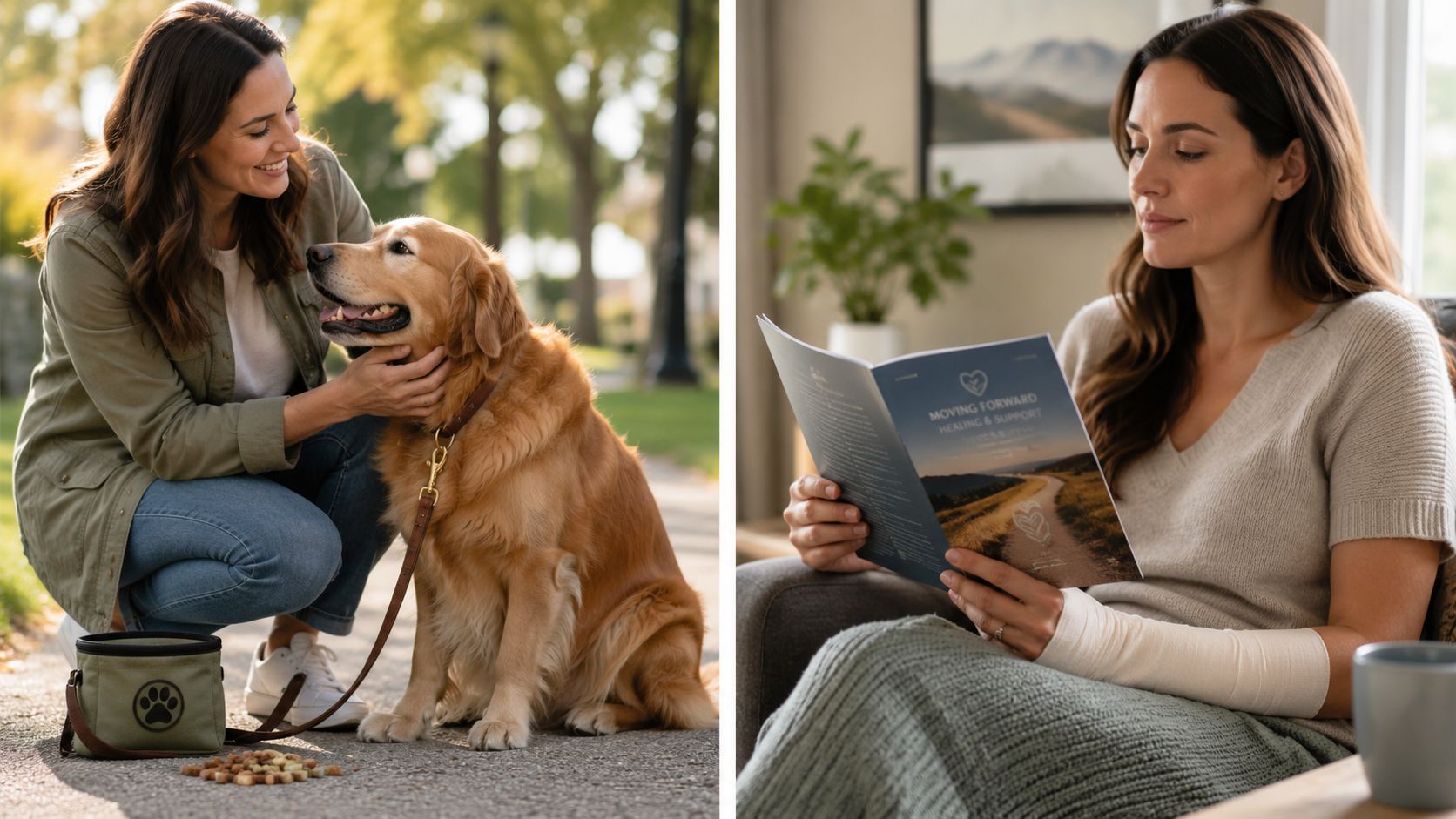
For the dog owner, the priority is control and credibility. Secure the dog. Gather vaccination and licensing records. Preserve photos of the yard, leash, crate, gate, and anything else that shows how the incident happened. If there was provocation, identify witnesses while memories are still fresh. Then take visible corrective action. That can include a veterinary check, a trainer or behaviorist consultation, and stronger containment.
For the bite victim, the priority is health and evidence. Get medical care right away, even if the wound seems manageable. Keep photographs from day one through healing. Get the owner’s name, address, and insurance information if possible. Report the bite so there is an official record. Then avoid casual settlement conversations before you understand the full medical picture.
A short checklist that helps
- Owners should act fast: Cooperation beats defensiveness.
- Victims should document everything: Photos, bills, discharge papers, and follow-up care all matter.
- Both sides should avoid assumptions: A first bite doesn’t automatically spare the dog, and a reported bite doesn’t automatically doom it.
- Get legal advice early: Dangerous-dog proceedings, insurance coverage issues, and injury claims can move faster than people expect.
If you’re asking, If My Dog Bites Someone Will It Be Put Down, the most honest answer for Pennsylvania and New Jersey is this: probably not automatically, but the risk becomes real when severe injury, prior aggression, poor restraint, or poor owner response enters the picture. The law around the bite matters as much as the bite itself.
If you or a family member is dealing with a dog bite case in Pennsylvania or New Jersey, Mattiacci Law can help you understand the legal process, protect your rights, and pursue the outcome the facts support. Whether you’re an injured victim seeking compensation or an owner facing a dangerous-dog issue tied to a civil claim, getting clear advice early can make a major difference.
Frequently Asked Questions
Will my dog be put down if it bites someone?
What is a dangerous dog?
What should I do if my dog bites someone?
Step 2: Exchange contact information and cooperate with animal control or law enforcement if contacted.
Step 3: Notify your homeowner's or renter's insurance company and consult an attorney if legal issues arise.