


Author: John Mattiacci | Owner Mattiacci Law
Published January 21, 2026

Car accidents are stressful enough all on their own, but nothing throws you off quite like the other driver straight-up refusing to hand over their insurance info.
It feels rude, confusing, and honestly a little suspicious.
Most people expect the usual exchange of details, a quick chat, maybe a shaky handshake, and that’s it. So when someone shuts down or gets defensive, it can leave you standing there thinking, “Uh… is this even allowed?”
Good news: you still have options.
In this post, we’ll show you what to do if the driver refused to give insurance details.
#1 Stay Calm And Safe
First thing, don’t panic. Seriously.
People act weird after accidents. Some get defensive, some get scared, some think avoiding responsibility will magically make the problem go away.
Their behavior has nothing to do with you. Your job right now is simply to stay safe and avoid escalating anything. Keep your distance if the other driver is acting irritated or aggressive.
You don’t need to argue with them to prove a point.
Just make sure you’re not standing in traffic, your vehicle isn’t blocking a dangerous spot, and everyone around you is ok.
Once you’re in a safer place mentally and physically, you can start thinking about the next steps.
Also Read: Excluded Driver In Accident But Not At Fault
#2 Gather Every Piece Of Information You Can
Even if they refuse to give insurance details, you can still collect a lot of helpful info. This part matters because your insurance company and the police can work with what you gather.
So get as much as you can without putting yourself at risk.
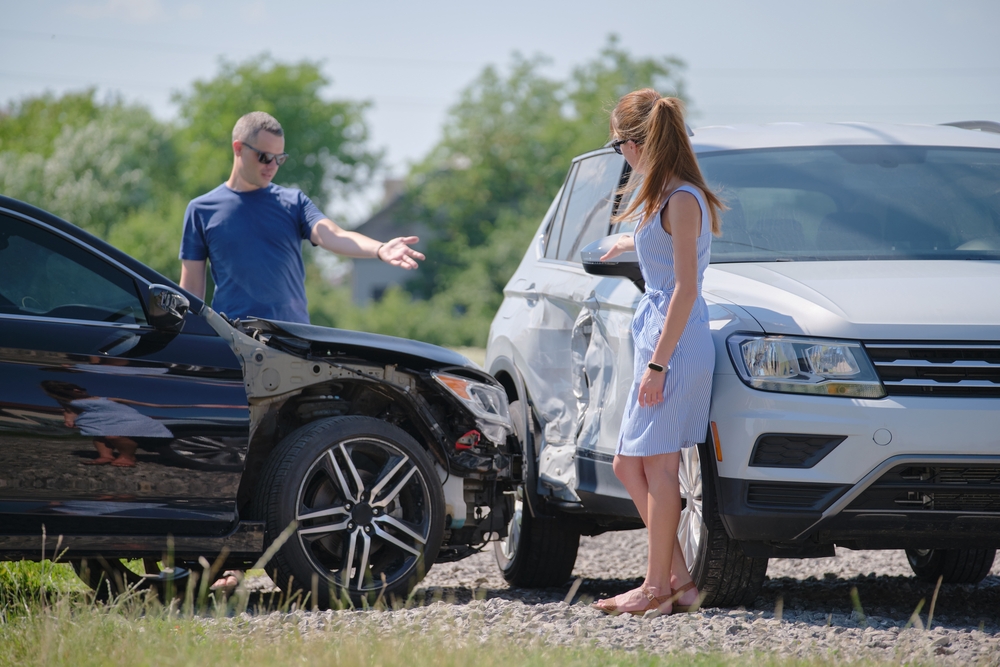
Here are the essentials:
- Photos of both vehicles, the damage, surroundings, skid marks, and the license plate
- The car’s make, model, and color
- Time, date, and exact location of the accident
- A picture of the driver if you feel safe doing it
If the driver gives you their name or phone number, great. If not, at least you still have their plate, and that alone can be extremely helpful.
Snapping a quick video of the scene can also help, especially if the driver is being uncooperative.
Don’t worry about sounding rude. You’re simply documenting what happened, and this is something you’re absolutely allowed to do.
#3 Call The Police Immediately
A lot of people hesitate to call the police because they don’t want the situation to escalate, but when someone refuses to give insurance info, that’s the point when you pick up the phone.
A police officer can step in and take control of the situation.
They’ll document everything, speak with both parties, and put together a report that becomes extremely helpful later. Plus, a driver refusing to share insurance details usually makes the responding officers take things more seriously.
Also Read: Police Did Not Take My Statement After Accident
Make sure to tell the dispatcher the essential details: location, the fact that it’s a vehicle accident, and that the other driver is refusing to cooperate.
When the officers arrive, they’ll gather the info you need for your claim, so you’re no longer stuck trying to do it on your own.
Even a simple official report goes a long way when it’s time to explain the situation.
#4 Notify Your Insurance Company
Once you’re safe and have the basics sorted out, call your insurance provider.
They deal with this scenario more often than you’d think.
Give them all the information you collected and let them know the driver refused to hand over insurance details. The more info you give them early on, the smoother things will be for you later.
They’ll guide you through next steps, like how to proceed with repairs, how your specific coverage works, and what options you have for getting compensation for the damage.
If you have uninsured motorist coverage, this is exactly the type of scenario it’s designed for.
Your insurer can also try to track down the other driver through the license plate if needed.
So even though the other driver tried to make things harder, the process doesn’t stop just because they refused to cooperate.

#5 Keep Thorough Documentation
This part is way more important than people realize.
Every little detail matters when someone is being difficult. Keep your photos, videos, timelines, notes, your claim number, the police report, repair estimates, and literally anything related to the accident in one place.
It makes everything easier because you won’t be scrambling for info later.
Having a clean record of what happened protects you from being blamed unfairly and helps your insurer move things along faster.
Plus, if anything ends up going to court or needing additional review, you already have everything organized.
Know Your Coverage Options
A lot of people panic when the other driver refuses to give insurance details because they assume it means they’re stuck paying the bill.
Not true. Your policy may already include protections for situations like this.
Uninsured motorist coverage can help pay for repairs and injuries when the other driver isn’t cooperating or can’t be identified. Collision coverage can also help take care of your repairs no matter who caused the accident.
Also Read: How To Reject An Insurance Settlement Offer
If you’re not sure what your policy includes, your insurance company can explain it clearly.
You might have more support than you realize.
Even basic policies often provide some level of help, so don’t assume you’re stuck just because the other driver didn’t act responsibly.
Is It Illegal To Refuse To Give Insurance Details?
In most places, yes, it is illegal.
Drivers are normally required to exchange info after an accident. Refusing to provide it can lead to fines, penalties, or additional charges depending on the situation.
That’s exactly why getting the police involved is important.
You don’t have to argue about the law with the other driver. Let the officers handle it. They’ll document the refusal in their report, which helps your case and puts the responsibility back where it belongs.
Can You Still File A Claim Without Their Insurance Information?
Yes. You can still file a claim even if the other driver gives you nothing.
Your insurer can use the license plate to track them down or just handle things under your own coverage.
It may feel complicated at the moment, but as long as you’ve collected solid details and contacted the police, you’re not stuck.
The process might take a bit longer, but you’re still fully able to move forward.
Bottom Line
A driver refusing to give insurance details is frustrating, stressful, and honestly just rude, but you still have plenty of power in the situation.
Stay calm, gather as much info as you can, get the police involved, and contact your insurer ASAP. Keep everything documented and let the professionals step in.
The police can get it from them, and if they can’t, your insurance company can track them down using the licence plate.
You don’t need to force the other driver to cooperate on your own. You just need to take the right steps, and the system will handle the rest.