


Author: John Mattiacci | Owner Mattiacci Law
Published February 4, 2026

Getting your car totaled is one of those moments that throws your whole day, week, and sometimes your budget into chaos.
One second you’re running errands or heading to work, the next you’re staring at a wrecked car wondering how everything went sideways so fast.
After the shock settles, a lot of people wonder if you can sue the person responsible.
That’s a fair question because cars cost money, accidents are stressful, and nobody wants to be stuck paying for damage they didn’t cause.
In this post, we’ll explain if you can sue someone who totaled your car.
What Does It Mean When A Car Is “Totaled”?
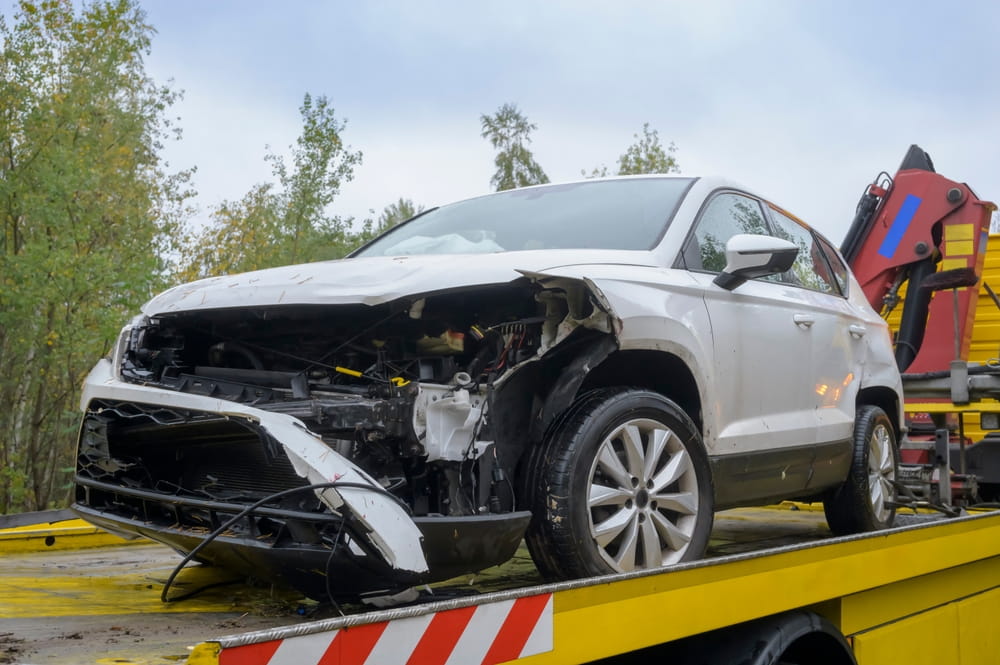
When people say a car is totaled, they don’t mean it exploded into a million pieces or can’t be driven at all.
In insurance terms, it just means the cost to fix the car is more than what the car is worth.
Insurance companies look at your car’s value right before the crash and compare that to the repair estimate. If repairs cross a certain percentage of that value, they call it a total loss.
This can feel super unfair, especially if your car still runs or only looks bad on the outside.
But your age of the car, mileage, condition, and market value all come into play. Once it’s labeled totaled, the insurer usually offers you a payout based on that value, not what you paid for it or how much you loved it.
Who Is Legally Responsible When A Car Is Totaled?
Responsibility comes down to fault. In most places, the driver who caused the crash is legally responsible for the damage. That could be someone who ran a red light, rear-ended you, was distracted, speeding, or just made a bad call.
Some states use a no-fault system, which means your own insurance handles certain costs first, no matter who caused the crash.
That doesn’t mean the other driver gets a free pass though.
Fault can still matter later, especially when property damage like a totaled car is involved.
There are also shared fault situations, where both drivers messed up a little. In those cases, responsibility is split by percentages, and that affects how much money you can recover.
It’s not always black and white, and insurance companies love to argue about this part.
Also Read: Hit And Run Parked Car No Witness
Can You Sue The Driver Who Totaled Your Car?
Yes, you can sue the driver who totaled your car, especially if they were at fault and insurance isn’t covering everything.
Lawsuits usually come into play when the insurance payout feels too low, gets denied, or doesn’t exist at all.
Suing doesn’t always mean a dramatic courtroom scene with a judge and a jury. Sometimes it’s a straightforward claim filed in small claims court, sometimes it’s a larger civil case handled by lawyers.
The point is, the legal system gives you a way to ask for compensation when insurance falls short.
That said, suing only makes sense if there’s something to gain. If the other driver has no assets and no insurance, winning a lawsuit might still leave you empty-handed.
It’s frustrating, but it’s a reality people don’t talk about enough.
What Damages Can You Sue For?
When your car is totaled, the obvious loss is the car itself, but it rarely stops there. A lawsuit can cover more than just the metal and tires.
You may be able to recover costs like:
- The actual cash value of your car
- Medical bills from injuries related to the crash
- Lost income if you missed work
- Pain and suffering depending on local laws
On top of that, you might also include things like towing fees, rental car costs, or personal items damaged in the crash.
The idea is to put you back in the position you were in before the accident, at least financially. It’s not about getting rich, it’s about not being stuck paying for someone else’s mistake.
Also Read: Excluded Driver In Accident But Not At Fault
Do You Have To Go Through Insurance First?
Most of the time, yes, insurance is the first stop.
It’s usually faster and less stressful than jumping straight into a lawsuit. You file a claim, they investigate, and they offer a settlement. For many people, that’s the end of the story.

But if the insurance company lowballs you, drags things out forever, or denies the claim, that’s when legal options start to look more appealing.
You’re not required to accept an offer that doesn’t feel fair. You also don’t have to wait forever for insurance to make a move if they’re clearly acting in bad faith.
Think of insurance as the first door you knock on.
If it opens and treats you fairly, great. If not, there are other doors.
What If The Other Driver Has No Insurance?
This is where things get complicated and honestly a bit maddening.
If the other driver has no insurance, your options depend a lot on your own coverage. Uninsured or underinsured motorist coverage can be a lifesaver here. It steps in when the other driver can’t pay.
If you don’t have that coverage, suing the driver directly might be your only option. The challenge is collecting the money.
If the driver doesn’t have insurance, they often don’t have much in the way of assets either.
You can still win the case, but collecting the judgment can take time, effort, and patience.
This is one of those situations where the law gives you a right, but reality decides how useful that right actually is.
Also Read: Who Pays For Medical Bills After A Truck Accident?
Is Suing Worth It?
This is the question people struggle with the most, and the answer depends on your situation.
Suing takes time, energy, and sometimes money. It can be emotionally draining, especially if you’re already dealing with injuries or transportation issues.
It’s usually worth considering if insurance isn’t covering your losses, the other driver clearly caused the crash, and there’s a realistic chance of collecting the money.
It may not be worth it if the costs outweigh the potential recovery or if the process will just add stress without much payoff.
There’s no shame in deciding not to sue.
Sometimes peace of mind is worth more than chasing every dollar.
Bottom Line
If someone totaled your car, suing is absolutely an option, but it’s not automatic and it’s not always the best move.
Start with insurance, understand who was at fault, and take a clear look at what you’ve actually lost. From there, decide if legal action makes sense for you, not just in theory, but in real life.
You didn’t ask for your car to be totaled, and you shouldn’t have to carry that burden alone.
Take a breath, gather your info, and choose the path that helps you move forward with the least amount of stress.