

Author: John Mattiacci | Owner Mattiacci Law
Published April 25, 2026
You’re probably dealing with this in real time. A driver backed into you outside a grocery store in South Philly. Someone clipped your car in a Center City garage and insists you “came out of nowhere.” Maybe you were walking to your car and a vehicle turned through the aisle without looking. What looked minor at first now means neck pain, missed work, repair estimates, and an insurance adjuster asking for a statement before you’ve had time to think.
A Parking Lot Accident in Philadelphia feels deceptively simple until the blame game starts. There’s often no traffic light, no clear police narrative, and no agreement about who had the right-of-way. In Philadelphia, those problems get sharper because insurers treat city claims defensively and because a crash on private property often leaves injured people thinking the normal rules don’t apply.
They do apply. The challenge is proving how they apply to your specific facts. That means preserving evidence quickly, understanding Pennsylvania’s fault rules, and avoiding the early mistakes that make a valid claim harder to win.
The Hidden Dangers of Philadelphia Parking Lots
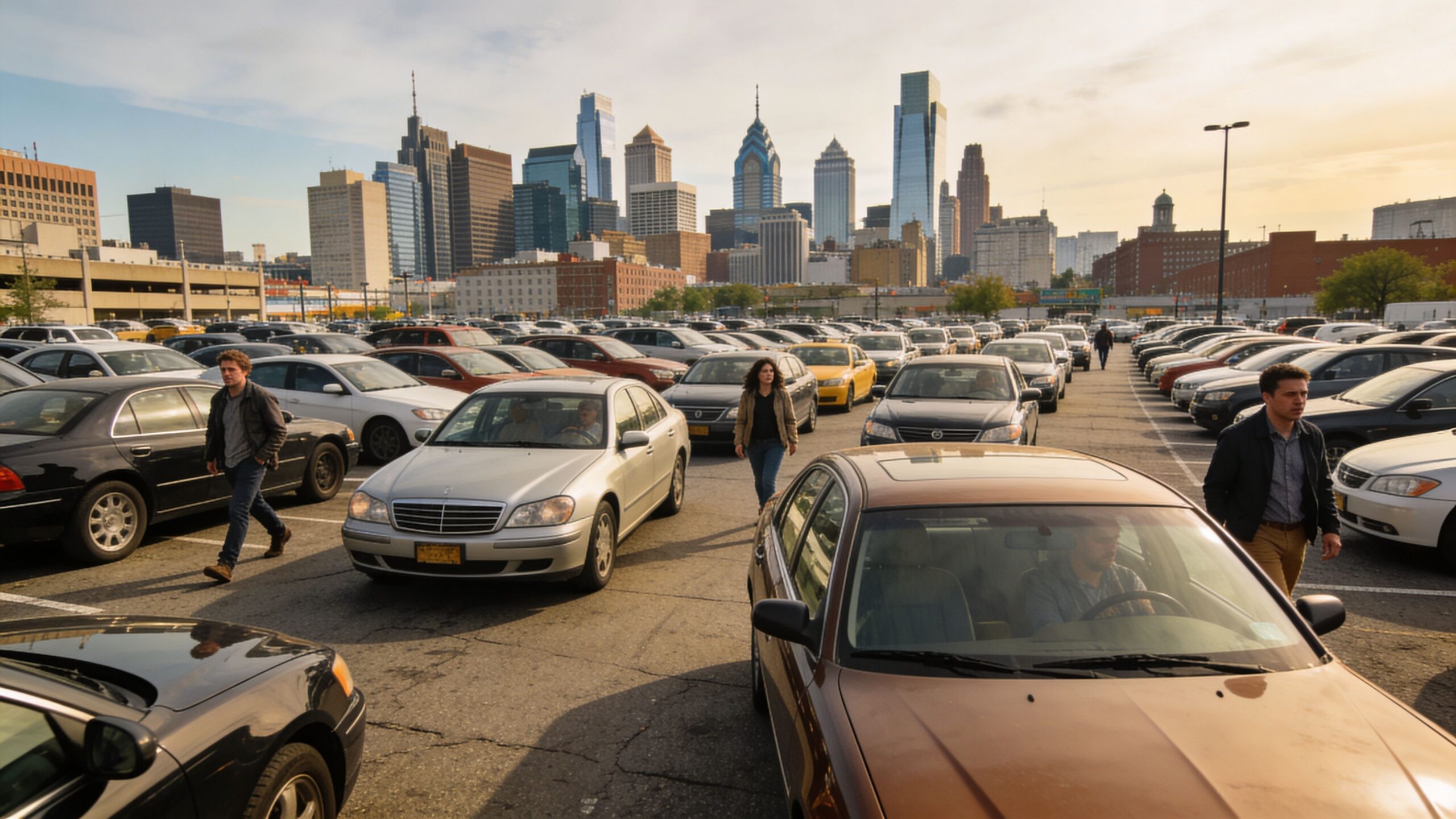
A Philadelphia parking lot has its own rhythm. Cars cut across rows at odd angles. Delivery vans block sightlines. Pedestrians push carts, look at their phones, and step out from between SUVs. Everyone is moving slowly, but not always carefully.
That’s why these crashes are so often underestimated. One in five of all vehicle accidents in the United States occur in parking lots, and in Philadelphia County, where over 10,417 car accidents were reported in 2021, these incidents still feed into the larger pool of crashes causing serious harm. The same reporting notes that 63% of crashes resulted in injury or death in that county context, which is a reminder that “low speed” doesn’t mean “low stakes” (parking lot accident statistics in Philadelphia context).
Why these crashes turn into disputes fast
Parking lots create messy facts. A driver says they were already in the lane. The other says they had almost finished backing out. A pedestrian says the driver never looked up. The property owner says it’s just a private lot and should be handled through insurance.
That confusion helps the other side if you don’t lock down evidence early.
- There’s usually no camera handed to you. Some lots have surveillance, but it can be overwritten quickly.
- Drivers make admissions, then retract them. An apology at the scene often turns into a denial later.
- Visible damage can mislead people. A bumper scratch can still come with a real back, shoulder, or head injury.
A parking lot crash is rarely “just a parking lot crash” once pain starts, witnesses leave, and the insurer starts looking for a way to shift fault.
If your situation sounds familiar, this practical guide on being hit in a parking lot and injured adds useful context on the first issues injured drivers usually face.
What matters most right away
The first legal question isn’t whether the crash happened on private property. It’s whether you can prove who failed to use reasonable care. In Philadelphia, that proof often comes from ordinary details: the angle of impact, where the cars stopped, whether a pedestrian path was visible, and what the driver was doing in the seconds before impact.
Determining Fault When No Traffic Lights Exist
Parking lots feel informal, but fault analysis isn’t random. When there’s no traffic signal, lawyers and insurers still look at basic right-of-way rules, vehicle movement, driver attention, lane position, and whether someone created a hazard that a careful person should have avoided.
The simplest working rule is this: the driver entering the flow of travel usually has the greater duty to yield.

The common scenarios
Here’s how fault usually gets evaluated in real parking lot claims.
| Scenario | Usual fault question | Common result |
|---|---|---|
| Driver backs out of a space into a moving car | Who was already established in the aisle? | Backing driver often carries most of the blame |
| Two cars back out at the same time | Did either driver keep a proper lookout? | Shared fault is common |
| Driver cuts through a parking space or turns sharply into a lane | Did the turning driver enter safely? | Turning driver often faces strong fault arguments |
| Pedestrian hit while walking to or from a vehicle | Did the driver yield and keep watch? | Driver often has major exposure, though pedestrian conduct still matters |
Through-lanes usually matter more than parking spaces
Think of a parking lot aisle as the main stream and a parking space as a side street. A car pulling out of the side space generally has to wait until it’s safe. That doesn’t give the through-lane driver a free pass to speed, stare at a screen, or ignore people walking across the row. But it does set the starting point for fault.
The same logic applies to turns. If a driver swings into a row, cuts the corner, or darts across empty spaces to beat traffic, that driver often creates the danger.
Pedestrian cases are different
Pedestrian claims often carry more seriousness because the body absorbs the impact directly. Drivers in parking lots must watch for people loading trunks, crossing between rows, or stepping into a travel lane. Pedestrians also need to act carefully, especially where visibility is blocked.
Practical rule: If a vehicle was moving into someone else’s path, that driver usually has the heavier burden to explain why the move was safe.
What actually persuades insurers and juries
Fault isn’t decided by whoever talks first. It’s built from details.
- Vehicle position after impact can show who entered whose path.
- Damage patterns often reveal whether a car was straight, turning, or backing.
- Photos of arrows, stop signs, curbs, and lane markings can settle arguments that memory won’t.
- Witness accounts matter most when they describe movement, not conclusions.
What doesn’t work is broad language like “I had the right-of-way” without facts behind it. In a Philadelphia parking lot claim, specifics win.
How Pennsylvania Law Affects Your Claim
Pennsylvania law doesn’t just ask who caused the crash. It asks how much blame each side carries, and whether your own auto insurance choice limits what you can recover. Those two issues can change the value of a claim dramatically.

Comparative negligence works like a scale
Pennsylvania uses modified comparative negligence. The easiest way to think about it is a scale. Your damages go on one side. Your share of fault goes on the other. If you were partly responsible, your recovery can be reduced by that share. If you cross the legal threshold and are found more responsible than the other side, recovery can be barred.
That rule matters in parking lots because insurers love arguing mutual blame. They’ll say you were backing too fast, not watching, walking outside a marked path, or pulling through a space without caution.
A strong claim answers those arguments with evidence, not outrage.
For a fuller breakdown, this explanation of comparative negligence in Pennsylvania is worth reading if fault is being disputed.
Limited tort and full tort can change the case
Many injured drivers don’t realize their own policy election matters until after the crash. In Pennsylvania, drivers often choose between limited tort and full tort coverage. That choice can affect whether you can pursue compensation for pain and suffering in a routine auto case.
Here’s the practical difference:
- Full tort usually preserves broader rights to seek noneconomic damages.
- Limited tort may restrict those damages unless the case fits an exception.
- The label on the policy matters less than the actual facts if there’s a serious injury issue or a coverage exception.
Parking lot cases often become complicated. People assume a low-speed crash means a low-value claim. But the legal question isn’t just speed. It’s injury, proof, and insurance language.
Why Philadelphia cases feel tougher
Philadelphia claims often involve aggressive fault arguments. Adjusters know juries can be skeptical of “minor impact” cases unless the evidence is clean and the medical timeline makes sense. They also know many people won’t know the difference between limited tort and full tort until they’ve already given statements that hurt them.
If the insurer is focusing heavily on what you “could have done differently,” it’s usually preparing a comparative negligence defense.
That doesn’t mean your case is weak. It means the legal framing matters. In some claims, the difference between a denied case and a paid case is whether someone organized the evidence around Pennsylvania law instead of around frustration.
Immediate Steps to Protect Your Rights After a Crash
The first hour after a parking lot crash matters more than many realize. Not because you need to perform for the insurer, but because evidence fades quickly and pain can show up later.
What to do before you leave the scene
Start with safety. If anyone may be hurt, call for medical help. Then build your file while the facts are still fresh.
- Call the police if there’s injury or a real dispute. Even on private property, a report can help anchor the timeline and basic facts.
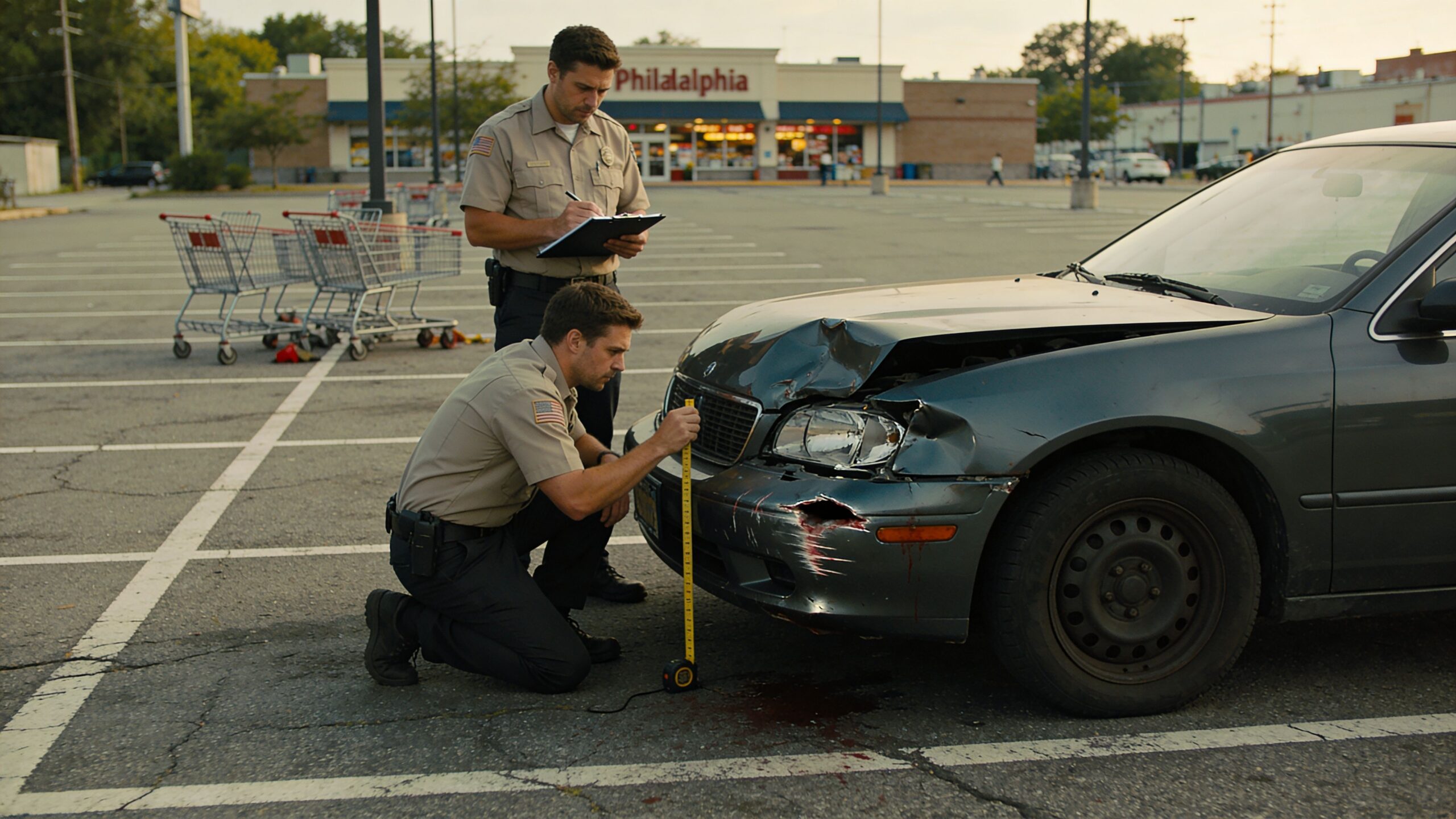
- Take wide and close photos. Get all vehicle damage, plate numbers, the full row or aisle, skid marks if any, curbs, arrows, signs, lighting, and anything blocking visibility.
- Exchange the essentials. Driver’s license, insurance card, registration, phone number, and vehicle owner information if different from the driver.
- Look for witnesses early. People disappear fast in parking lots. A name and number can matter later.
- Don’t argue fault. Be polite. Don’t speculate. Don’t say you’re “fine” if you’re not sure.
What to do the same day
Some injuries don’t fully announce themselves at the scene. Adrenaline hides a lot. Neck pain, headaches, shoulder injuries, and back symptoms often become clearer later that day or the next morning.
Take these steps:
- Get a medical evaluation. Urgent care, ER, or your primary provider, depending on symptoms.
- Write down what happened. Include direction of travel, what you saw, where impact occurred, and what the other driver said.
- Notify your insurer promptly. Keep it factual and brief.
- Preserve receipts and records. Towing, rides, prescriptions, imaging appointments, all of it.
The best evidence is usually gathered before anyone knows there will be a fight.
This checklist on steps to take after a crash in Philadelphia is a good practical companion if you’re still sorting through what to do next.
What not to do
A few mistakes show up again and again in parking lot cases:
- Don’t accept cash at the scene in exchange for “keeping insurance out of it.”
- Don’t delay treatment just because the crash looked minor.
- Don’t repair the car immediately without photos if fault is contested.
- Don’t post about the crash online. Insurers look for contradictions.
Navigating the Insurance Claims Process
Once the cars are gone, the insurance process starts turning your injury into a file. That file doesn’t speak for itself. The adjuster decides what gets emphasized, what gets questioned, and what gets framed as “preexisting,” “minor,” or “unclear.”
In Philadelphia, that process often feels more defensive from the start. Insurers often undervalue claims in high-litigation areas like Philadelphia, and a recent Pennsylvania Insurance Department report noted that denial rates for construction-adjacent claims hit 28% in Q1 2026, reflecting how carriers use ambiguity to delay or deny payment (Philadelphia-area insurer denial context).
The tactics that show up most often
Parking lot claims are especially vulnerable to insurer minimization because the defense theme writes itself. Slow speeds. Property damage looks modest. Fault seems murky. So the adjuster looks for shortcuts.
Common tactics include:
- The quick settlement call. They try to close the claim before the medical picture is clear.
- The recorded statement request. They hope you’ll guess, speculate, or phrase something poorly.
- The “no visible injury” angle. They treat the vehicle damage as a cap on your physical pain.
- The shared-fault push. They frame the whole crash as a misunderstanding with equal blame.
What actually helps your claim
A good claim file is organized, boring, and hard to attack. That sounds unglamorous, but it works.
| What strengthens a claim | Why it matters |
|---|---|
| Prompt medical care | Creates a clean timeline between crash and symptoms |
| Consistent symptom reporting | Stops the insurer from calling the injury exaggerated |
| Strong scene photos | Supports movement, lane use, and impact location |
| Clear wage loss proof | Converts disruption into documented damages |
| Targeted legal communication | Keeps the adjuster from controlling the narrative |
Why early statements can hurt you
People think honesty is enough. Honesty matters, but casual wording can still damage a claim. If you tell an adjuster “I’m okay, just sore,” that sentence may be used later to argue your injury was trivial. If you guess about speed or distance, the insurer may treat your estimate like sworn reconstruction.
Speak in facts you know. Don’t fill in gaps for the insurance company.
A lawyer’s role here isn’t theatrics. It’s control. Control of communication, medical documentation, witness follow-up, video preservation requests, and the demand package that explains why the claim deserves serious money, not nuisance money.
Serious Injuries and Complex Philadelphia Cases
A parking lot crash can leave more than bruises. The injuries that worry lawyers most are often the ones people dismiss in the beginning. Head trauma after striking a door frame or window. A spinal injury aggravated by twisting on impact. A pedestrian knocked down and hurt far worse by the fall than by the vehicle itself.
Philadelphia cases also become more complex when the parking area itself is unsafe. Poor sightlines, bad lighting, broken pavement, confused traffic flow, or negligent site management can turn a two-party car claim into a broader premises case.
Injuries that don’t look dramatic at first
Some symptoms hide in plain sight. Pelvic pain is a good example. Seat-belt force, bracing during impact, and awkward body rotation can trigger pain that people initially chalk up to soreness. This overview of pelvic pain after an auto accident is useful because it explains why that symptom deserves real medical attention instead of guesswork.
Other injuries raise complexity for a different reason. They interfere with concentration, sleep, mobility, and work, but they don’t always show up cleanly in the first set of records. That gap gives insurers room to argue.
The CHOP garage collapse shows how parking cases can widen fast
Not every Philadelphia parking injury involves two ordinary drivers. The April 8, 2026 partial collapse of a parking garage under construction for CHOP in Grays Ferry showed how parking-related incidents can involve a web of parties and a very different liability analysis. Reporting on the event described the failure of a precast concrete segment and noted that this work fell under special inspections outside standard L&I oversight, which creates a complicated path for assigning fault among manufacturers, subcontractors, and property owners (CHOP Grays Ferry garage collapse reporting).
That matters beyond the construction setting. It shows a broader truth about Philadelphia parking injury cases. Sometimes the obvious defendant isn’t the only one. Sometimes the case expands into negligent maintenance, site design, contractor conduct, or product failure.
What works in high-stakes cases
For severe injury claims, broad accusations don’t help. Focus does.
- Get the right records early. Not just discharge paperwork, but imaging, follow-up visits, and specialist notes.
- Preserve site evidence. In a garage or structured parking setting, maintenance logs, inspection records, and contractor roles may matter.
- Use the right expert at the right time. Reconstruction and medical experts can connect facts that seem disconnected to a layperson.
The bigger the injury, the less room there is for improvisation.
Frequently Asked Questions About Philly Parking Lot Accidents
What if the other driver left the scene?
A hit-and-run in a parking lot is still a serious claim. Report it right away, notify your insurer, and ask nearby businesses or garage operators about surveillance footage. Your own uninsured motorist or related coverage may become important depending on the policy.
Can the parking lot owner be responsible too?
Sometimes, yes. If the injury involved a dangerous condition beyond ordinary driving, such as poor lighting, obstructed views, broken pavement, or unsafe garage conditions, a property owner or manager may have separate responsibility. That depends on notice, control, and whether the hazard contributed to the crash.
How long do I have to file a lawsuit in Pennsylvania?
Pennsylvania generally has filing deadlines for injury claims, and you shouldn’t wait to sort them out. Delay is dangerous because footage disappears, witnesses become harder to find, and repair evidence gets lost. The practical answer is simple. Start immediately.
What if the other driver lies about what happened?
That’s common. Parking lot cases often become credibility fights. Photos, witness names, vehicle damage, business surveillance, and prompt medical treatment usually matter more than who sounds more confident on the phone.
Do I need a lawyer for a parking lot accident?
Not every claim requires litigation, but disputed fault, significant injury, insurance pushback, or any commercial or garage-related issue raises the stakes quickly. If the insurer is minimizing your injury or trying to pin part of the crash on you, legal help usually changes the conversation.
If you were hurt in a Parking Lot Accident in Philadelphia, Mattiacci Law can help you understand your options and protect the value of your claim. The firm represents injured people across Philadelphia and handles serious auto, premises, and complex injury cases with direct attorney access, free consultations, and a no-win, no-fee guarantee.