


Author: John Mattiacci | Owner Mattiacci Law
Published October 21, 2025

Car accidents happen fast. One moment you’re cruising along, and the next you’re dealing with flashing lights, bent metal, and a whole lot of stress.
In that chaos, it’s easy to forget what to do next.
But the way you document evidence after a crash can completely shape how your claim or case plays out. Insurance companies care about details, and so do lawyers and judges.
Having clear, organized evidence gives you the best shot at protecting yourself.
In this quick guide, we’ll show you how to document evidence after a car accident like a PRO.
#1 Call The Police
The very first thing you need to do after an accident, no matter how minor it seems, is call the police. Even if you’re not sure there’s significant damage or injuries, it’s crucial to have an official record of what happened.
The police will come, take statements, and create a report. This report will serve as an important piece of evidence later on.
When the officer arrives, stick to the facts. Share what happened, but don’t guess or make assumptions. If you don’t know something, it’s fine to say you’re not sure.
Also ask the officer how to get a copy of the report, because you’ll want it for your file.
It’s always better to have law enforcement involved, just in case the situation escalates or if there’s a dispute about who’s at fault.
Also Read: When Is A Pedestrian At Fault For A Car Accident?
#2 Take Photos And Videos
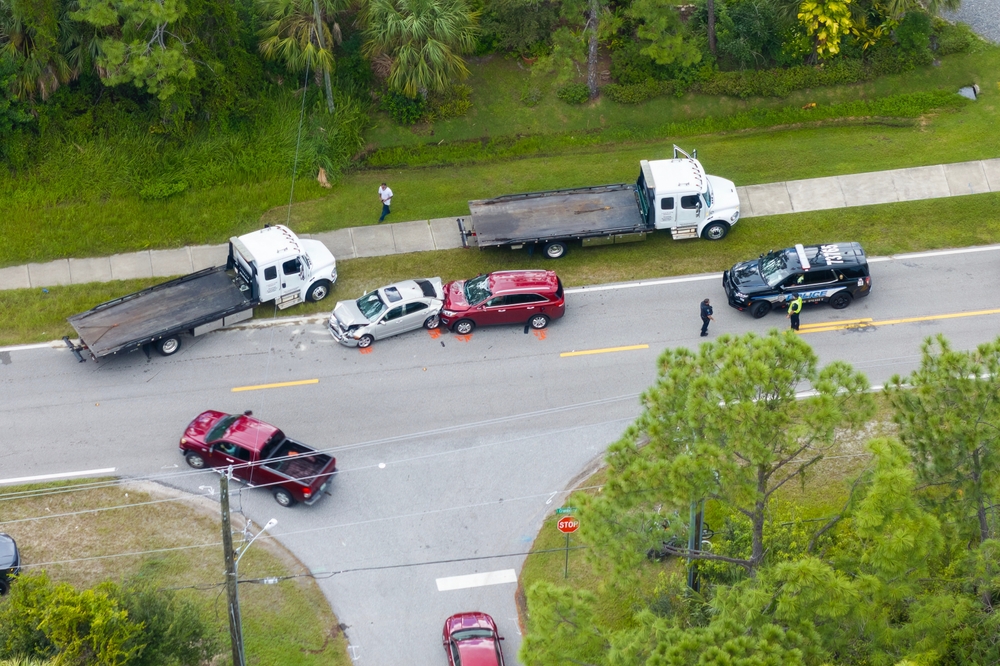
You’ll want to document as much as you can about the scene. The more visual evidence you have, the better. Take plenty of photos and videos, including:
- Damage to all vehicles involved
- Skid marks or anything else that might show what happened
- The general scene of the accident (road conditions, traffic signals, etc.)
Sometimes, things can be tricky to remember later on, but photos don’t lie. They help reconstruct the accident and prove key details that might otherwise get lost in the shuffle.
You should also take pictures of the other driver’s license plate, insurance info, and driver’s license.
If it’s safe to do so, capture a few wide shots of the overall scene, as this helps to set the context. Video can be even better – if you’re able to, walk around and get a 360-degree view of everything.
#3 Gather Driver And Witness Information
When the dust settles, and you’ve got your pictures and videos, it’s time to talk to the people involved. Here’s what you need from everyone:
- Full names
- Addresses
- Phone numbers
- Driver’s license numbers
- Insurance company and policy number
- License plate number
Don’t just take the other driver’s word for it. Write down everything you can.
If there are any witnesses, ask for their contact details, too.
They’re not involved, so their statements carry weight. If someone stops and says they saw the whole thing, politely ask for their name and contact info. If they’re willing, you can even use your phone to record a quick statement right there.
Also Read: What Photographs And Video Evidence Should I Capture After A Slip And Fall Accident
Also, try to get the names and badge numbers of any officers who respond. They might be able to offer a witness statement if needed.
#4 Keep Notes While It’s Fresh
After the accident, everything can become a blur, and memories tend to fade. As soon as you can, write down your version of what happened. Include details like:
- The time and date
- Road conditions (wet, dry, icy, etc.)
- Weather conditions (foggy, rainy, etc.)
- Any notable events that happened leading up to the crash (e.g., did you stop at a red light? Was another driver speeding?)
- Any injuries you noticed (even minor ones)
Jotting everything down while it’s fresh helps ensure accuracy. This can be especially useful when you’re filling out insurance claims or talking to your lawyer. The more detailed, the better.
#5 Protect Medical Evidence
If you’re hurt, getting medical attention is the top priority. But it’s also important to keep track of any medical evidence. That includes doctor’s notes, hospital records, discharge papers, and any physical therapy or specialist treatments
Make sure to keep copies of all your medical bills, too.
That timeline can prove the accident caused your pain and not something else.
The more you have, the easier it’ll be to prove your injuries.

Plus, sometimes injuries don’t show up right away, so even if you feel fine immediately after the accident, it’s worth seeing a doctor anyway. A doctor can help spot things that might become problems later on, like internal injuries or whiplash.
Also Read: How Long After A Car Accident Can I Claim Injury In Pennsylvania?
#6 Preserve Digital Evidence
These days, accidents often involve digital trails you might not think about right away.
Maybe a nearby business has a security camera that caught the crash. Maybe your own car has a dash cam or you were using a driving app that tracked your route. That’s evidence too.
If you spot cameras on buildings or traffic poles, make a note.
Sometimes you can request that footage, but you have to act fast before it gets deleted. If you have a dash cam, back up the file immediately so it doesn’t get lost.
Even text messages to friends or family about the accident can show timing and context.
Don’t underestimate how useful that digital stuff can be.
#7 Save All Accident-Related Documents
You’ll be handed a lot of paperwork after an accident. Keep everything organized in one spot, even if it seems like a small thing at the time.
This includes:
- Police reports
- Medical bills
- Vehicle repair estimates and receipts
- Tow truck and rental car receipts
- Insurance letters or emails
Keeping everything helps you avoid scrambling for a crucial document later on. Plus, you can track the progress of your claim or any legal action you take.
Some documents may be required if you need to go to court or speak to your attorney.
#8 Avoid Talking Too Much With Insurance Adjusters
It’s tempting to tell your side of the story to the insurance adjuster right away, but don’t rush it.
Always always stick to the basic facts, and be careful not to say anything that could be taken out of context or used against you later.
Insurance adjusters are there to settle the claim as quickly and cheaply as possible. They’re professionals at asking questions that seem harmless but could end up hurting your case.
It’s best to give your statement in writing, or better yet, let your lawyer handle communications with them.
Always be cautious about admitting fault, even if you think it might’ve been your mistake.
#9 Consider Legal Help
Sometimes, things can get messy. If the accident involved significant damage, serious injuries, or a dispute over who’s at fault, you might want to consider legal help.
A car accident lawyer can help you navigate the complexities of insurance claims, negotiations, and even court if it comes to that.
Lawyers know the ins and outs of how these cases go.
They can review the evidence, talk to witnesses, and help you understand your rights.
If you’ve been injured, a lawyer can also ensure you get the compensation you deserve for medical bills, pain and suffering, and other damages.
Bottom Line
After a car accident, evidence is everything. Photos, police reports, witness info, medical records, digital trails – they all work together to paint the full picture.
The stronger your documentation, the harder it is for anyone to dispute what happened.
So here’s the takeaway: stay calm, gather as much as you can, and keep it organized. You don’t need to become an investigator – you just need to protect yourself with the facts.
When it’s all said and done, having that solid evidence can make the difference between a fair outcome and a frustrating battle.