


Author: John Mattiacci | Owner Mattiacci Law
Published August 15, 2026

You're changing lanes on I-95 when the sedan ahead drifts across the line. The driver says he checked the mirrors. The vehicle he struck was there, but the driver had no working rear-view mirror, and the side mirrors never showed the entire area beside and behind the car. A routine merge becomes a serious injury claim.
That detail matters because car accidents caused by blind spots without a rear-view mirror aren't arguments about whether someone looked carefully enough. They raise a more precise question: did the driver have a reasonable opportunity to see the roadway, and did the driver operate a vehicle that was missing or obstructing equipment needed for safe visibility? In Pennsylvania and New Jersey, that question can affect negligence, comparative fault, evidence, and damages.
What Happens When a Driver Has No Rear View Mirror
Consider a three-car lane-change crash. Car One is traveling in the right lane. Car Two, an SUV, is beside Car One but slightly behind the driver's shoulder. Car Three is ahead in the left lane. Car One's driver decides to move left, checks the side mirror, and begins crossing the lane. The SUV occupies the area the driver can't see clearly. Car One hits the SUV, which then strikes Car Three.
After the collision, the driver says, “I checked my mirrors.” The insurer may repeat that statement as if it ends the analysis. It doesn't. A missing or unusable interior rear-view mirror can show that the driver's visibility was compromised before the maneuver began. The case becomes less about an unavoidable blind spot and more about whether the driver knowingly operated a vehicle without a basic visibility system.
The condition of the mirror changes the claim
A mirror blocked by boxes isn't identical to a mirror that was never installed after a windshield replacement. In the first situation, the driver may have created the obstruction by loading the vehicle improperly. In the second, the driver or vehicle owner may have failed to restore equipment after a repair. A cracked mirror, a loose mounting bracket, heavy tint, or an object hanging from the mirror can create a different factual dispute.
Insurance adjusters often look for these details early. They may ask whether the driver knew about the missing mirror, whether the vehicle had recently been serviced, and whether the driver relied only on side mirrors. Those questions aren't harmless background inquiries. They can identify an admission, a repair record, or a vehicle defect that supports the injured person's theory of breach.
Practical rule: A traffic citation may be minor by itself, but the same equipment violation can become important evidence when it helps explain why the driver failed to see a vehicle, pedestrian, or cyclist.
Visibility is part of the driving duty
Every driver has to operate a vehicle with reasonable care under the circumstances. That duty includes maintaining a usable view of surrounding traffic, adjusting mirrors, looking over the shoulder, and stopping when the driver can't confirm that the path is clear.
A driver without a rear-view mirror may still argue that the other vehicle was in a side blind spot, that the injured person was traveling too fast, or that the lane change was already underway. Those arguments can affect fault allocation. They don't erase the central issue: removing a visibility aid can make a foreseeable danger harder to detect.
The absence of a rear-view mirror also affects proof. Investigators can inspect the windshield, mounting point, mirror bracket, tint strip, cargo area, repair invoices, and photographs taken before the vehicle was repaired. A driver who says the mirror was missing only after the crash may face a credibility problem if service records show it had been absent for weeks.
How Blind Zones Are Measured and Why Geometry Matters
A blind spot isn't just a driver's subjective complaint. Engineers can define it by identifying an area where an object is present but unavailable to the driver's direct view or mirror view.
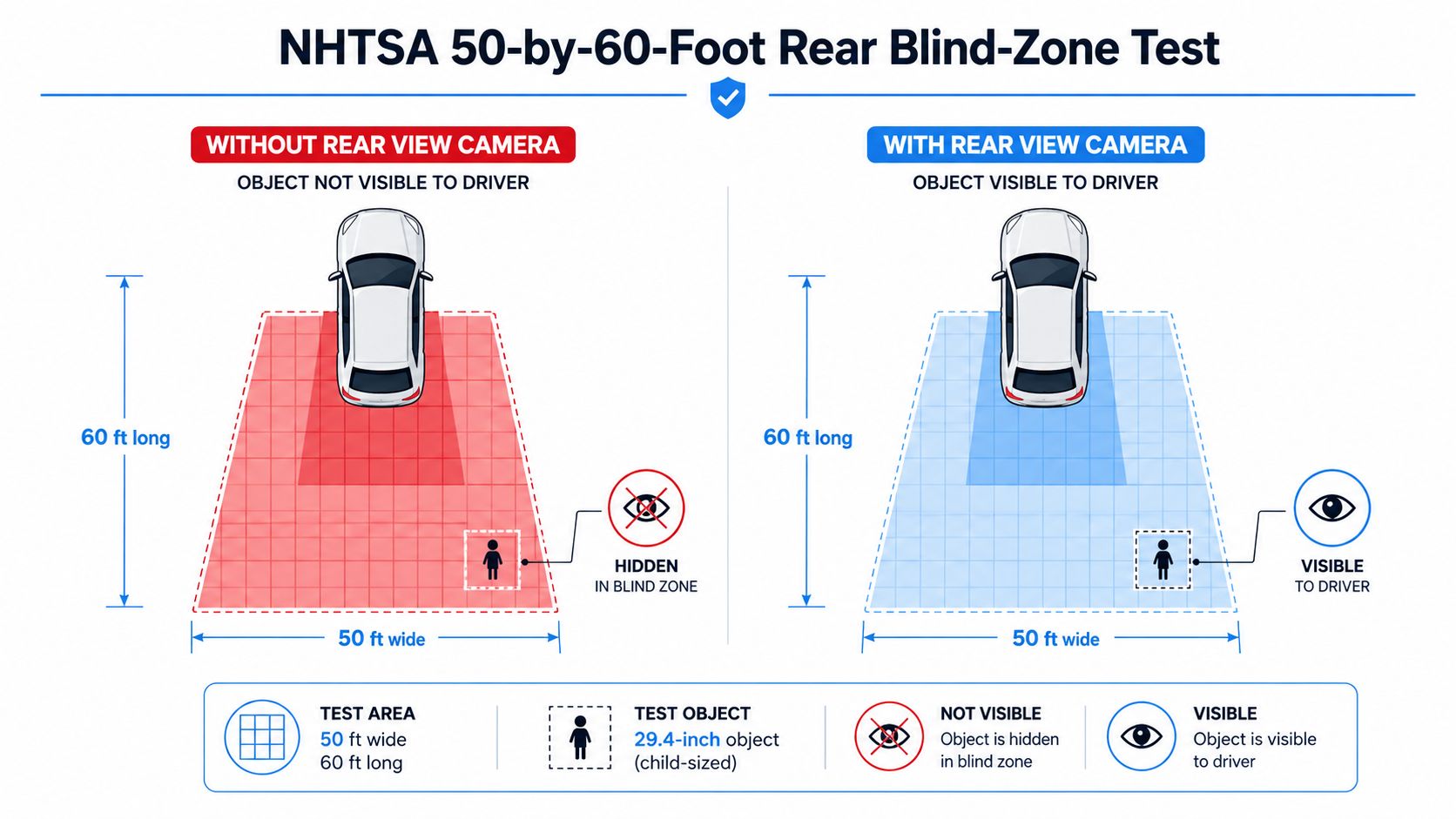
The NHTSA rear-visibility test uses a 50-foot by 60-foot field behind a vehicle. Within that field, the agency evaluates whether a 29.4-inch object can be seen by direct rear vision. The measurement matters because it gives lawyers, experts, and courts a repeatable way to discuss what the driver could or couldn't see, rather than relying only on the driver's memory.
Vehicle size and driver height change the analysis
The measured rear blind zone varies sharply by vehicle class. NHTSA-based material describes rear blind-zone areas ranging from 100 square feet for small pickup trucks to 1,440 square feet for large SUVs (NHTSA-based blind-spot crash analysis). The same source reports that rear blind-zone length averaged 14 feet for a taller driver and 23 feet for a shorter driver (research on vehicle geometry and driver stature).
That difference affects foreseeability. A driver in a large SUV can't fairly describe the rear obstruction as a surprise if the vehicle's design creates a substantial hidden area. A shorter driver may face an even longer unseen area because seating position changes the sightline over the rear structure.
The legal point is practical. The defendant's vehicle, seat position, mirror arrangement, cargo, and driver height should be documented. Those facts can show whether the driver had an ordinary visibility problem or operated with a much greater obstruction than a reasonable driver should have accepted.
Side mirrors don't eliminate lateral blind zones
Side mirrors cover only part of the roadway. A Virginia Tech synthesis found that, with typical mirror aiming and a hypothetical 180-degree direct field of view, the area from approximately 13 to 45 degrees laterally from the vehicle can remain outside mirror vision (Virginia Tech rear-visibility synthesis).
That area can conceal a vehicle traveling beside the driver. A proper shoulder check remains important, but a missing interior mirror removes another reference point for understanding traffic behind the vehicle. A rear-view camera or other rear-visibility system can reduce the unseen area, but the driver still has to use it correctly and respond to what it shows.
For a broader discussion of how mirror size affects these risks, see car accidents caused by small rear-view mirror blind spots.
Negligence, Comparative Fault, and Equipment Violations in PA and NJ
A rear-view-mirror claim usually follows the ordinary negligence framework. The injured person must establish a duty, a breach, causation, and damages. The missing or defective mirror can matter at each stage, but it doesn't automatically prove the entire case.
Duty and breach
The duty is straightforward. Drivers must use reasonable care and operate vehicles in a reasonably safe condition. A driver who knowingly uses a vehicle without a functioning rear-view mirror may have breached that duty, especially if the missing mirror limits the ability to monitor traffic before changing lanes or reversing.
The breach question is more fact-specific. Was the mirror absent for a long period? Did the driver notice it after a windshield replacement? Was it blocked by cargo? Did the driver use an aftermarket substitute that was too small or improperly positioned? Did the driver make a maneuver that required a clear view despite knowing the rear visibility was limited?
A violation of a vehicle-equipment rule can support the breach argument. It may be treated as negligence per se in some circumstances, meaning the violation itself can establish breach if the statute protects the class of people injured and the harm falls within the risk the rule addresses. In other situations, the violation is evidence of negligence, but the jury still decides whether the driver acted unreasonably.

Causation and damages
The mirror violation must connect to the crash. If the driver struck a vehicle while reversing because the rear area was hidden, the connection may be direct. If the crash occurred during a lane change, the defense may argue that the side blind spot, not the missing interior mirror, caused the impact.
An accident reconstruction professional may examine vehicle positions, timing, lane markings, mirror placement, driver seating, photographs, and available video. The question isn't whether a mirror would have guaranteed avoidance. It's whether the missing or obstructed mirror materially reduced the driver's opportunity to perceive the hazard and respond.
Damages include the injuries and losses legally caused by the collision. Medical records, wage documentation, treatment recommendations, photographs, and testimony about pain and functional limitations support that part of the claim.
Pennsylvania and New Jersey fault rules
Pennsylvania generally uses a modified comparative negligence rule with a 51% bar, as explained in Pennsylvania comparative negligence law. An injured person may recover when their assigned fault is not more than 50%, but the award is reduced by the person's percentage of fault. If the injured person is assigned 51% or more, recovery is barred under the rule.
New Jersey uses a modified comparative negligence rule with a 50% bar. That makes precise fault arguments especially important. The defense may claim the injured driver accelerated, failed to signal, occupied a prohibited area, or could have avoided the collision. The plaintiff's response should focus on visibility, timing, vehicle geometry, and the defendant's equipment condition.
Common Crash Patterns Linked to Missing Rear Visibility
Certain fact patterns appear repeatedly in blind-spot litigation. The labels don't decide liability, but they help identify what evidence should be collected before vehicles disappear into repair shops or salvage yards.
Highway lane changes
A sedan moves into an adjacent lane and strikes a vehicle positioned in the lateral area outside ordinary mirror coverage. The defense says the other driver was in an unavoidable blind spot. The plaintiff's evidence may show that the defendant didn't have a working rear-view mirror, failed to turn the head before moving over, or began the maneuver without enough space.
The key evidence includes damage location, lane markings, turn-signal use, dashcam footage, witness accounts, and the actual mirror setup. The driver's statement that “I didn't see him” may help establish that the vehicle was not observed, but it doesn't by itself prove why the driver failed to see it.
Parking-lot backovers
A driver reverses from a space and hits a pedestrian, cyclist, or child-sized object hidden behind the vehicle. The NHTSA rear-visibility framework is especially useful here because it defines a measurable area where a 29.4-inch object may not be visible by direct rear vision (NHTSA rear-visibility rulemaking analysis).
A driver may argue that the person appeared suddenly. Investigators should examine the vehicle's rear blind zone, camera operation, parking-lot sightlines, warning sounds, surveillance footage, and whether the driver looked behind the vehicle before reversing.
Left-turn pedestrian crashes
A vehicle turns left across a crosswalk or intersection and strikes a pedestrian who was difficult to see from the driver's position. An IIHS analysis of nearly 4,500 police-reported pedestrian crashes in seven states found that large driver-side blind zones were associated with a 70% increase in the risk of left-turn pedestrian crashes compared with small blind zones (IIHS-related pedestrian blind-zone analysis).
That finding doesn't replace crash-specific proof. It helps explain why vehicle design, driver position, and turning sightlines deserve attention rather than treating the collision as a simple failure to look.
| Crash Pattern | Typical Blind-Zone Issue | Key Evidence |
|---|---|---|
| Highway lane change | Vehicle beside or behind the driver, outside ordinary mirror coverage | Dashcam video, mirror condition, vehicle damage, witnesses |
| Parking-lot backover | Low or short road user hidden behind the rear structure | Camera records, scene measurements, surveillance, driver viewpoint |
| Left-turn pedestrian crash | Large driver-side obstruction during a turning movement | Intersection video, crosswalk evidence, vehicle design, reconstruction |
Evidence That Wins or Loses a Rear-Visibility Case
The strongest cases preserve the visibility problem before anyone has a chance to clean up the facts. Photographs taken after repair can't always show how the mirror looked at the moment of impact, and a vehicle may be sold or altered before an inspection occurs.
At the scene
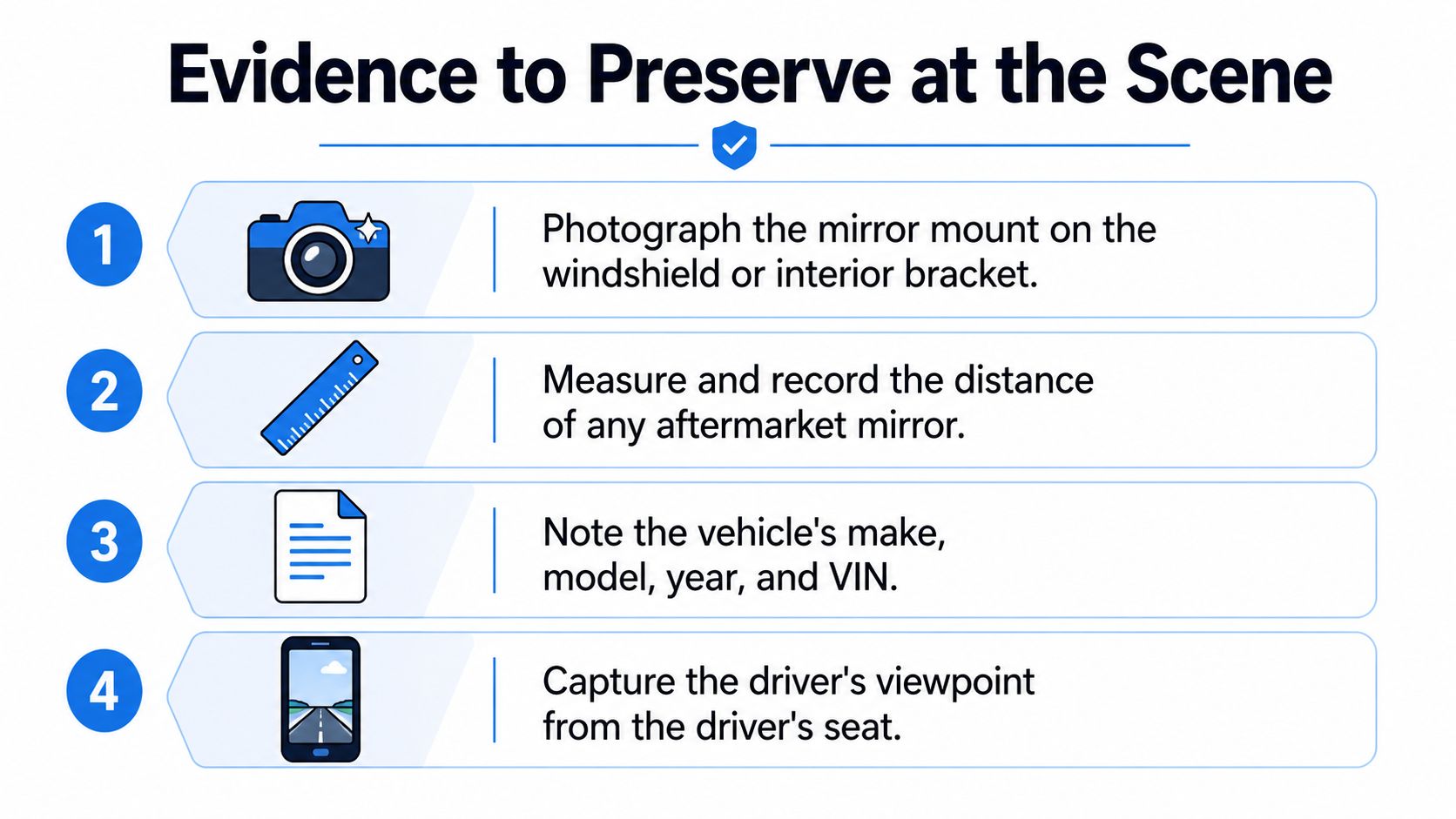
Use a phone to photograph the entire vehicle, then move closer to the visibility equipment. Capture:
- Mirror mounting points: Photograph the windshield bracket, interior mounting location, side mirrors, cracks, loose parts, and signs that a mirror was removed.
- Obstructions: Record cargo, headrests, window tint, stickers, hanging objects, or anything blocking the rear window.
- Driver viewpoint: Take photographs from the driver's seated position, with the seat adjusted as it was during the crash.
- Vehicle identity: Note the make, model, year, license plate, and VIN when safely available.
After the vehicles leave
A lawyer may request windshield replacement invoices, service records, inspection records, dealer communications, recall information, and repair photographs. Commercial vehicles may generate additional material, including fleet inspection logs, driver pre-trip records, camera maintenance entries, and telematics data.
Preserve electronic evidence quickly. Dashcams overwrite footage, parking-lot systems delete recordings, and nearby businesses may not retain doorbell or exterior-camera video indefinitely. Event data recorder downloads, fleet telematics, phone records, and vehicle-camera logs can help establish speed, braking, steering input, and timing.
Do not give a recorded statement to the other insurer before the mirror condition has been documented. A casual answer about checking mirrors can later be presented as a complete admission, even when the equipment itself was defective.
What to Do in the First 72 Hours After a Blind-Spot Crash
The first few days should be handled in sequence, not by trying to solve the entire legal case at once.
The first hour
Get medical attention, even if pain seems manageable. Tell the provider how the impact occurred and identify symptoms accurately. Ask for the police report process, obtain witness contact information, and photograph the vehicles only if you can do so safely.
Do not move or discard broken mirror parts. If the vehicle is towed, tell the tow yard and insurer that the vehicle and visibility equipment must be preserved for inspection.
The first day
Notify your own insurer of the collision, but keep the description factual. Give the date, location, vehicles involved, and injuries. Don't speculate about fault, and don't volunteer phrases such as “I didn't see him” or “I thought I checked” when discussing the other driver's conduct.
You can use this post-accident checklist to organize medical, insurance, vehicle, and evidence tasks. Keep copies of photographs, towing documents, medical records, prescriptions, and every insurance communication.
Days two through three
Arrange an inspection before repairs if possible. Request repair-shop records, identify the windshield vendor, and ask whether the mirror or mounting system was replaced, recalibrated, or left incomplete. Start a symptom diary that records pain, sleep disruption, missed work, medication effects, and limitations in ordinary activities.
An attorney may preserve the vehicle through a formal demand, obtain service history, retain an accident reconstruction expert, request telematics, and evaluate whether an equipment-violation theory belongs in the complaint. That work is especially useful when the insurer argues that the crash was merely an unavoidable blind-spot event.
A contingency-fee consultation becomes valuable when the vehicle condition, electronic evidence, or fault allocation could materially change the claim's value.
Prevention, Fleet Policies, and the Road Ahead for Rear Visibility
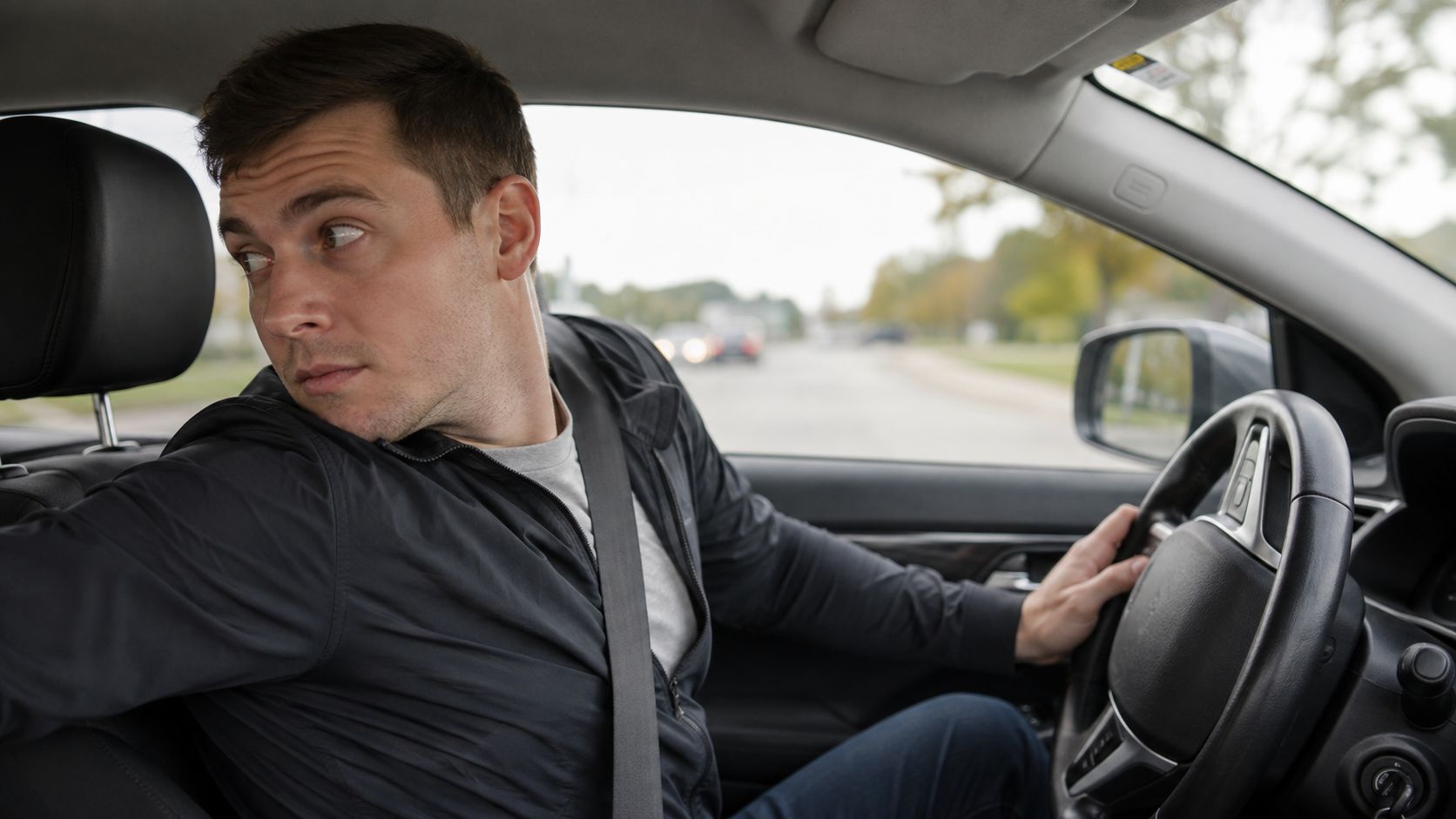
The safest approach treats visibility as a system. Set the interior mirror for the full rear window, aim side mirrors to reduce overlap, and perform a deliberate shoulder check before changing lanes. When reversing, inspect the area around the vehicle, use the camera if available, and stop when the view is incomplete.
Blind-spot monitoring can help, but it isn't a substitute for attention. A 2026 Australasian analysis found that blind-spot monitoring was associated with a 15% reduction in lane-change crashes, while lane-change crashes represented 2.4% of all crashes in that dataset (Australasian blind-spot monitoring analysis). The practical lesson is narrow and important. The technology may help most with lane changes, but it won't prevent every backing, turning, or visibility-related collision.
Fleet operators need documented controls
Fleet managers should require mirror checks on daily inspection forms, document windshield-replacement procedures, and confirm that cameras and related systems function after service. A policy should also address cargo placement, driver seating, damaged brackets, dirty lenses, and vehicles that must be removed from service until visibility is restored.
For a broader framework covering driver behavior, vehicle condition, telematics, and documented corrective action, fleet managers can review AutoProv fleet risk management. Those same records can later show whether a company had a reasonable inspection system or ignored repeated visibility defects.
Prevention and litigation point to the same conclusion. A driver's attention matters, but so do the mirror, camera, vehicle geometry, seating position, maintenance history, and fleet controls. When a crash causes serious injury, those details can determine whether the case is treated as unavoidable or as a preventable failure of reasonable care.
If a missing, broken, blocked, or improperly installed rear-view mirror contributed to your crash, Mattiacci Law can investigate the vehicle, preserve repair and electronic evidence, and evaluate negligence and equipment-violation claims in Pennsylvania or New Jersey. Contact the firm for a free consultation so you can understand your options before the vehicle is repaired and important evidence disappears.