

Author: John Mattiacci | Owner Mattiacci Law
Published February 15, 2026
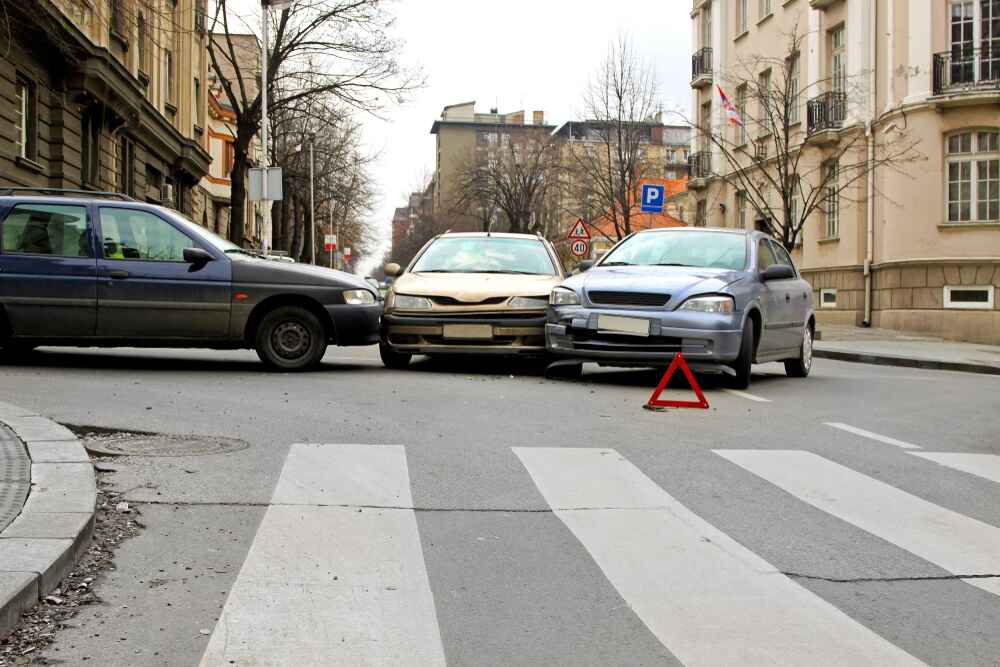
Three-car accidents make everything more confusing than it needs to be.
You’re not just dealing with one other driver, you’re suddenly caught in the middle of multiple stories, multiple insurance companies, and a lot of finger-pointing.
Everyone has a story. Everyone feels wronged. And the big question floating in the air is always the same… who’s actually at fault here?
In this post, we’ll explain who’s at fault in a 3 car accident, and what insurance companies look at when sorting it all out.
Common 3-Car Accident Scenarios And Who’s At Fault
Not every three-car accident looks the same, but most of them fall into a few familiar patterns:
#1 Rear-End Chain Reaction
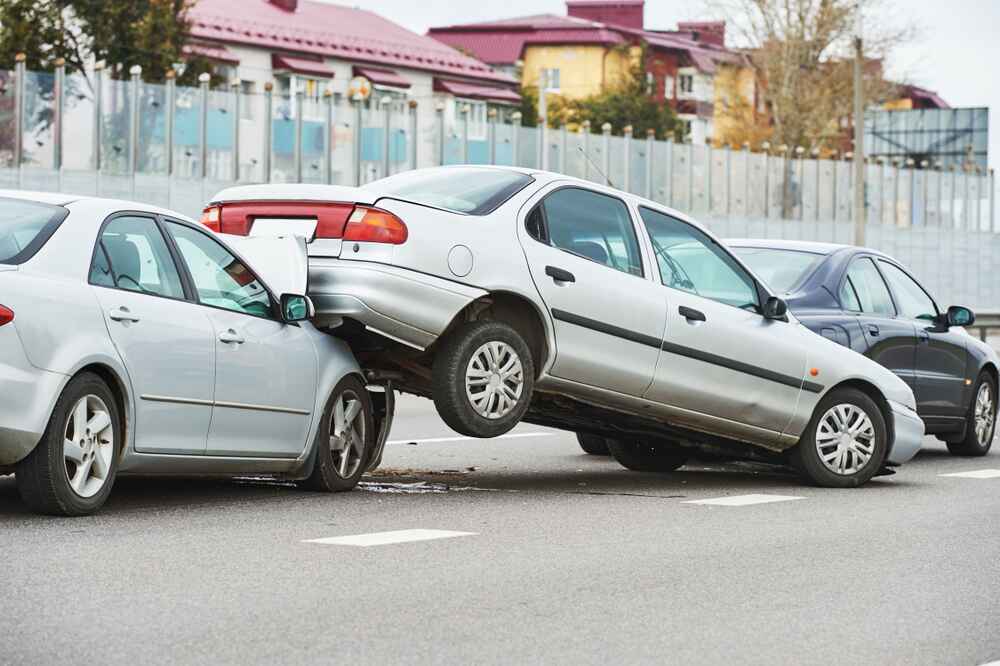
This is the classic domino effect crash. Car A stops. Car B stops. Car C doesn’t stop fast enough and slams into Car B, which then gets pushed into Car A.
In most of these cases, Car C is at fault.
Following too closely or not paying attention is usually the root cause.
The logic is pretty simple. If you hit someone from behind, you’re expected to have left enough space to stop safely.
That said, things can get complicated if Car B was following Car A way too closely, or if Car A slammed on the brakes for no good reason.
Still, nine times out of ten, the last car in the chain takes most or all of the blame.
Also Read: When Is A Rear-end Collision Not Your Fault?
#2 Middle Car Triggers The Crash
This one surprises people. The middle car isn’t always just an innocent sandwich filling.
Picture this. Car B is tailgating Car A. Car A slows down. Car B reacts late and hits Car A. A split second later, Car C hits Car B because there was no time to stop.
Here, Car B may be at fault for starting the mess in the first place.
Even though Car C made contact, the argument becomes that the crash would not have happened if Car B had kept a safe distance.
In situations like this, fault can lean heavily toward the middle car, or be shared between the middle and rear car depending on timing, speed, and spacing.
#3 Intersection Collisions
Intersections are chaos magnets, especially when signals, turns, and split-second decisions are involved.
A common example is one driver running a red light and hitting another car that had the right of way, then that second car spins or slides into a third vehicle.
In that case, the driver who ignored the signal is usually the primary at-fault party.
But intersections also see left-turn mishaps, rolling stops, and confusion over who goes first.
When three cars collide in these spots, fault often comes down to traffic laws and who violated them first.
#4 Unsafe Lane Changes
Lane changes seem harmless until they’re not.
A driver swerves into another lane without checking blind spots or signaling properly, sideswipes one car, and that car then crashes into a third.
Even though the unsafe lane changer may only touch one vehicle, they can still be responsible for the entire chain of events.
This is a good example of how fault doesn’t always match the number of impacts.
One bad move can ripple outward fast.
Also Read: Hit And Run Parked Car No Witness
#5 Sudden Stops And Road Hazards
Sometimes nobody is driving aggressively. Maybe a tire blows out, debris falls off a truck, or an animal darts across the road.
If the first car stops suddenly to avoid a hazard, and the cars behind don’t react in time, fault gets trickier.
The lead driver usually isn’t blamed for reacting to a real danger. Instead, responsibility often falls on drivers who failed to leave enough space or weren’t alert.
In rare cases, fault can be shared among multiple drivers if several poor decisions piled up at once.
How Do Insurance Companies Determine Fault?
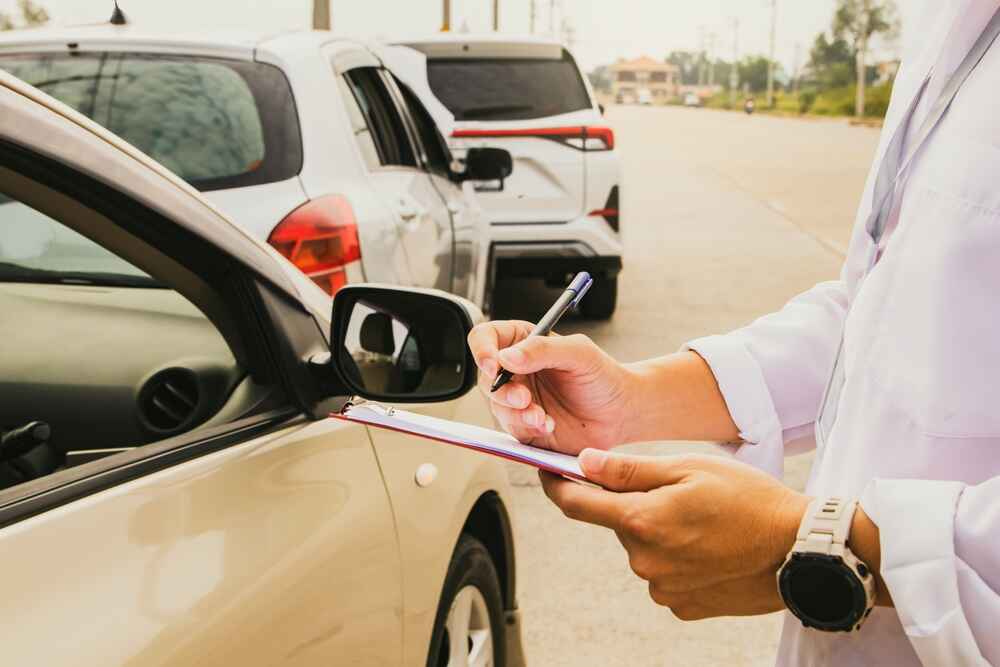
After a three-car crash, fault isn’t decided by gut feelings or roadside arguments. It’s based on evidence and analysis. A lot of moving parts come together to tell the story of what actually happened.
Insurance adjusters and investigators typically look at things like:
- Police reports and traffic citations
- Vehicle damage patterns and impact points
- Statements from all drivers and witnesses
- Traffic camera or dashcam footage
- Road conditions, weather, and visibility
Each piece helps build a timeline. Who braked first. Who was speeding. Who changed lanes. Who ignored a signal.
It’s less about who’s loudest and more about who’s actions started the chain reaction.
Also Read: Small Claims Court Car Accident
Can More Than One Driver Be At Fault?
Yes, and this is where many people get frustrated.
Three-car accidents often end with shared fault. One driver may be mostly responsible, while another carries a smaller percentage for contributing to the outcome.
Maybe someone was speeding slightly, another was distracted, and a third followed too closely.
Fault can be split in different ways depending on local laws.
Some places use comparative fault rules, meaning each driver is assigned a percentage of responsibility. Others are stricter.
What matters is that being partially at fault doesn’t automatically mean you’re out of options. It just affects how damages and payouts are handled later.
How Insurance Handles 3-Car Accidents
Insurance companies don’t love three-car accidents.
Too many claims. Too many stories. Too much back and forth.
Each driver’s insurer conducts its own investigation, and they don’t always agree at first. One company might say their driver is 20 percent responsible. Another might argue it’s 0 percent.
Negotiations happen behind the scenes more than people realize.
Here’s what typically plays a role in insurance decisions:
- Each policy’s coverage limits and exclusions
- Assigned fault percentages
- Local fault and negligence laws
- Medical costs, vehicle damage, and lost income
Because multiple insurers are involved, settlements often take longer than in two-car crashes. Patience becomes part of the process, even though that’s the last thing anyone wants after an accident.
Bottom Line
Three-car accidents are rarely simple, and that’s what makes them stressful.
Fault isn’t always obvious, and it’s not always fair at first glance.
The car that looks most damaged isn’t automatically the one that caused the crash, and the person who feels innocent might still carry some responsibility.
What really matters is understanding that these cases are about sequences, not single moments. One action leads to another, and the full picture only becomes clear once everything is laid out.
If you ever find yourself in a three-car accident, focus on staying calm, getting medical help if needed, and documenting everything.
The fault discussion will happen later, piece by piece, based on facts rather than assumptions.